

Product Introduction
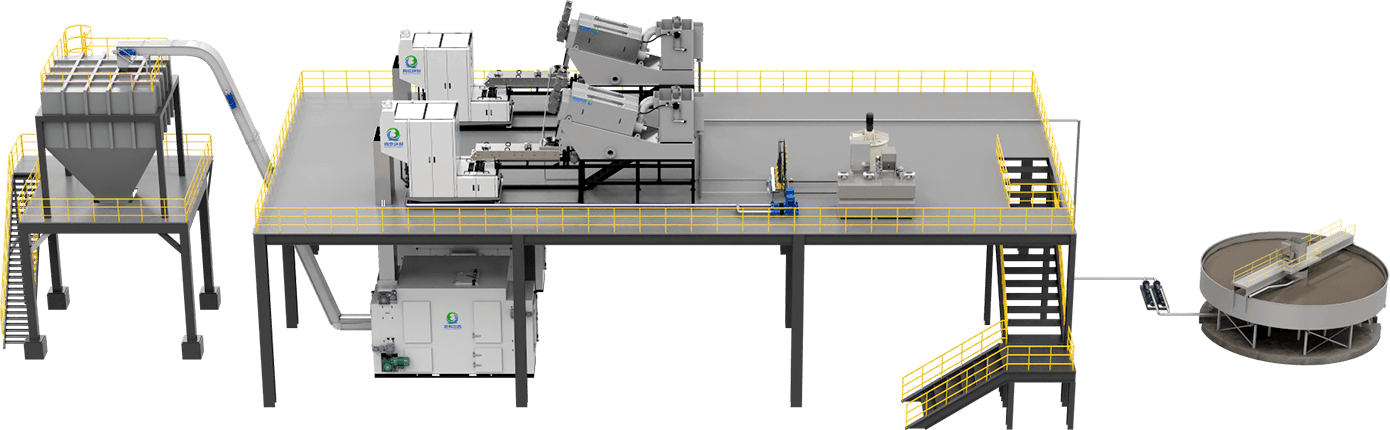
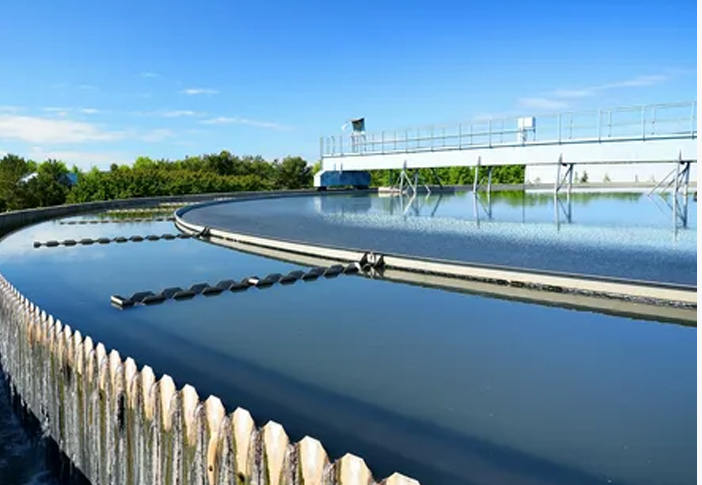
A sludge thickening system raises the solids concentration of dilute sludge before dewatering, so that pumps, tanks and dewatering machines handle less water. Qingben Environmental Technology (Jiangsu) Co., Ltd. is a sludge thickening system manufacturer and supplier based in Yangzhou, China. Our thickening range works directly on sludge from secondary sedimentation tanks and does not require a separate concentration tank, which reduces civil investment and floor area.
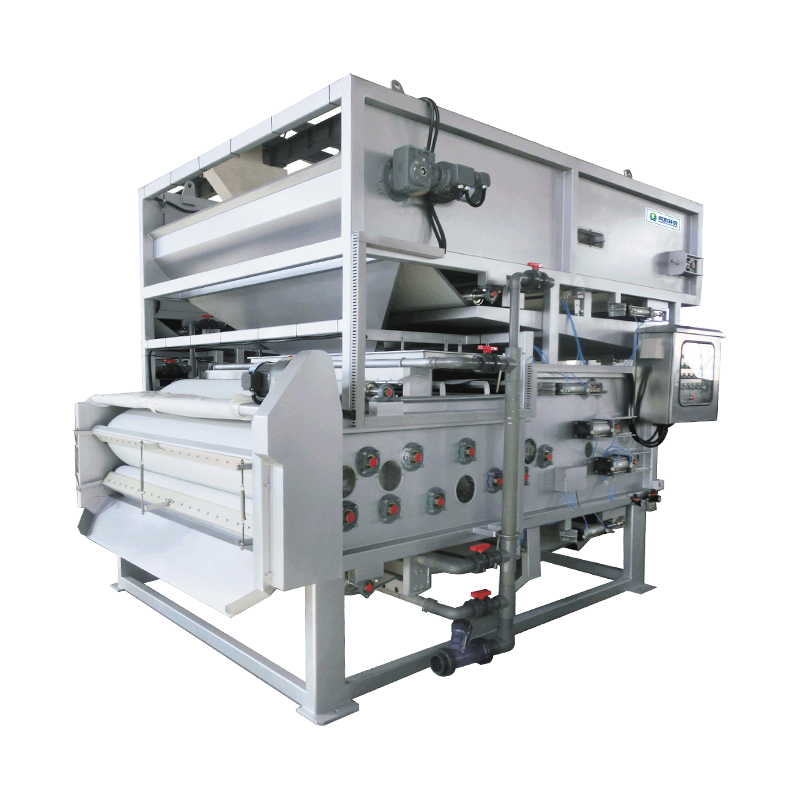
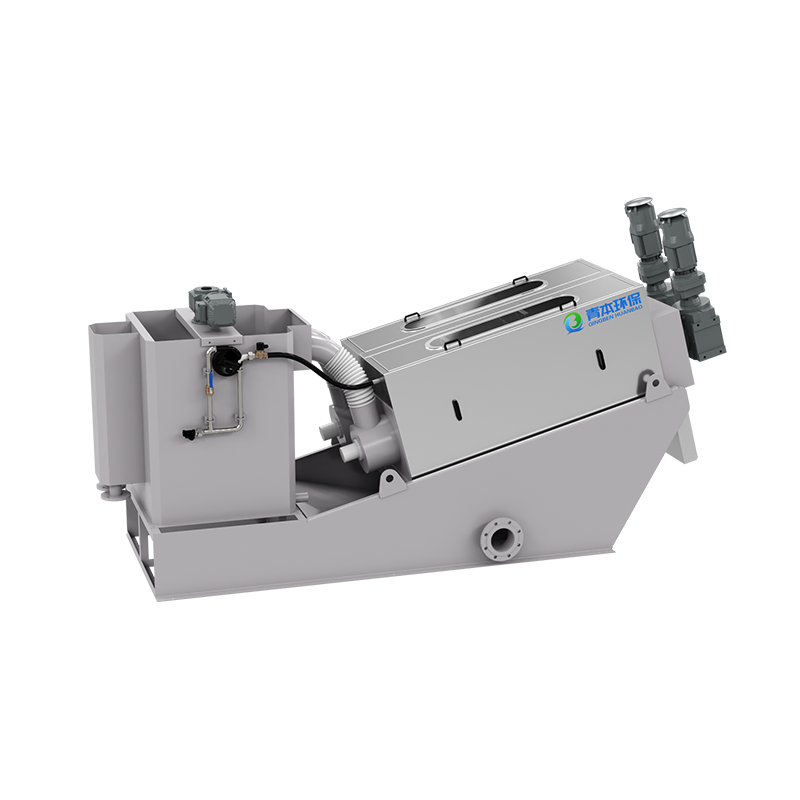
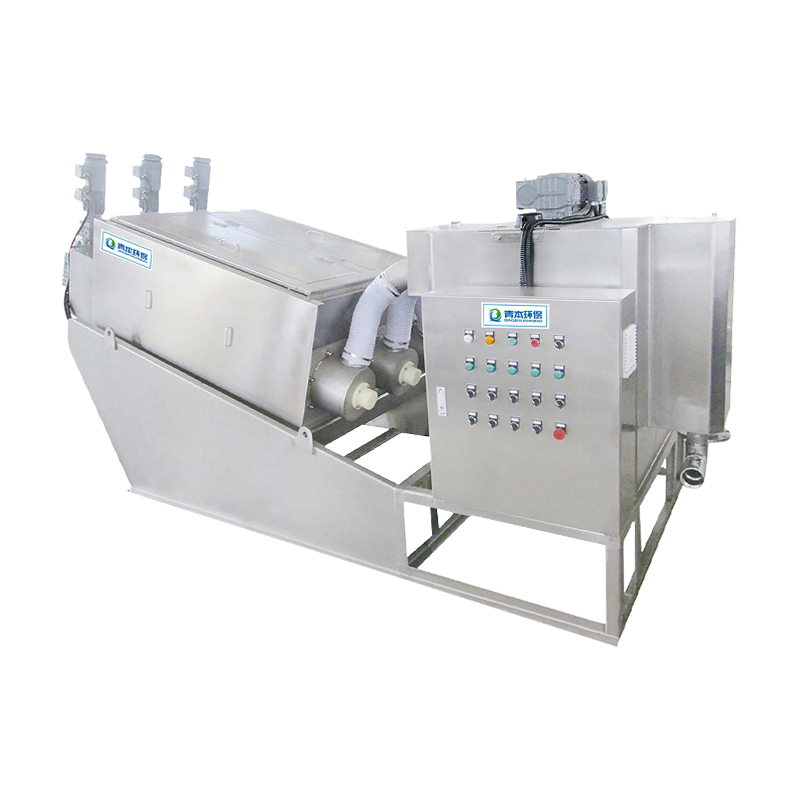
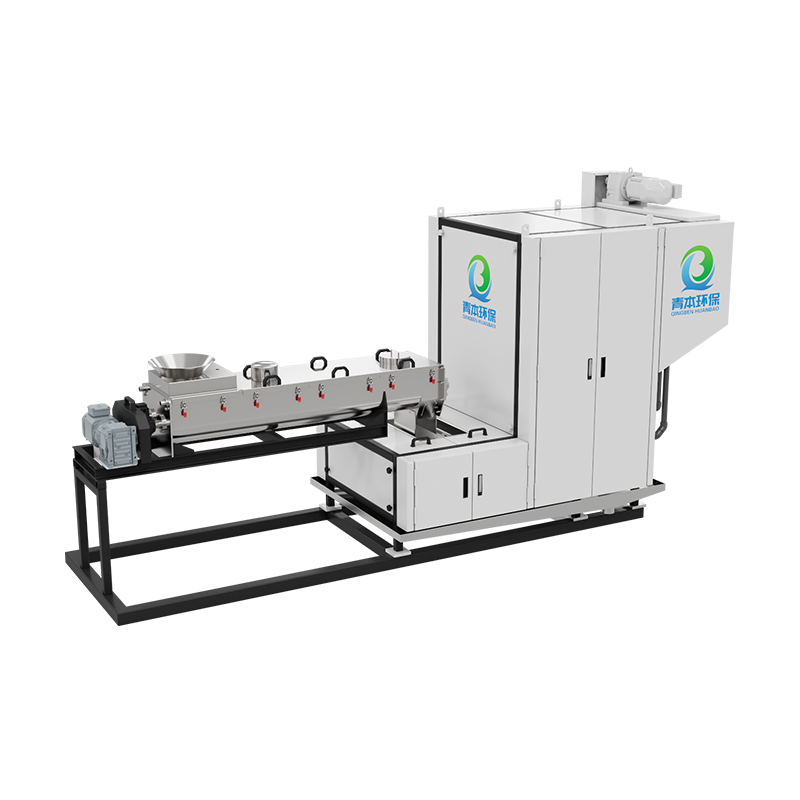
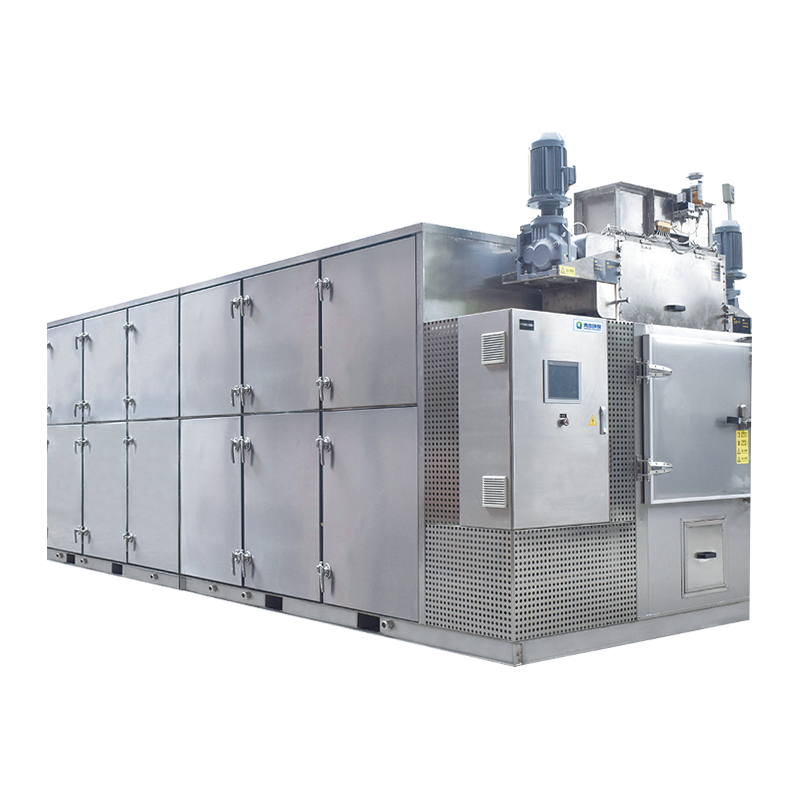
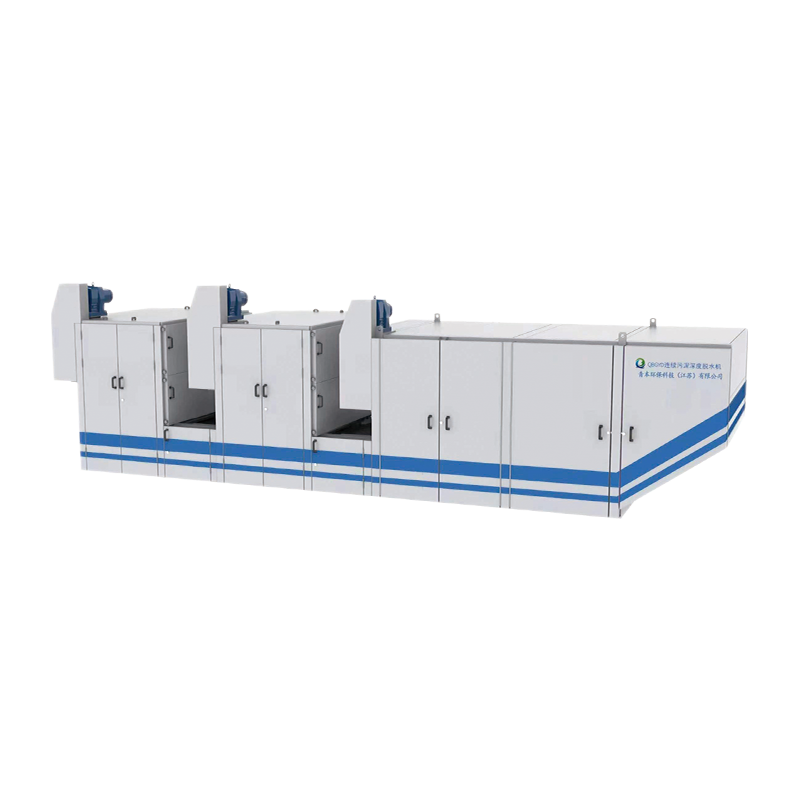
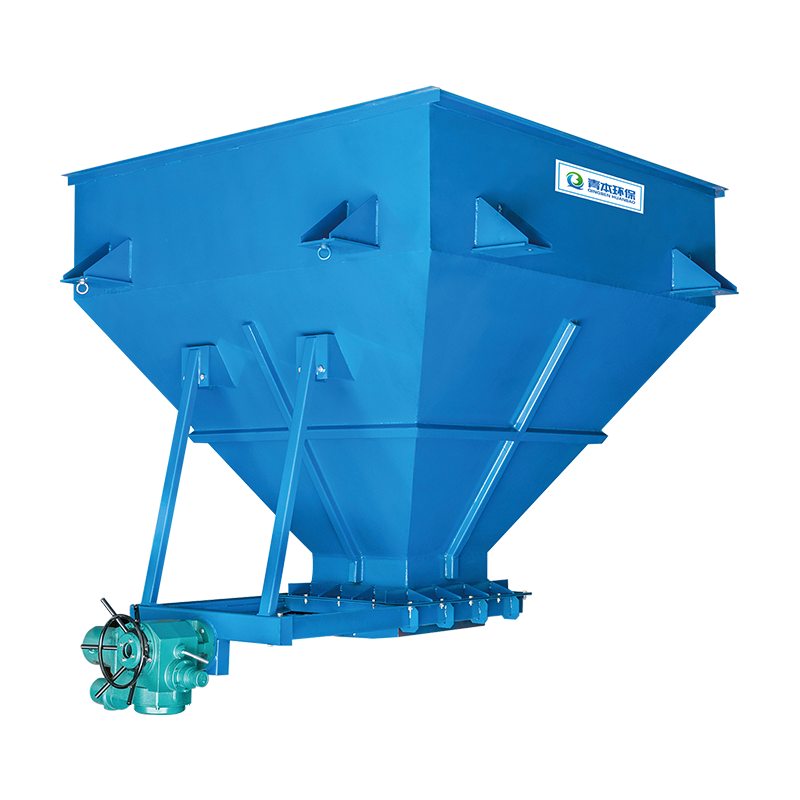
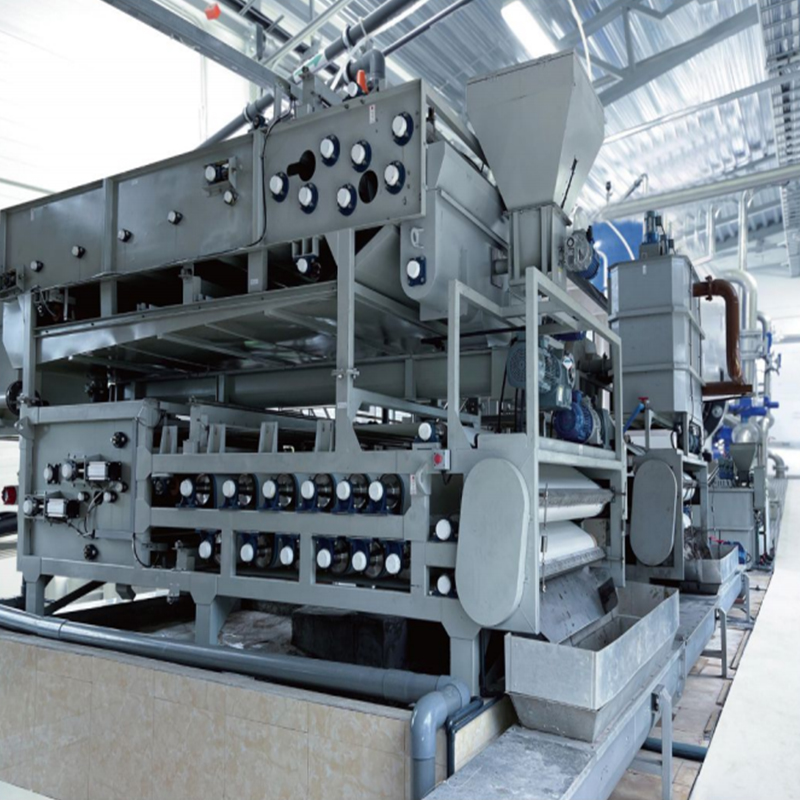
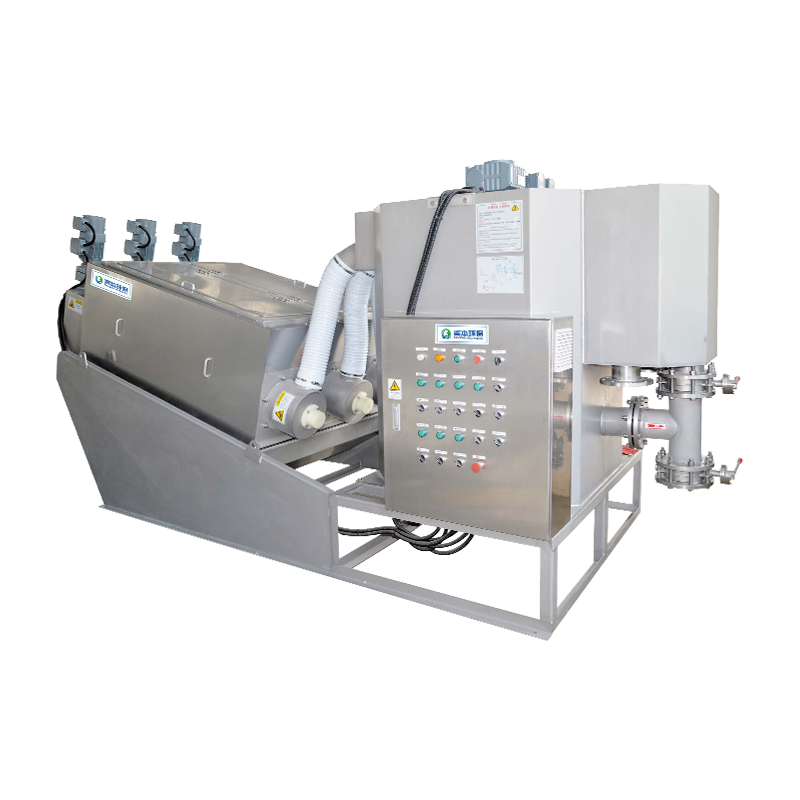
The product group covers three machine types. The screw press sludge pre-concentration machine (QBDL-N series) is a dedicated thickener. The pre-concentration conch-screw press sludge dehydrator (QBDL-Y series) adds a pre-concentration stage in the mixing tank ahead of the screw press. The QBDNT belt filter press combines gravity thickening and belt dewatering in one frame for surplus sludge that has not been pre-thickened, such as A/O and SBR surplus sludge.
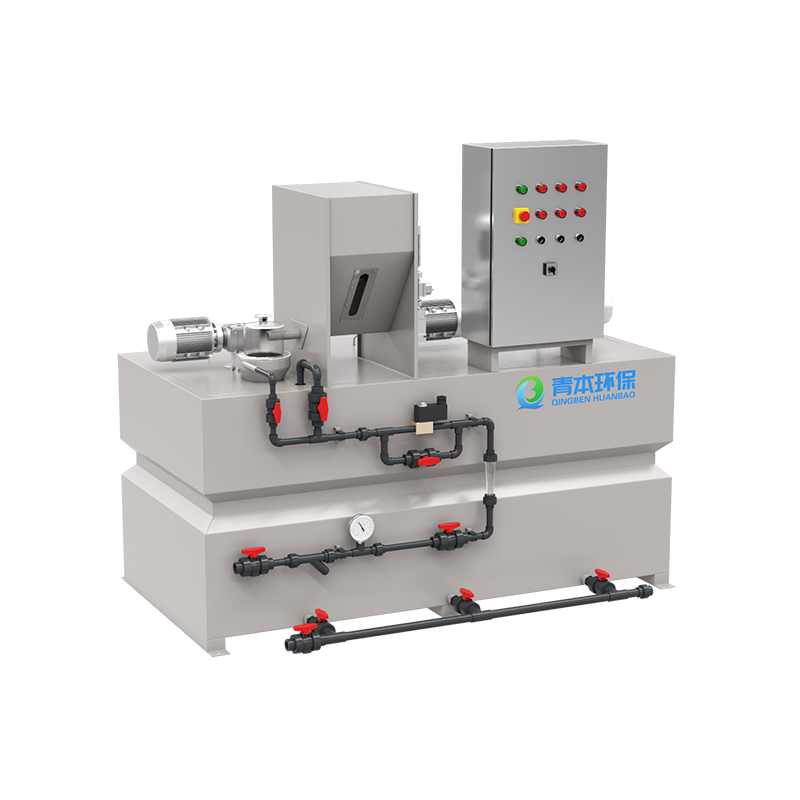
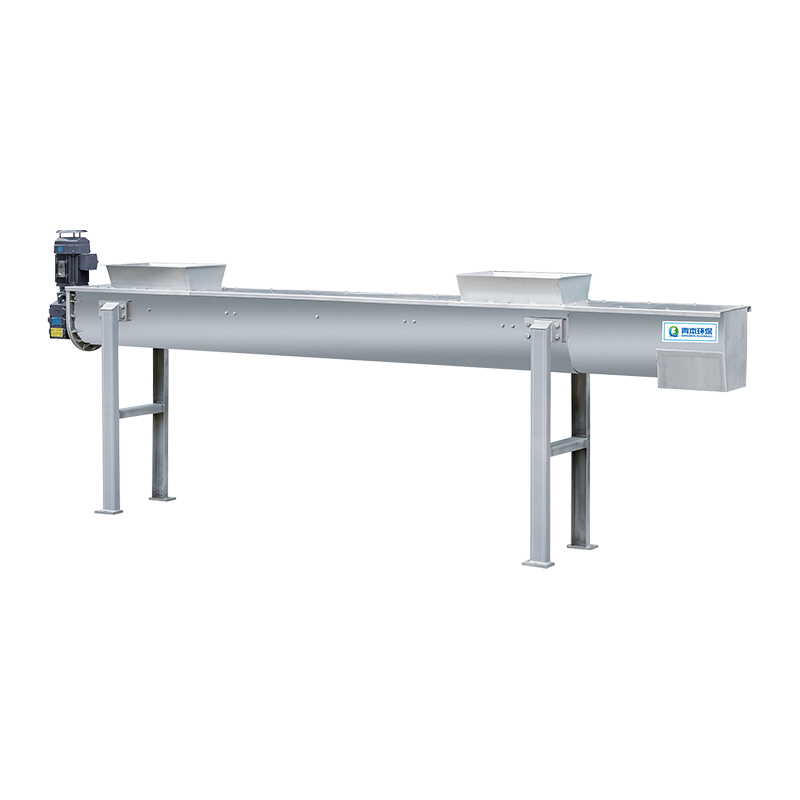
These machines are specified by municipal wastewater plant owners, EPC and engineering companies, industrial wastewater operators and distributors. Published data sheets list dry solids capacity, motor power, washing water consumption, overall size and weight, so procurement teams can compare models before requesting a quotation. An integrated dosing device and screw conveyor can be supplied with the same line.
Our Yangzhou factory works under ISO9001, ISO14001 and ISO45001 management systems, and the equipment range carries CE marking. Customized configurations, installation, commissioning and operator training are available. MOQ, sample policy and production lead time: please contact us for details.
Product Type
Screw press pre-concentration machine, pre-concentration conch-screw press dehydrator, and belt-type thickening and dewatering machine.
Core Models
QBDL-N301 to N404, QBDL-Y301 to Y404, and QBDNT1.0 / 1.5 / 2.0.
Capacity Range
QBDL-N: about 70 to 1,200 kg DS/h across the published models. QBDNT: 90 to 300 kg DS/h.
Feed Basis
Sludge from secondary sedimentation tanks. QBDNT is rated at 0.8% to 1.5% SS feed.
Product Structure
Stacked screw with fixed and moving rings, mixing tank and control cabinet; belt press with gravity, wedge and pressure zones.
Performance
Self-cleaning filter gap on screw models; QBDNT cake moisture rated at 75% to 85%.
Customization
Model size, interfaces, dosing and conveying, and control interface matched to project data.
Quality Control
ISO9001, ISO14001, ISO45001 management systems and CE marking at company level.
MOQ and Lead Time
Please contact us for details.
OEM/ODM Services
To be confirmed according to project requirements.
Specifications & Customization
Key Parameters
| Parameter | Details | Basis |
| Product Group | Pre-concentration screw press (QBDL-N), pre-concentration conch-screw press dehydrator (QBDL-Y), belt filter press (QBDNT) | Published product pages |
| Thickening Principle | Stacked screw with fixed and moving rings; gravity belt drainage on QBDNT | Published product pages |
| Rated Feed (QBDNT) | 0.8% to 1.5% SS, depending on sludge type | QBDNT data sheet |
| Cake Moisture (QBDNT) | 75% to 85% | QBDNT data sheet |
| Belt Widths (QBDNT) | 1,000 / 1,500 / 2,000 mm | QBDNT data sheet |
| Drive and Control | Variable frequency drive on filter belt; fully automatic; on-site or remote control | Published product pages |
| Power Supply | 380 V / 50 Hz or local supply voltage | QBDNT page; other models subject to configuration |
| Material | Painted topcoat finish and PEX polyester monofilament filter cloth (QBDNT); other materials subject to product configuration | Published product pages |
| Standards | ISO9001, ISO14001, ISO45001 management systems; CE marking | Company level |
| Packaging | Available upon request | To be confirmed |
Selected Models
| Model | Dry Solids Capacity | Total Motor Power | Overall Size L x W x H (mm) | Net Weight (kg) |
| QBDL-N301 | 70 to 100 kg/h | 1.3 kW | 3,160 x 1,150 x 2,000 | 850 |
| QBDL-N302 | 140 to 200 kg/h | 2.25 kW | 3,360 x 1,350 x 2,000 | 1,200 |
| QBDL-N402 | 400 to 600 kg/h | 4.5 kW | 4,650 x 1,900 x 2,560 | 3,280 |
| QBDL-N404 | 800 to 1,200 kg/h | 8.2 kW | 7,850 x 3,150 x 2,560 | 6,560 |
| QBDL-Y301 | 40 to 70 kg/h | 1.5 kW | 4,000 x 1,580 x 1,900 | 1,100 |
| QBDL-Y404 | 400 to 640 kg/h | 8.2 kW | 5,500 x 3,105 x 2,560 | 7,500 |
| QBDNT1.0 | 90 to 160 kg/h | 0.37 / 0.75 / 0.37 kW (belt drive / thickener / mixer) | 4,050 x 1,770 x 2,250 | 2,000 (reference) |
| QBDNT2.0 | 210 to 300 kg/h | 0.75 / 1.1 / 0.75 kW (belt drive / thickener / mixer) | 5,150 x 2,750 x 3,190 | 3,500 (reference) |
Reference sizes and weights should be confirmed against the dimensional drawing before ordering. Capacity at a given feed concentration is listed on the product data sheet.
Customization Options
Model SizeSelect from the published QBDL-N, QBDL-Y and QBDNT sizes based on your feed data.
Interfaces and PipingSludge inlet, filtrate outlet, polymer inlet and washing water connections reviewed against site drawings.
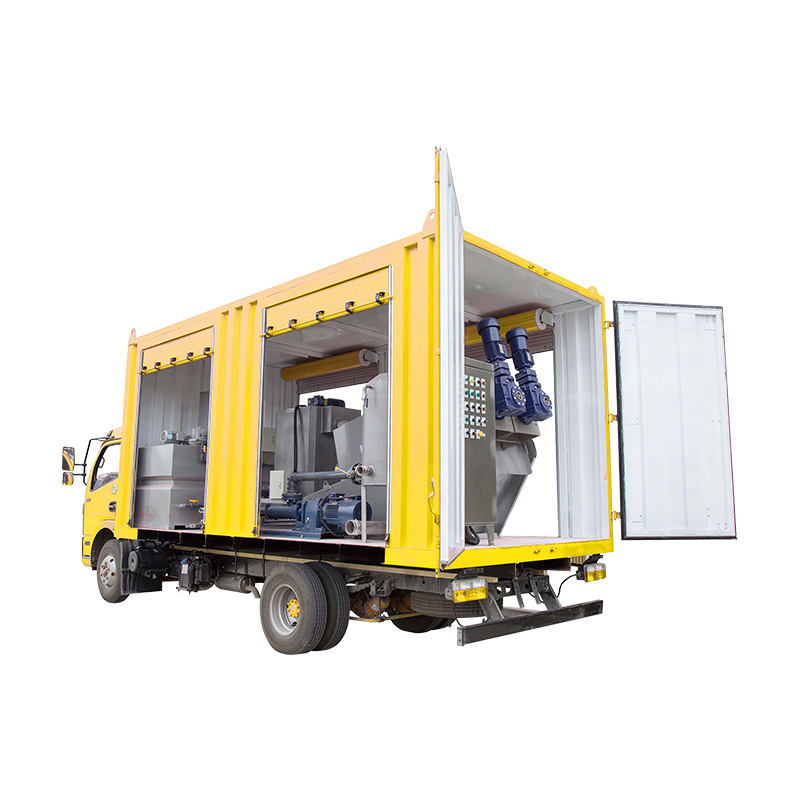
Dosing and ConveyingIntegrated or manual dosing device and screw conveyor can be added to the line.
Control InterfaceLocal panel, remote PLC, SCADA or existing DCS interface, defined during design.
Voltage and FrequencyControl voltage and frequency configured for the destination country.
OEM/ODM and BrandingPlease contact us for details.
Applications & Target Customers
Application Scenarios
| Industry / Application | Typical Use | Relevant Product Features |
| Municipal wastewater treatment | Thickening surplus activated sludge from secondary sedimentation tanks before dewatering | No separate concentration tank; continuous operation; fully automatic control |
| Food and beverage processing | Pre-concentrating low-concentration sludge from food processing wastewater | Pre-concentration plus screw press for dilute sludge |
| Industrial wastewater treatment | Thickening biological or chemical sludge ahead of a press or dryer | Selectable model size; interfaces matched to existing line |
| Livestock and agriculture | Thickening and dewatering of livestock wastewater sludge | QBDNT belt press for larger flows |
| Existing dewatering plants | Adding pre-thickening ahead of a high-pressure press or plate and frame press | QBDL-N used as pretreatment equipment |
Target Customers
Municipal Plant Owners
Need thickening of surplus sludge without building new tanks, plus stable automatic operation.
EPC and Engineering Companies
Need defined capacity data, drawings and interface lists to include in a tender package.
Industrial Wastewater Operators
Need a machine that fits existing space and works with their polymer and dosing setup.
Importers and Distributors
Need a clear model range and technical documents for resale and project support.
Suitable and Unsuitable Uses
Suitable Uses
Thickening dilute sludge from secondary sedimentation tanks
Pre-thickening ahead of a screw press or high-pressure dewatering line
Combined thickening and dewatering for A/O and SBR surplus sludge (QBDNT)
Projects where a thickening tank cannot be built
Unsuitable Uses or Applications Requiring Additional Evaluation
Sludge with high grease content, abrasive solids or difficult fibres: solids loading, polymer demand and cake target should be assessed first
Projects that need a dry cake or dried product: a dewatering or drying stage must follow
Feed outside the published concentration range: confirm with our engineers
Sludge with unknown polymer response: bench testing is advisable
Selection Guidance
Application Requirements: Thickener only, or thickener plus dewatering.
Technical Specifications: Dry solids capacity at your feed concentration, motor power and washing water.
Working Environment: Indoor or outdoor, headroom, discharge height and odor control.
Material Compatibility: Confirm materials for your sludge chemistry.
Installation Conditions: Foundation, access and utility connections.
Budget and Order Quantity: Please contact us for details.
Usage Notes
- Product inspection: Check model, nameplate data and delivered components against the order.
- Installation: Level foundation within the base dimensions; connection points for sludge feed, polymer, filtrate and wash water.
- Operating environment: Confirm power supply, washing water pressure and drainage return point.
- Daily maintenance: Belt washing, tracking observation and grit removal on QBDNT; scheduled washing on screw models.
- Weekly maintenance: Check belt tension, rollers, scraper blades and polymer mix consistency on QBDNT.
- Storage: Please contact us for storage requirements.
Advantages
Thickening Without a Separate Tank
The QBDL-N machine concentrates sludge from the secondary sedimentation tank continuously. A concentration tank is not needed in the line.
Verifiable basis: Published QBDL-N product description: no concentration tank required.
Buyer benefit: Lower civil cost, smaller footprint and less odor and phosphorus release from tank retention.
Self-Cleaning Stacked Ring Design
Relative movement between fixed and moving rings keeps the filtrate gap clear. This avoids the blockages common with mesh-type machines.
Verifiable basis: Described on our sludge dewatering equipment page.
Buyer benefit: Less manual cleaning and steadier operation on fluctuating feed.
Wide Published Model Range
The QBDL-N series has 12 models, and the QBDL-Y series has 12 more. Each is listed with capacity, power, size and weight.
Verifiable basis: Data sheets list 70 to 1,200 kg DS/h for QBDL-N.
Buyer benefit: Buyers can size close to the real duty and compare models before inquiry.
Thickening and Dewatering in One Frame
The QBDNT combines gravity thickening, conditioning, wedge zone and roller dewatering. It accepts surplus sludge without a separate thickener.
Verifiable basis: QBDNT data sheet: 0.8% to 1.5% SS feed, 75% to 85% cake moisture.
Buyer benefit: Fewer machines, pumps and control points in the line.
Control Flexibility
Screw models run fully automatically. The QBDNT has a variable frequency drive on the filter belt and can be controlled on-site or remotely.
Verifiable basis: Published control descriptions for QBDNT and screw press lines.
Buyer benefit: Operators can adjust to feed changes, and the line can integrate with a plant PLC.
Documented Quality and Project Support
The factory operates under ISO9001, ISO14001 and ISO45001 management systems, and the range carries CE marking. Installation, commissioning and operator training are offered.
Verifiable basis: Certificates shown on the company website.
Buyer benefit: Clear documentation for tender files and a handover that includes training.
Frequently Asked Questions
- Q: Do I still need a thickening tank if I use a QBDL-N pre-concentration machine?
- A: No. The QBDL-N is designed to concentrate sludge from the secondary sedimentation tank directly, so a separate concentration tank is not required. Please confirm site conditions with our engineers.
- Q: What is the difference between the QBDL-N and QBDL-Y series?
- A: The QBDL-N is a pre-concentration machine that thickens only. The QBDL-Y adds a pre-concentration system in the mixing tank ahead of a screw press, so it thickens and dewaters in one unit.
- Q: What feed is the QBDNT belt filter press rated for?
- A: The published rating is 0.8% to 1.5% SS, typical of A/O and SBR surplus sludge. Hydraulic capacity is 6 to 12 m3/h for QBDNT1.0, 10 to 18 m3/h for QBDNT1.5 and 15 to 25 m3/h for QBDNT2.0, depending on sludge type.
- Q: Can a pre-concentration unit feed my existing dewatering equipment?
- A: Yes. Our product page states that the QBDL-N can be used as pretreatment for dewatering and deep dewatering systems, including high-pressure elastic presses and diaphragm plate and frame presses.
- Q: What information do you need to recommend a model?
- A: Please send sludge source, feed concentration, daily volume, operating hours, target cake dryness, available utilities, site layout and control preference. Capacity is then matched to the data sheet.
- Q: Do you offer custom configurations or OEM/ODM supply?
- A: Equipment is configured around project data, including interfaces, dosing, conveying and controls. OEM/ODM and private-label requests: please contact us for details.
- Q: What are the MOQ, sample policy and lead time?
- A: These depend on the model and configuration. Please contact us with your requirements for confirmed information.
- Q: Do you provide installation and training?
- A: Yes. We provide installation, commissioning, trial operation and operator training, followed by after-sales maintenance and spare parts support.
Contact Us to Learn More
Send us your sludge source, feed concentration, daily volume and target cake dryness. Our team can recommend a thickening or pre-concentration model, prepare a drawing and quote the line with dosing and conveying where needed.
Product specifications, model selection, custom configuration, sample and MOQ questions, packaging and delivery requirements.
View More ProductsSend an Inquiry