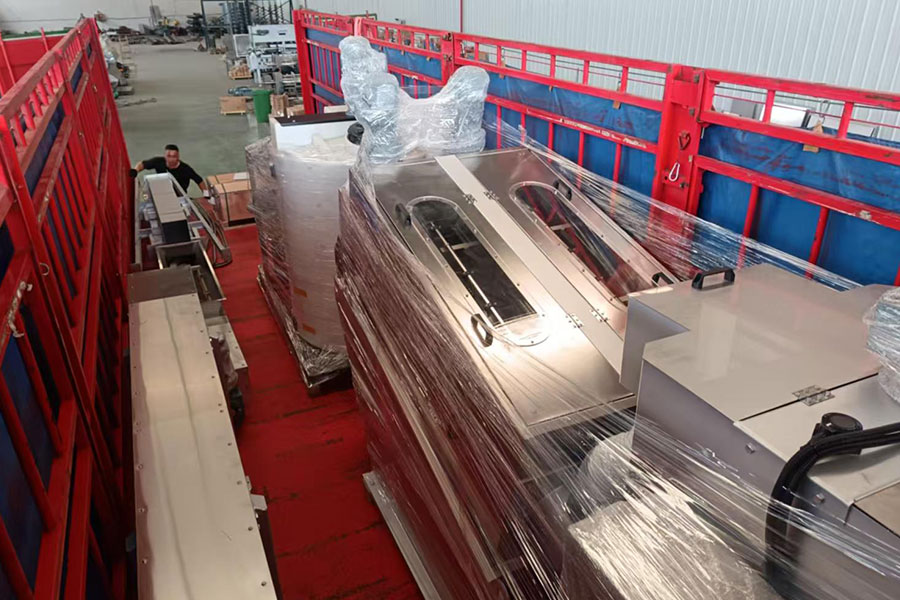
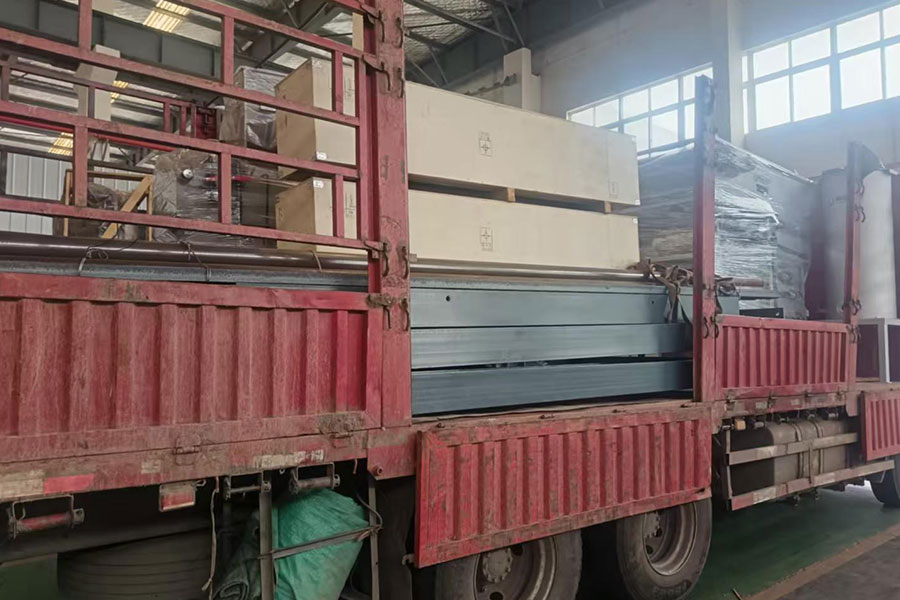
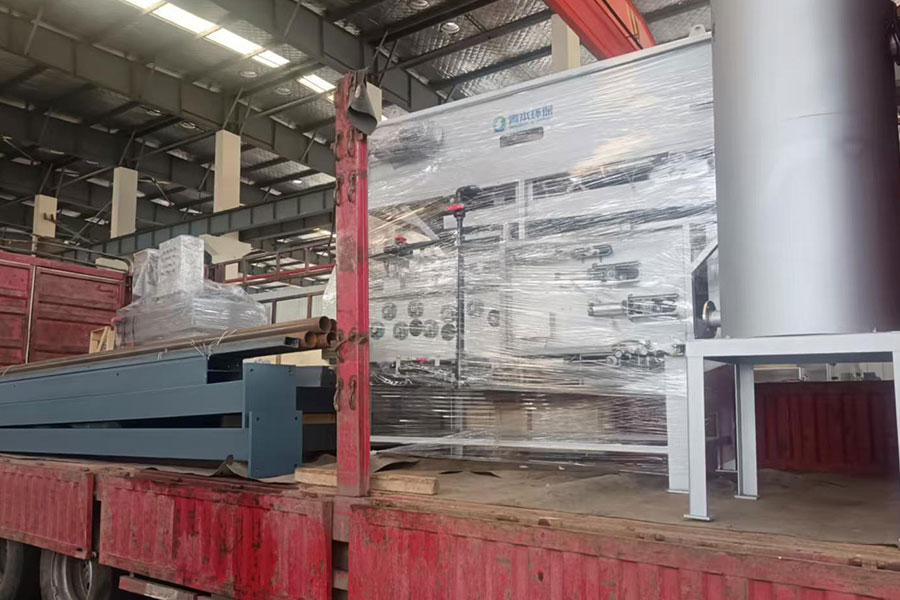
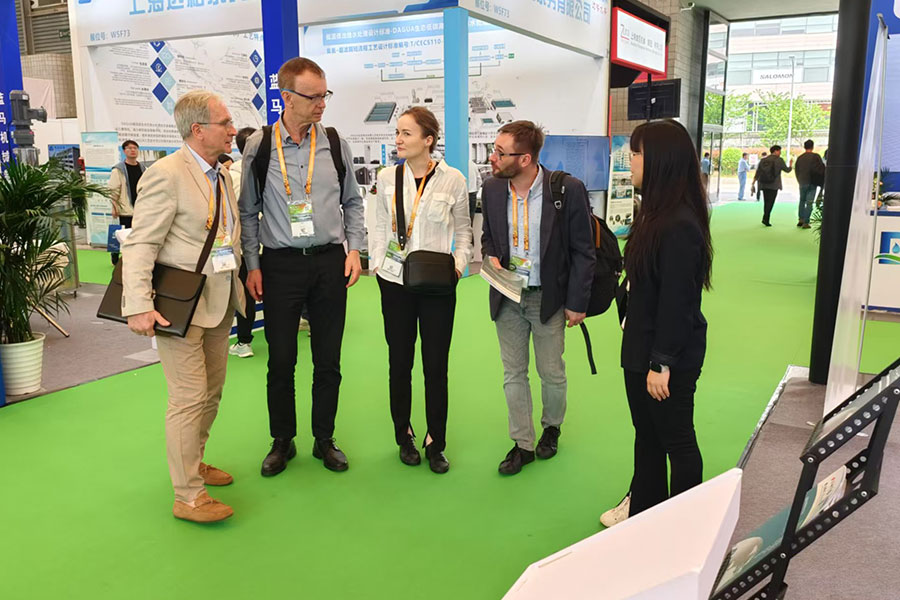
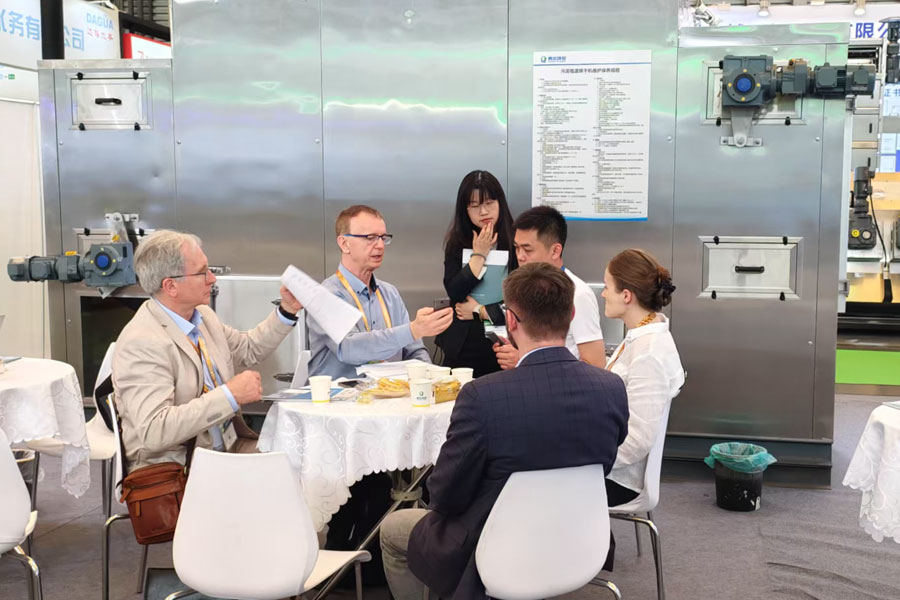
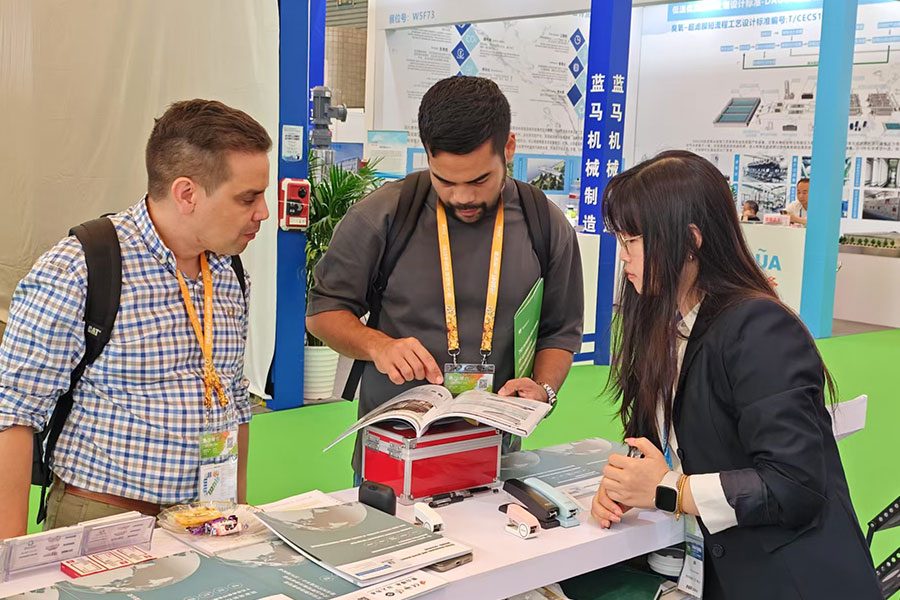
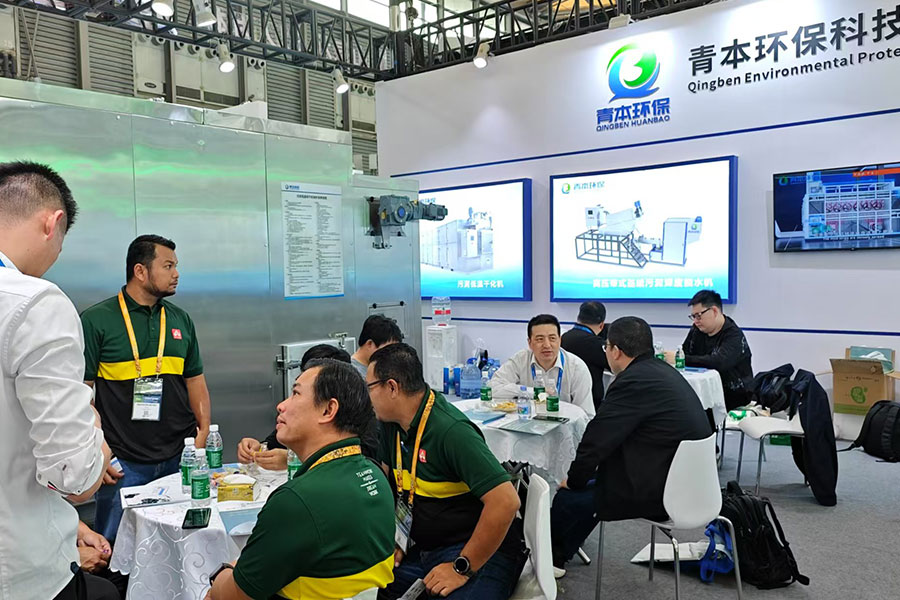
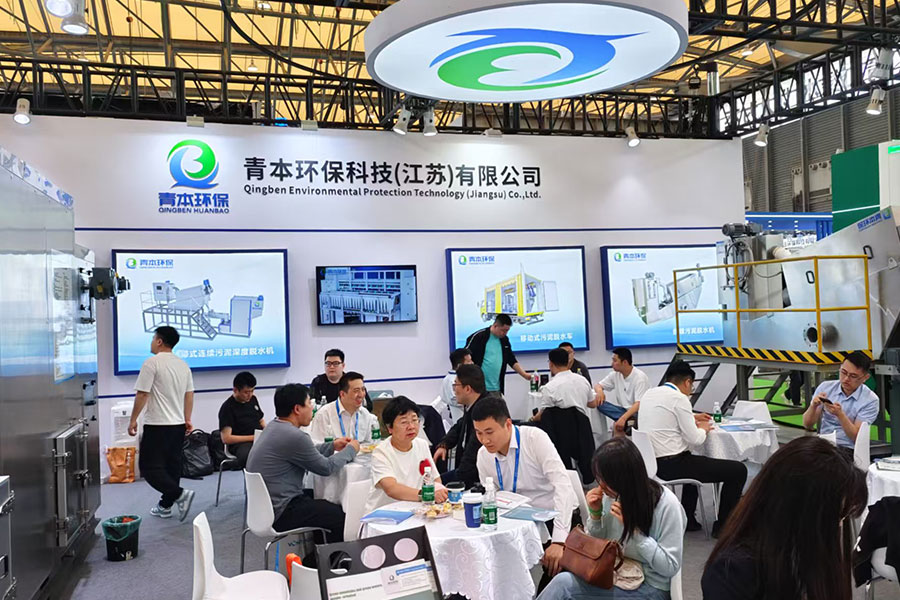
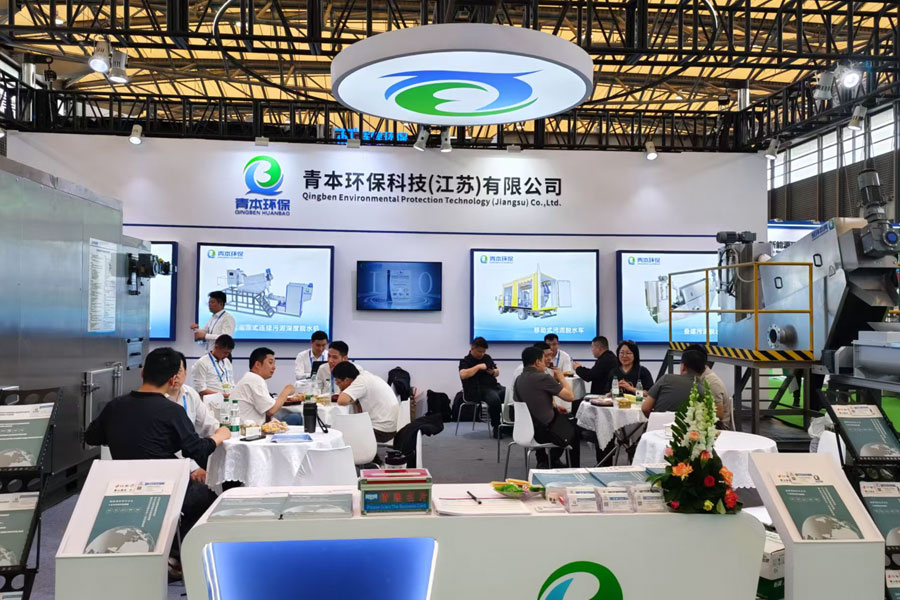
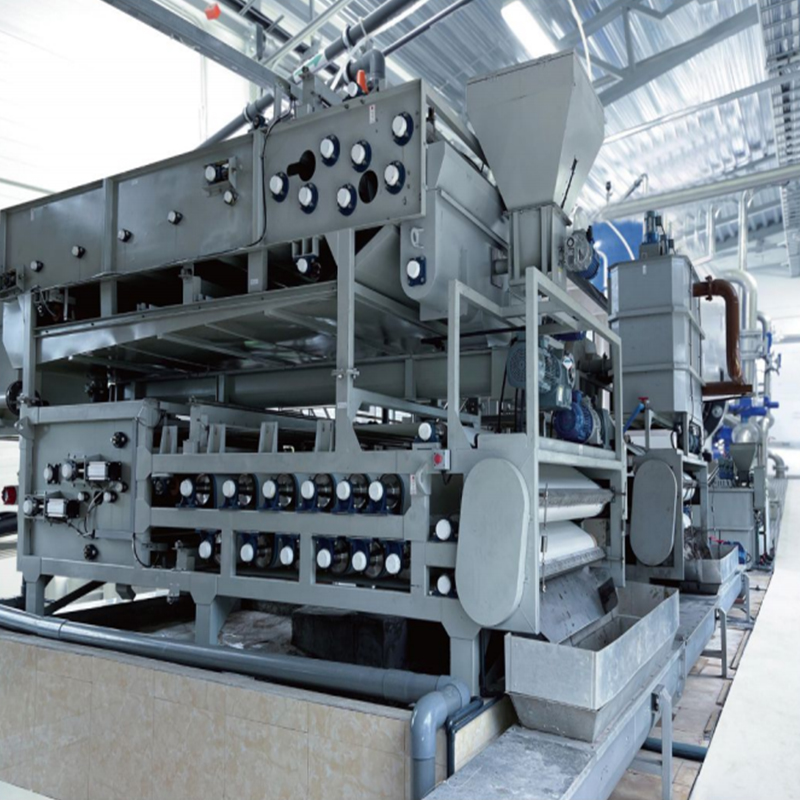
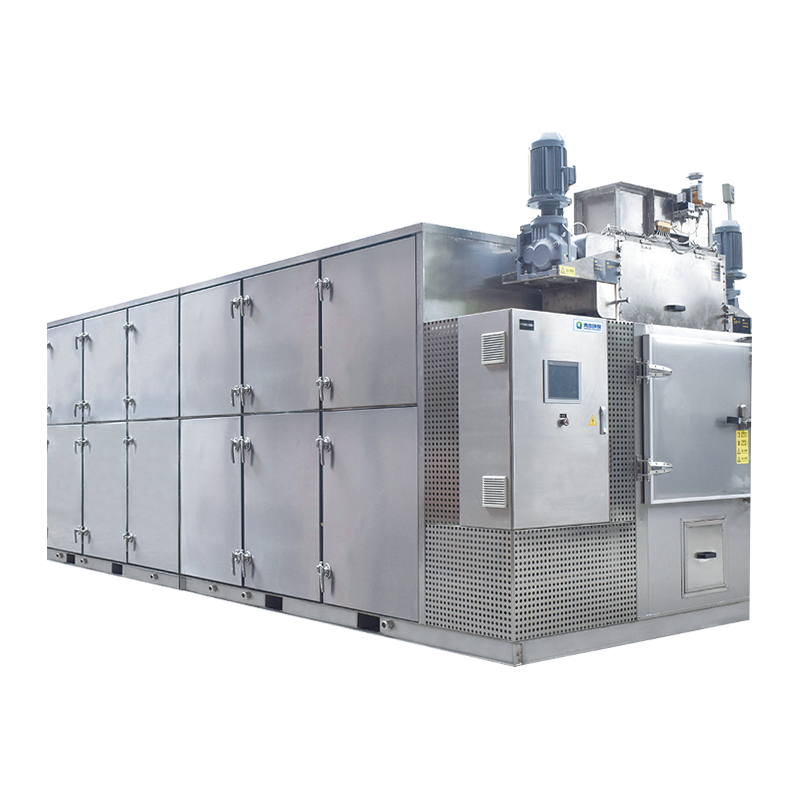
Qingben Environmental Technology (Jiangsu) Co., Ltd. builds the Screw Press Sludge Dewatering Machine manufacturer range for municipal wastewater plants, industrial pretreatment facilities, food and beverage processors, livestock operations, mining sites, and marine or offshore installations. Our machines combine flocculation, thickening, pressing, and filtrate collection in one compact frame, and they run continuously with minimal operator attention.
Design and Operating Principle
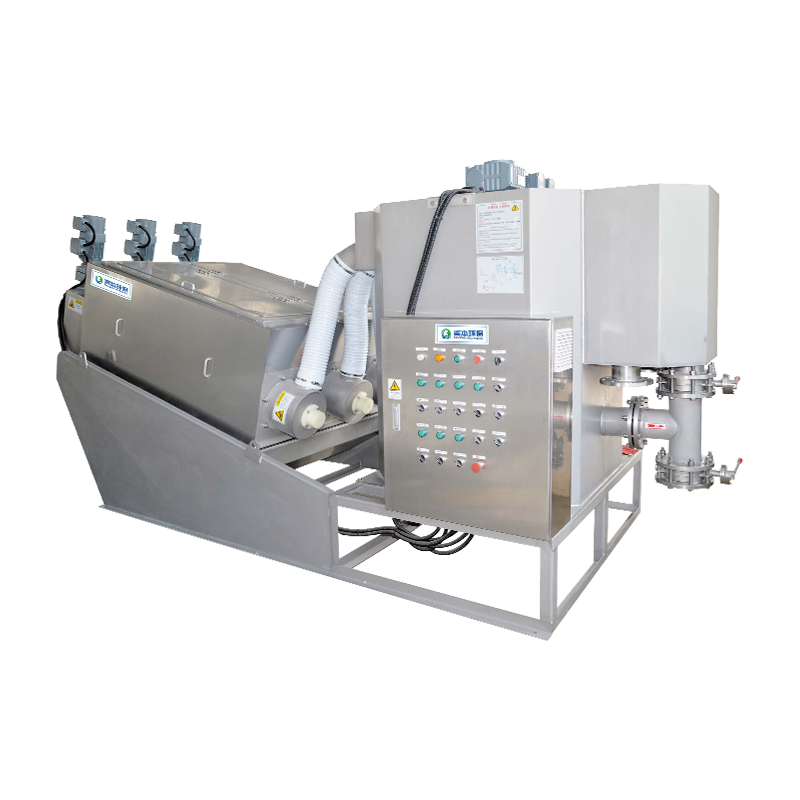
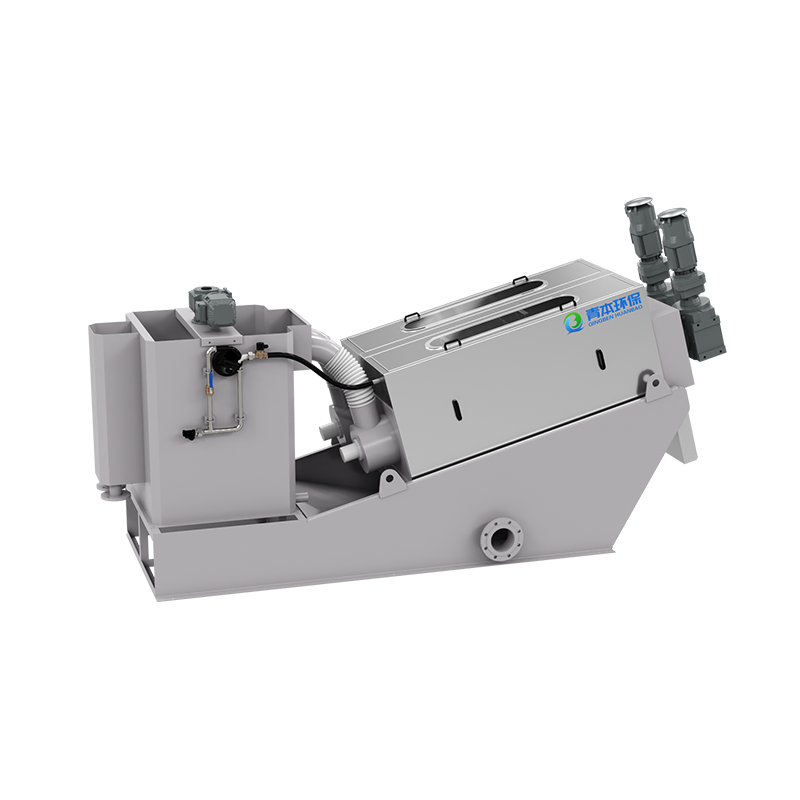
The screw press dewatering machine is built around a screw shaft enclosed by fixed and moving rings. As the shaft turns at 2–4 rpm, sludge enters the thickening zone where free water passes through the ring gaps. The concentrated sludge is then carried toward the discharge end, where the screw pitch decreases and the ring spacing narrows. A back pressure plate at the outlet raises internal pressure, squeezing additional water out and producing a drier filter cake.
The moving rings rotate with the screw shaft, creating a continuous self-cleaning action between the fixed and moving rings. This avoids the clogging problems common in traditional dewatering equipment and reduces the need for high-pressure washdown between cycles.
- Feed concentration range: 5000–50000 mg/L, suitable for low- and high-concentration sludge
- Slow rotation speed: 2–4 rpm for quiet, low-shear operation
- Average energy consumption: 0.01–0.1 kWh/kg-DS, roughly 1/8 of a belt press and 1/20 of a centrifuge
- Independent variable frequency drive on each dewatering body for smooth startup and separate control
Application Fit and Sludge Compatibility
This is a fully continuous liquid solid separator, equally able to thicken dilute sludge and dewater already concentrated sludge. Because it can accept feed directly from aeration tanks and secondary sedimentation tanks, it removes the need for a separate sludge concentration tank in many plant layouts. That reduces investment in mixers, air compressors, flushing pumps, and related auxiliary equipment.
Municipal wastewater
Biological sludge, secondary sludge, and mixed sludge from small to large treatment plants.
Industrial wastewater
Food and beverage, chemical, textile, paper, and general manufacturing effluent sludge.
Agriculture and livestock
Manure slurry, biogas digester residue, and high-strength organic wastewater.
Marine and remote sites
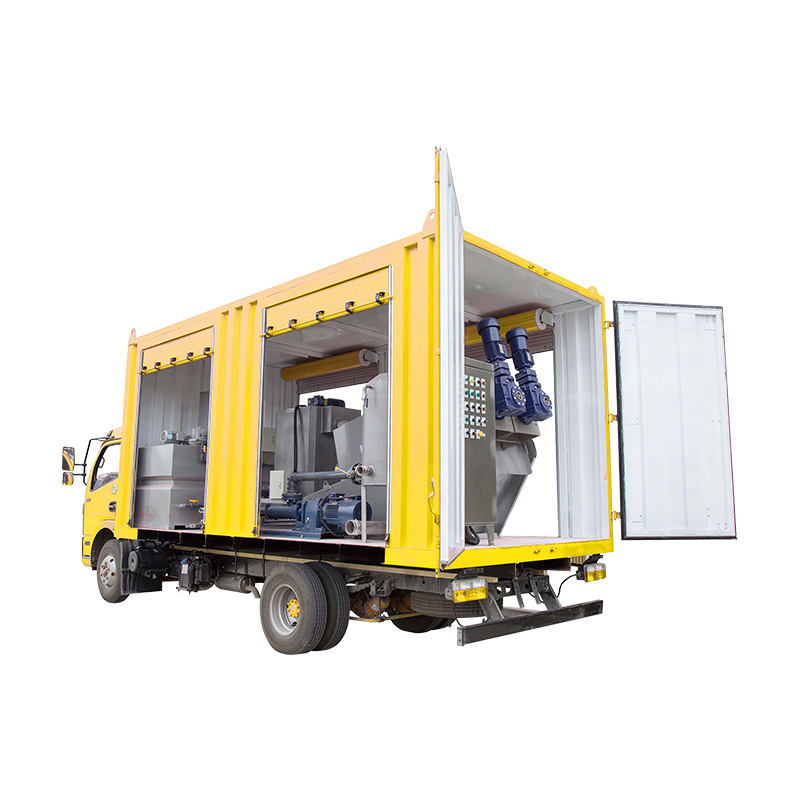
Compact footprint and low noise make it practical for vessels, offshore platforms, and containerized plants.
Model Range and Capacity
Our QBDL series covers single-screw and multi-screw configurations with screw diameters from 130 mm to 400 mm. The table below shows representative models and their throughput at different feed concentrations; complete dimensional and connection data are provided with each proposal.
| Model |
Screw |
Dry solids capacity |
Flow @ 10,000 mg/L |
Flow @ 30,000 mg/L |
Installed power |
| QBDL131 |
φ130×1 |
8–14 kg/h |
~1 m³/h |
~0.4 m³/h |
0.36 kW |
| QBDL202 |
φ200×2 |
30–40 kg/h |
~3 m³/h |
~1.2 m³/h |
1.29 kW |
| QBDL302 |
φ300×2 |
70–140 kg/h |
~10 m³/h |
~4 m³/h |
2.25 kW |
| QBDL352 |
φ350×2 |
140–240 kg/h |
~20 m³/h |
~8 m³/h |
3.3 kW |
| QBDL402 |
φ400×2 |
200–320 kg/h |
~26 m³/h |
~10 m³/h |
4.5 kW |
| QBDL404 |
φ400×4 |
400–640 kg/h |
~52 m³/h |
~20 m³/h |
8.2 kW |
Higher feed concentrations reduce hydraulic throughput but increase dry solids capture per cubic meter. Our selection engineers use the actual feed concentration and daily solids load to match the correct screw configuration, not just a nominal flow rate.
Configuration and Automation Integration
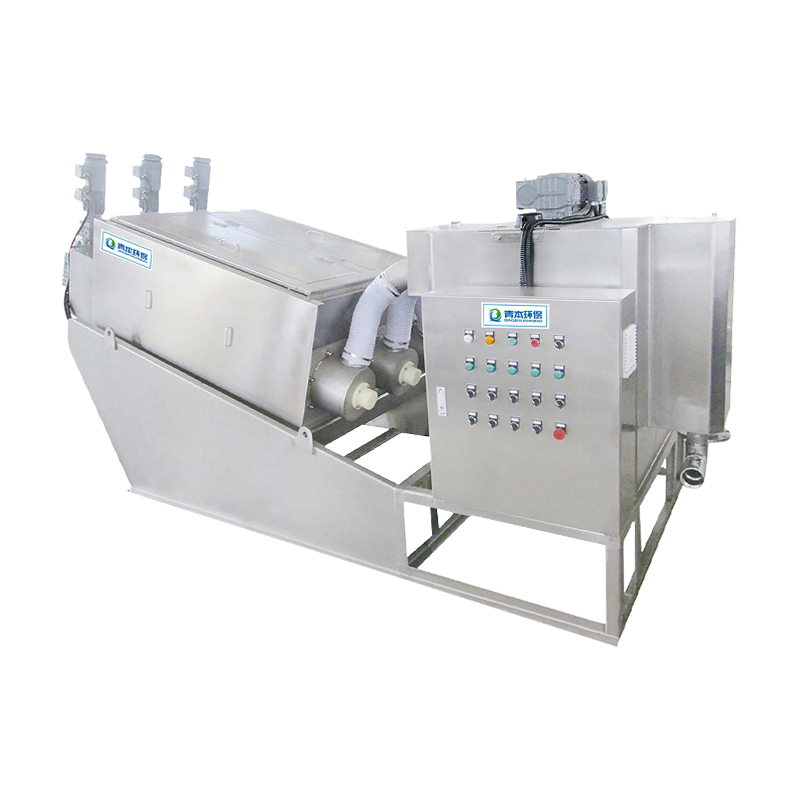
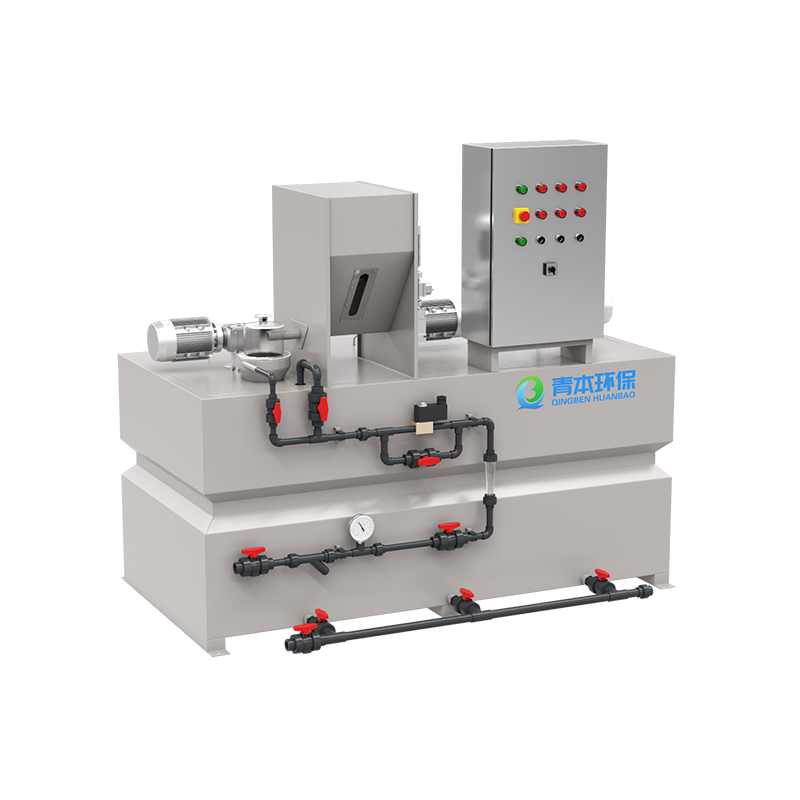
Each unit is supplied with an automatic control cabinet, flocculation and conditioning tank, thickening and dewatering body, and liquid collecting tank. Polymer dosing can be integrated through our Integrated Dosing Device to automate flocculant preparation and feed.
- Independent variable frequency drive on each dewatering body allows staged startup and separate stop/start control
- Control cabinet integrates motor protection, fault indication, and local operation interface
- Process signals can be arranged for remote monitoring, depending on the customer’s control philosophy
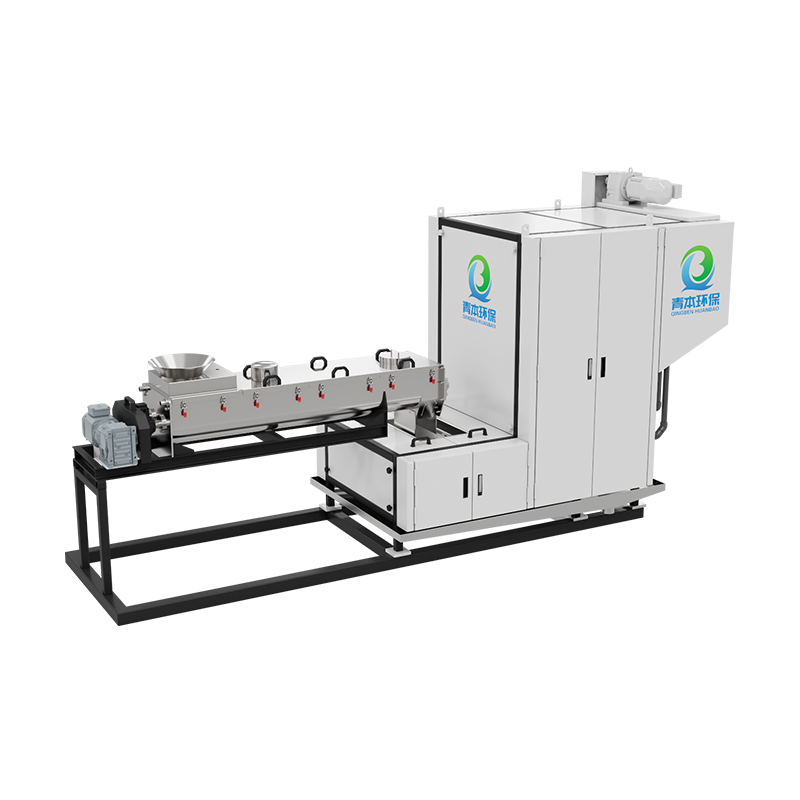
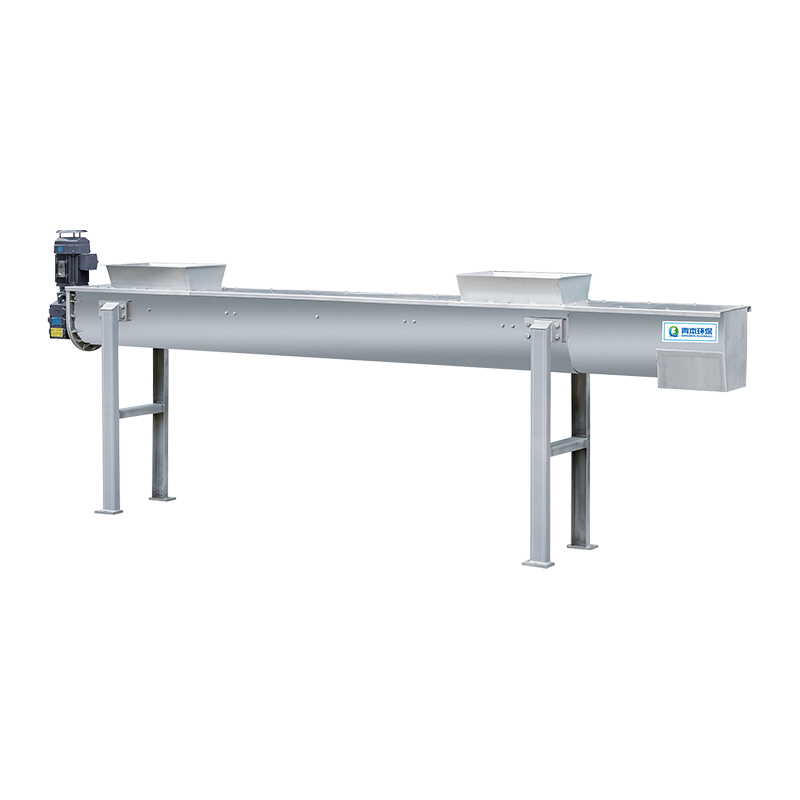
- Available with our screw conveyors and sludge hoppers for a complete dewatering line
Installation, Utilities, and Operation
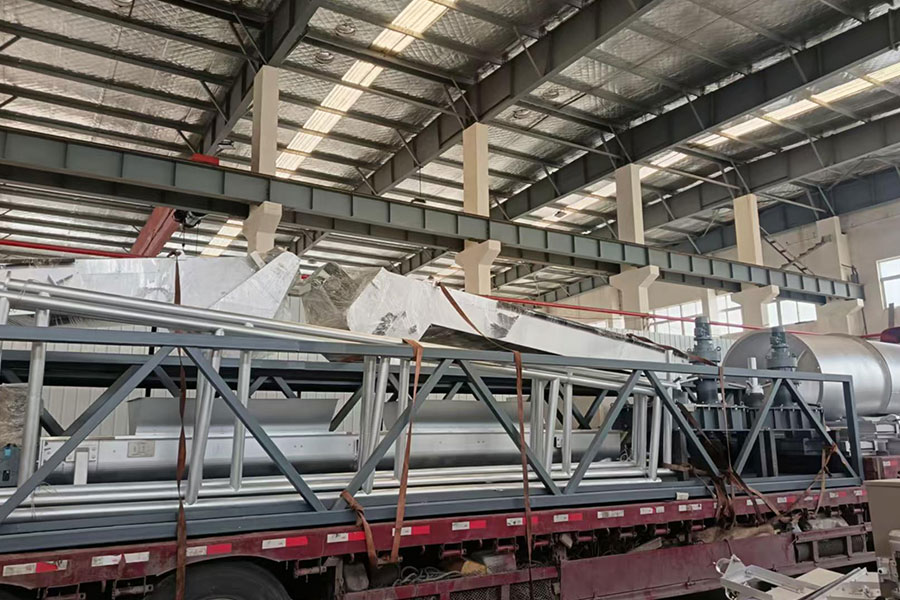
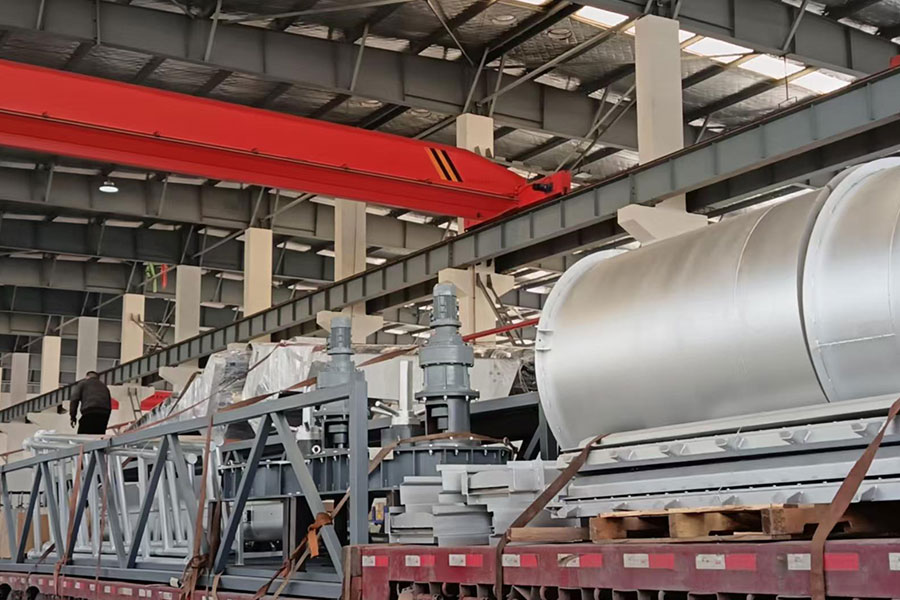
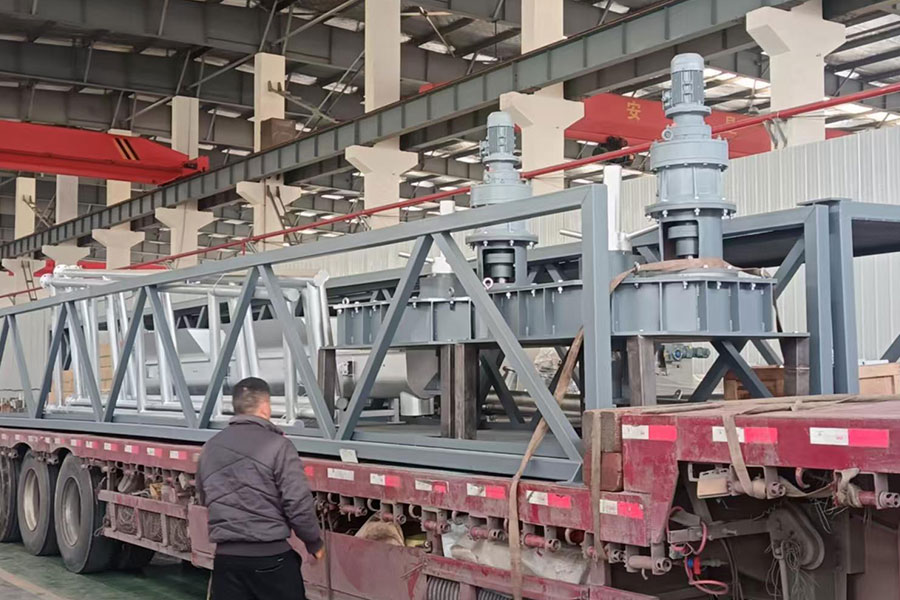
The machine is factory-assembled and skid-mounted, which simplifies installation on a concrete floor or steel platform. Typical connections are sludge feed, polymer dosing, water supply, filtrate outlet, and electrical power. Washing water pressure is 0.1–0.2 MPa, and routine washing water flow ranges from 28 to 320 L/h depending on model.
The screw shaft and mixer are driven by independent motors sized for continuous duty. Because the unit operates at low speed, vibration and noise are minimal, making it suitable for installations near occupied areas or inside buildings.
- Recommended inspection: brief visual check each shift; washing is typically needed 5–10 minutes per operating hour
- Wearing parts: screw shaft and movable ring assemblies; replacement cycles are estimated at 3–5 years based on 16 h/day operation
- Actual wear depends on sludge grit content, chemical conditioning, and operating hours
Quality Assurance and Project Handoff
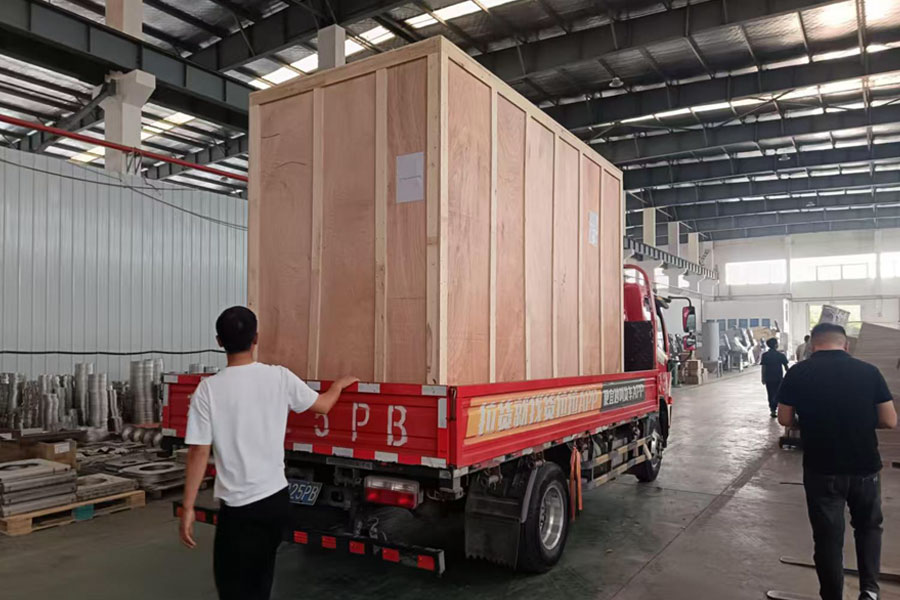
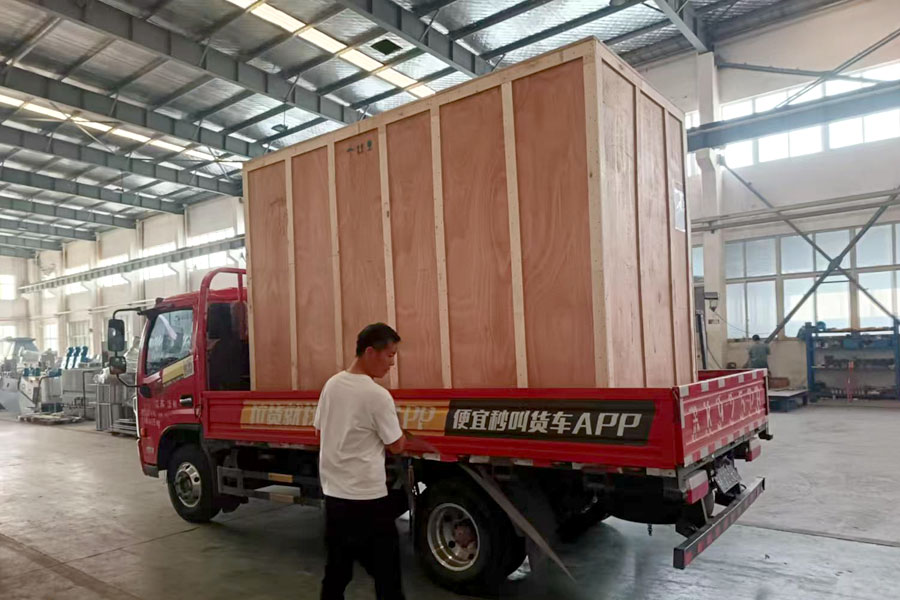
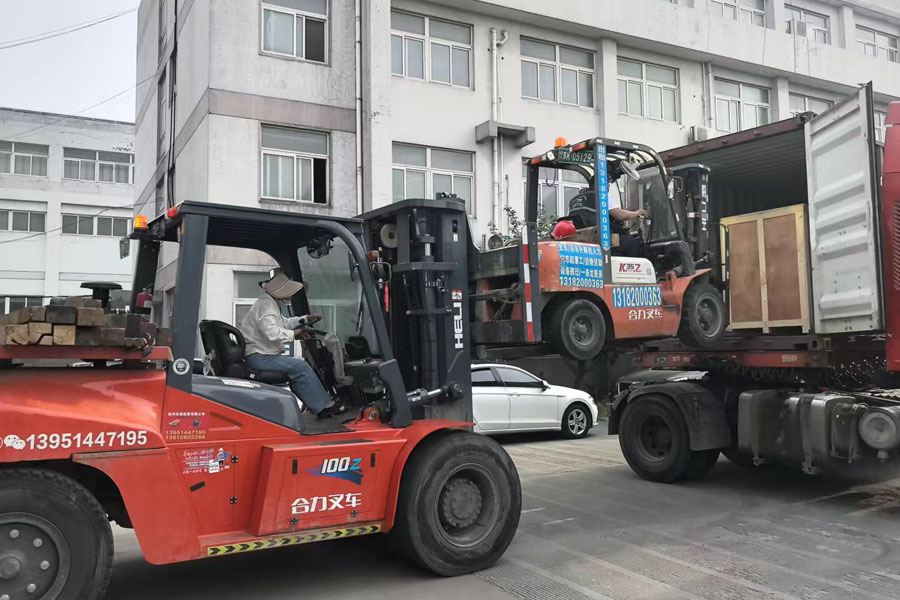
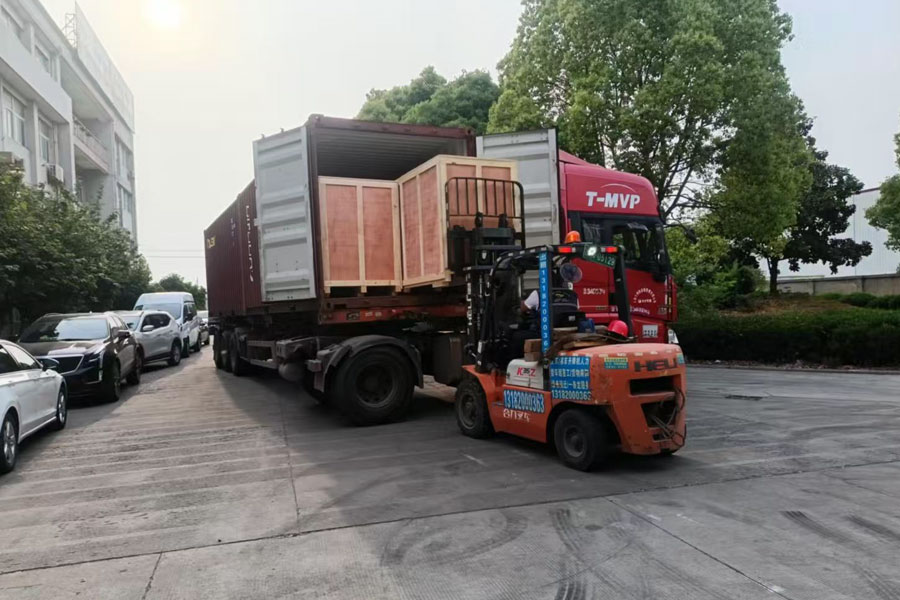
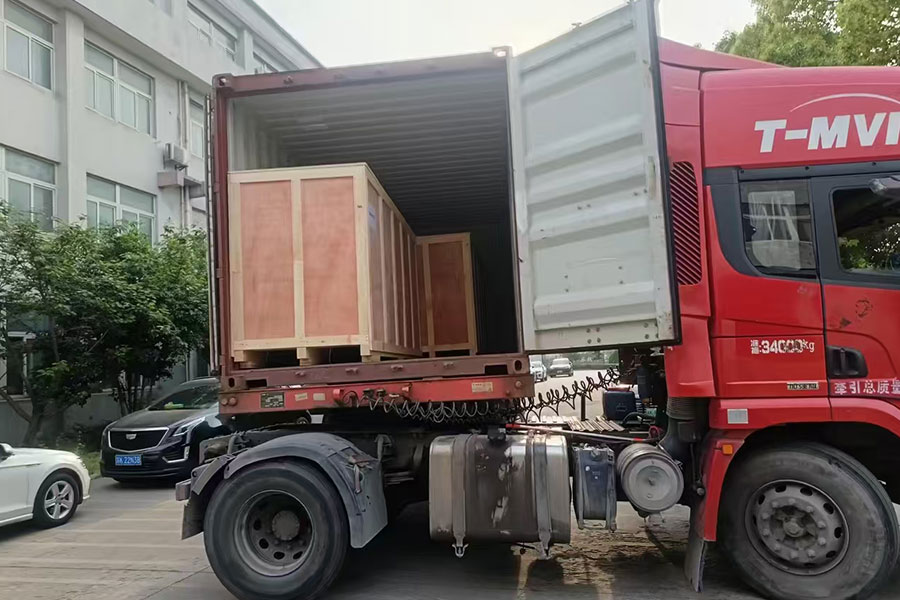
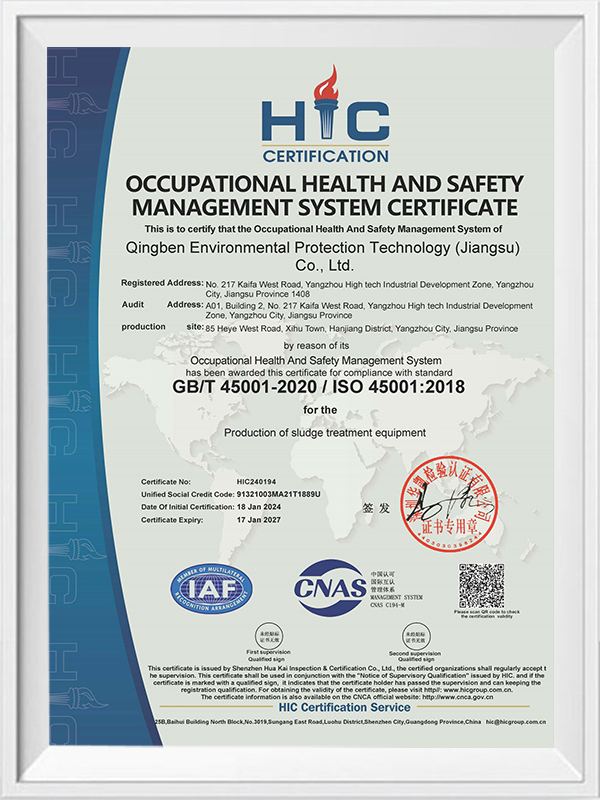
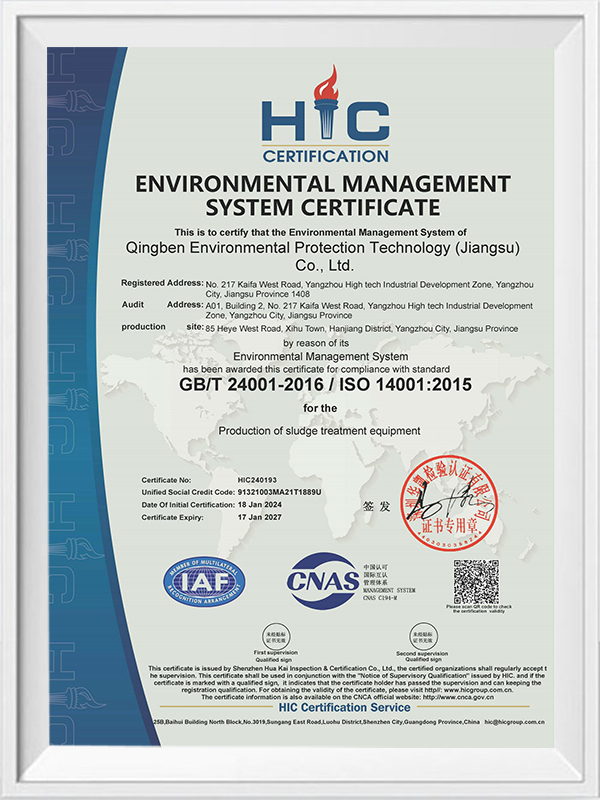
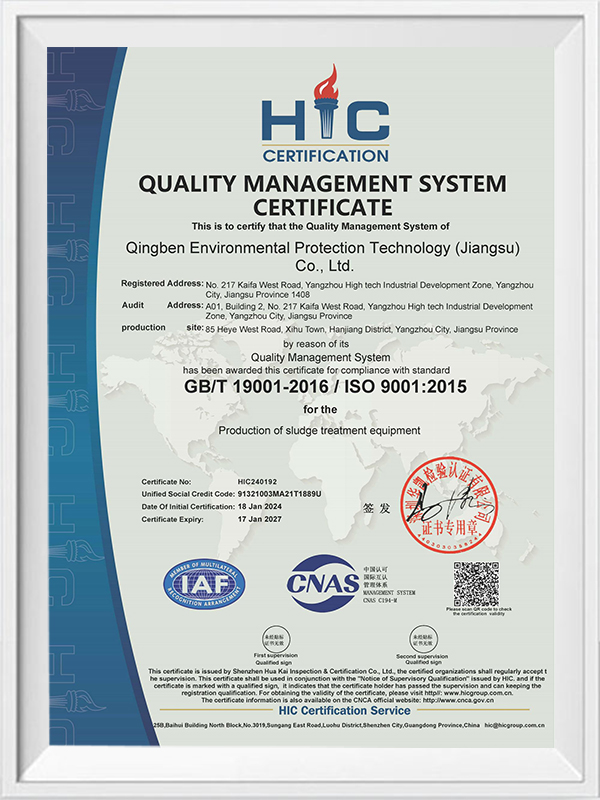
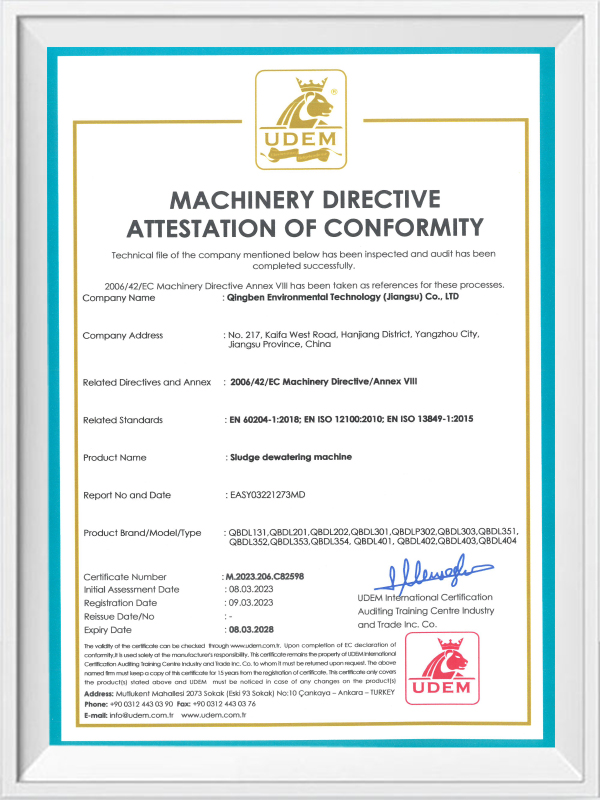
As a China-based factory, we control fabrication, assembly, and run-in testing before shipment. Our service scope covers technical consultation, equipment customization, system integration, installation and commissioning support, operator training, and after-sales maintenance. For international projects, we prepare the machine for export packing and provide the documentation needed for customs clearance and site acceptance.
Information We Use to Configure Your Solution
Every Screw Press Dewatering proposal starts with your actual operating conditions. Send us the following data, and we will return a model recommendation, layout sketch, and utility summary.
- Sludge source: municipal, industrial, livestock, food processing, or other
- Feed flow rate and sludge concentration (mg/L or % dry solids)
- Operating hours per day and required dry solids throughput
- Target cake dryness, if set by disposal or downstream drying
- Available space, site conditions, and preferred discharge height
- Electrical supply voltage and control requirements
- Polymer type and existing dosing system, if any
Frequently Asked Questions
What sludge concentrations can the screw press dewatering machine handle?
The standard range is 5000–50000 mg/L, which covers dilute secondary sludge as well as high-concentration digested or industrial sludge. The same machine can thicken and dewater continuously, so a separate pre-thickener is not always required.
Does the machine need a separate sludge concentration tank?
In many plants, no. The screw press accepts sludge directly from aeration tanks or secondary sedimentation tanks, eliminating the concentration tank and associated mixers, air compressors, and flushing pumps. A final recommendation depends on your sludge type and required throughput.
How is the machine integrated into an existing treatment line?
We supply the complete unit with automatic control cabinet, flocculation tank, dewatering body, and liquid collection tank. It can be connected to an existing polymer preparation system or paired with our integrated dosing device, screw conveyor, and sludge hopper.
What maintenance is required during normal operation?
The self-cleaning action of the fixed and moving rings reduces manual cleaning. Routine washing is recommended for 5–10 minutes per operating hour, and wearing parts such as screw shafts and movable rings typically last 3–5 years when operated 16 hours per day. Actual life varies with grit content and operating conditions.
What information does Qingben need for a quotation?
We need sludge source, feed flow, sludge concentration, operating hours, target cake dryness, available space, electrical supply, and any existing dosing or conveying equipment. With those parameters, our engineering team selects the model, motor configuration, and auxiliary equipment for your project.
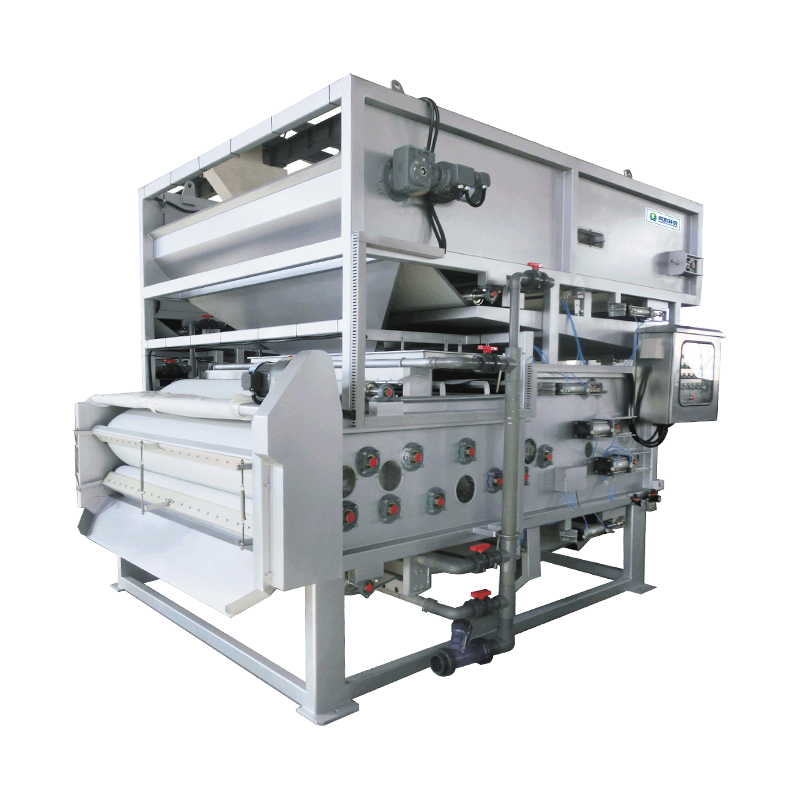
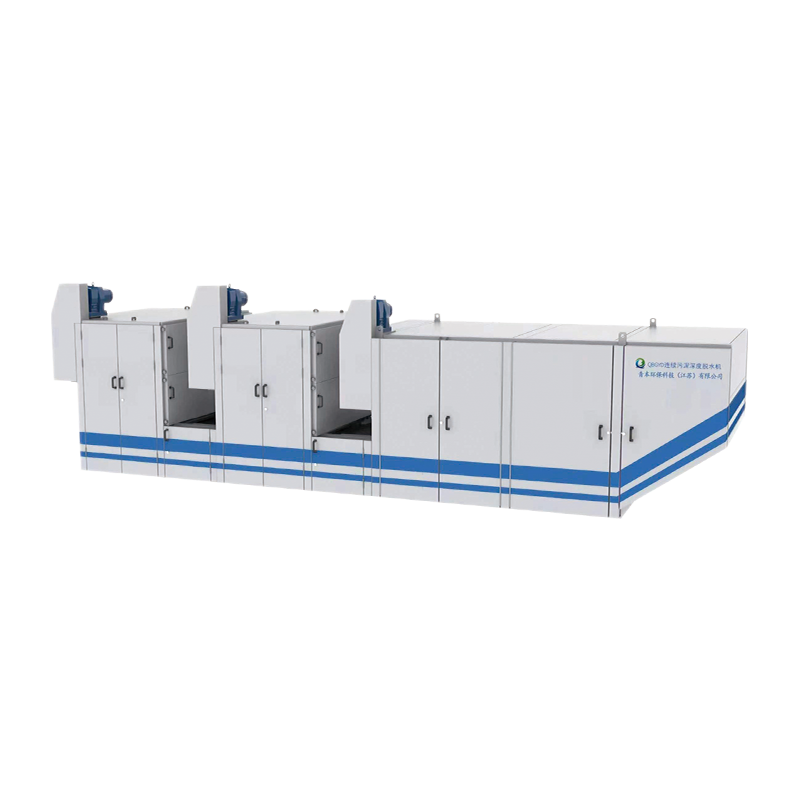
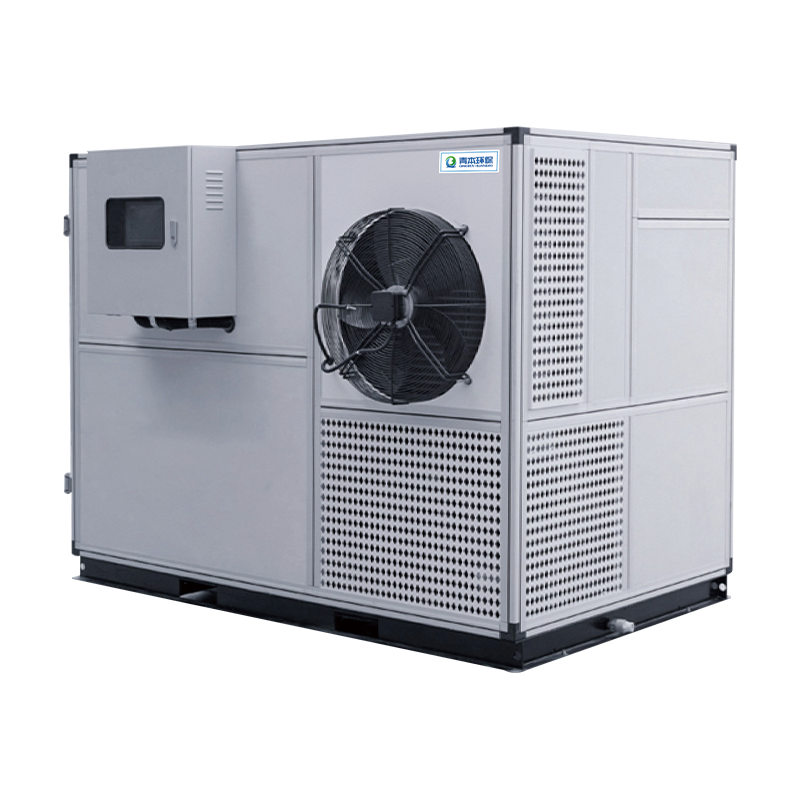
For a complete dewatering line, our Sludge Dewatering Machine Supplier range also includes belt filter presses, preconcentration conch machines, high-pressure belt systems, and mobile dewatering trucks. Contact our factory with your project data and we will prepare a configuration proposal.





 Product introduction