

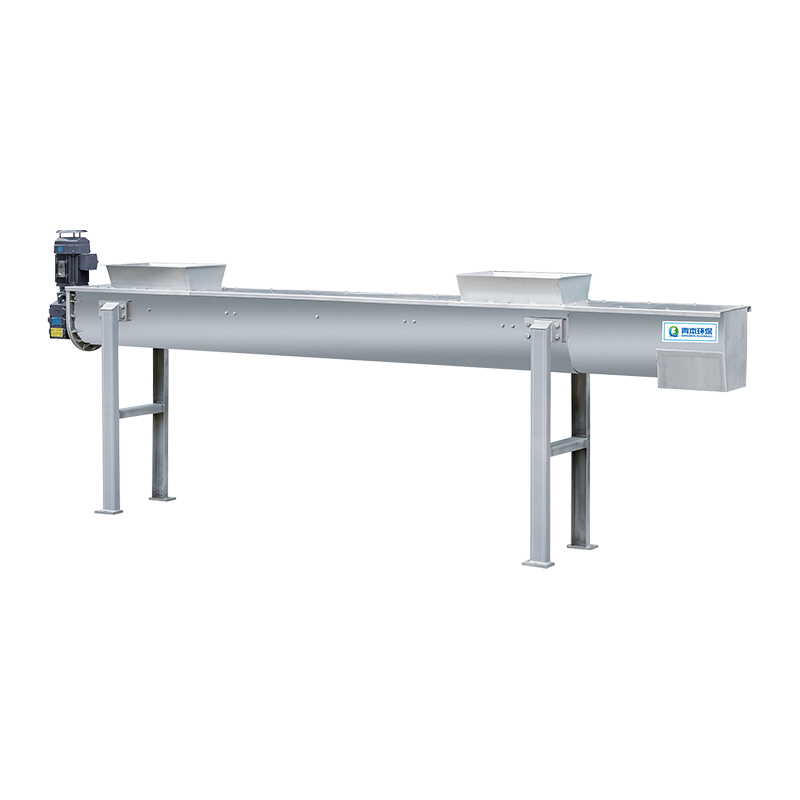
Take a plant producing 30 wet tonnes of 20% dry-solids sludge cake a day. Haul the same solids at 30% dry solids and the daily load falls to 20 tonnes; at 60%, to 10 tonnes. The trucks, the tipping contract and the manifests barely change, only the water does. Sludge disposal is usually budgeted as a logistics line item, yet most of the cost and most of the permit risk is fixed much earlier, at thickening, dewatering and drying. Get the cake drier and everything downstream becomes smaller, cheaper and easier to defend in an audit.
Content
- 1 What sludge disposal actually covers
- 2 Why water content decides the bill
- 3 From liquid sludge to a disposable cake
- 4 Matching equipment to your disposal route
- 5 Five procurement risks that appear after commissioning
- 6 Records that keep a disposal route open
- 7 Sludge disposal: frequently asked questions
- 7.1 Q1. What is sludge disposal?
- 7.2 Q2. How much does sludge disposal cost per tonne?
- 7.3 Q3. What dry solids content is needed for landfill?
- 7.4 Q4. What is the difference between sludge treatment and sludge disposal?
- 7.5 Q5. Can dried sludge be used as fuel or fertiliser?
- 7.6 Q6. How do you reduce sludge disposal volume?
What sludge disposal actually covers
Disposal is the final destination. Treatment is everything that happens before it: screening, thickening, dewatering, drying and stabilisation. Tenders often blur the two, and that is where specification mismatches start. A supplier quotes a dewatering unit rated for 20% dry solids while the receiving landfill, kiln or incinerator needs 30% or more before it will accept the load.
The five routes below cover most municipal and industrial sludge. Acceptance limits differ by region and by site permit, so treat the dry-solids figures as a starting point for a conversation with the receiving facility rather than as a design target.
| Disposal route | Typical feed | What drives the cost | Practical constraint |
|---|---|---|---|
| Landfill (monofill or co-disposal) | Dewatered cake, generally 20% dry solids or above | Tipping fee per wet tonne, haul distance, leachate treatment | Local bans on liquid or organic waste; stability and odour limits |
| Incineration | Roughly 25-35% dry solids, often blended | Auxiliary fuel, flue-gas treatment, ash handling | Permits, stack monitoring, a route for the ash |
| Land application (biosolids) | Dewatered or dried, stabilised cake | Pathogen and vector-attraction treatment, soil loading limits | Seasonal windows, metal and contaminant limits, public acceptance |
| Composting or co-composting | Around 20-30% dry solids, mixed with bulking agent | Bulking agent, odour control, screening | Product quality standards and a reliable outlet |
| Cement kiln co-processing | Dried cake, commonly 60% dry solids and above | Drying energy, calorific value, chlorine and sulphur limits | Distance to the kiln, strict acceptance criteria |
Why water content decides the bill
Fees are almost always charged per wet tonne, so the water you haul is the product you buy. One tonne of dry solids arrives at the gate as 5 tonnes of cake at 20% dry solids, 3.3 tonnes at 30%, 2.5 tonnes at 40% and 1.1 tonnes at 90%. Municipal wastewater treatment plants feel this most because their volumes are steady and large: moving from 20% to 30% dry solids removes about a third of the truck movements, and with them a third of the fuel, driver hours and gate fees.
The same arithmetic applies to polymer and power. Pushing dewatering further costs more in consumables per tonne of solids, but it shrinks the mass that has to leave the site, and the crossover point is usually reached well before the equipment's maximum capability. That crossover is the number worth calculating before a purchase order, not after the first monthly invoice.
From liquid sludge to a disposable cake
The line itself is not complicated, but each stage has a different job and a different failure mode. A weak stage upstream quietly overloads everything behind it.
- Screening and grit removal. Rags, grit and sand destroy dewatering scrolls and filter cloths, so a bar screen and a grit classifier upstream protect the investment that follows.
- Thickening. Gravity belt thickeners, rotary drum thickeners or a pre-concentration screw press lift dilute sludge from around 0.5-2% to 4-6% dry solids, cutting the hydraulic load on the dewatering stage.
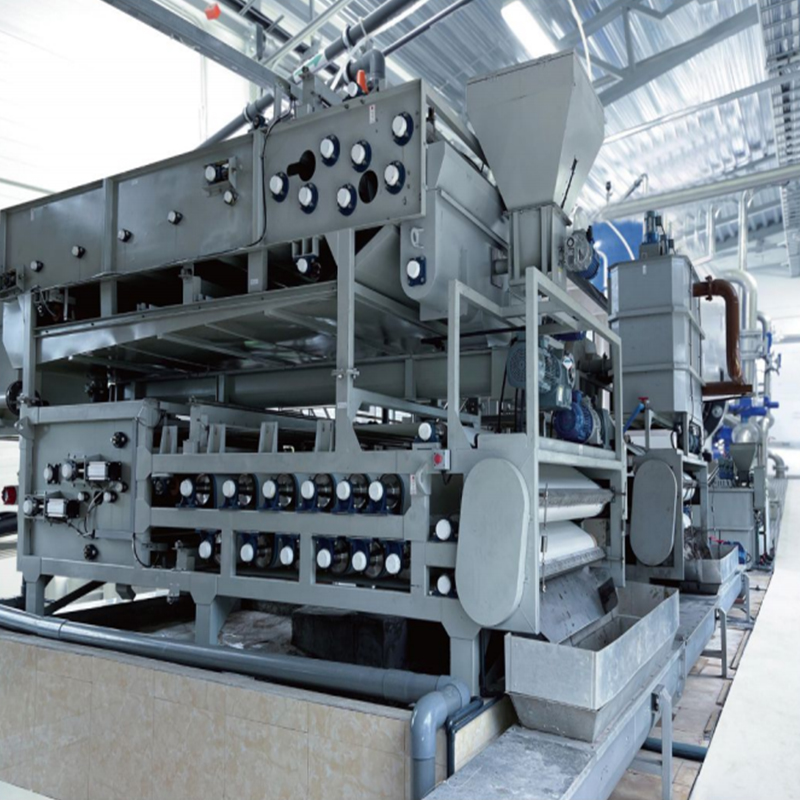
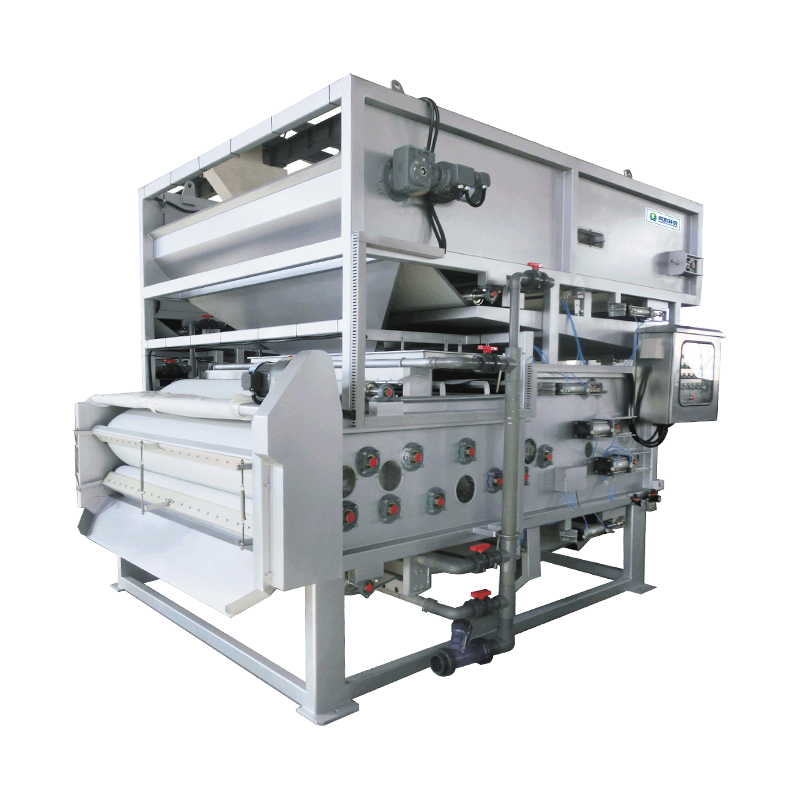
- Dewatering. Screw presses, belt filter presses and high-pressure belt units take thickened sludge to roughly 20-35% dry solids. The choice comes down to sludge type, target dryness and how much operator attention the plant can spare.
- Drying and stabilisation. Low-temperature belt or chamber dryers, or lime stabilisation, push dryness to 60-90% when co-processing, incineration or long-distance hauling demands it.
- Final disposal. The receiving facility's acceptance criteria close the loop. Nothing upstream should be specified until that limit is written down.
Notice the step change. Thickening barely moves the number, dewatering does most of the work, and drying is what turns a wet cake into a product that can travel economically.
Matching equipment to your disposal route
Landfill, co-processing and incineration
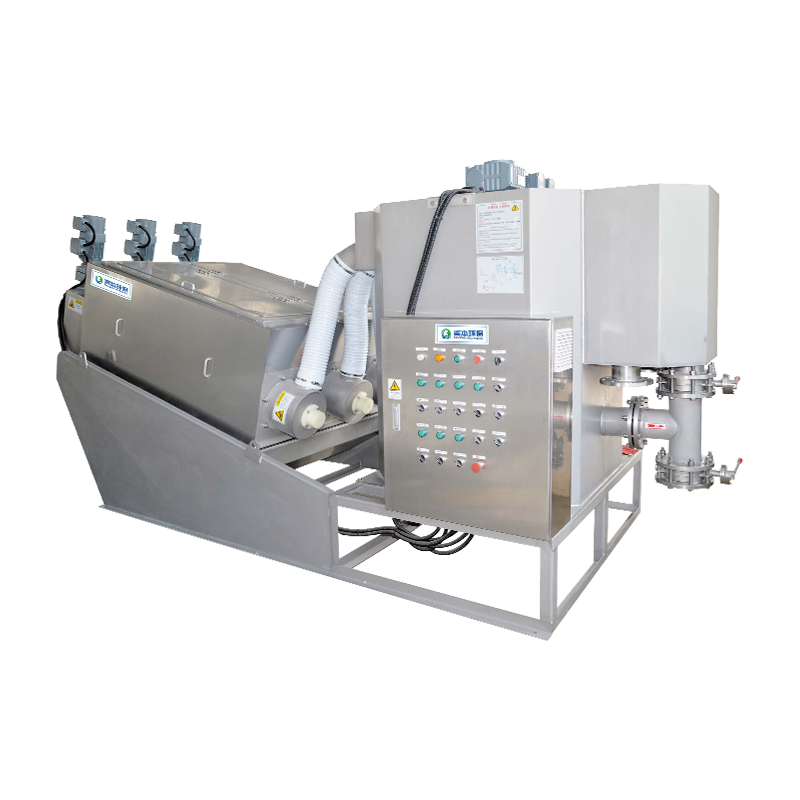
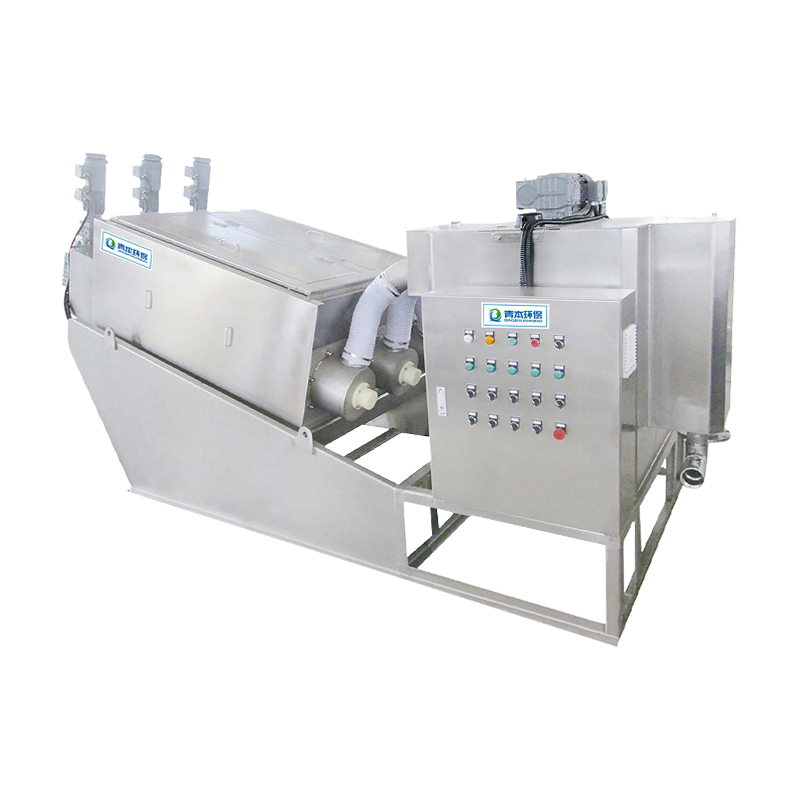
Where the cake leaves the site, dewatering is the workhorse. A screw press sludge dewatering machine suits plants that want low operator attention, low wash-water demand and predictable polymer use, while high-pressure belt units are chosen when the receiving facility insists on the driest cake achievable without thermal drying. Size on dry-solids throughput rather than hydraulic flow alone: a unit rated for 60 cubic metres per hour of 1% sludge is not the same unit as one handling 60 cubic metres per hour at 4%.
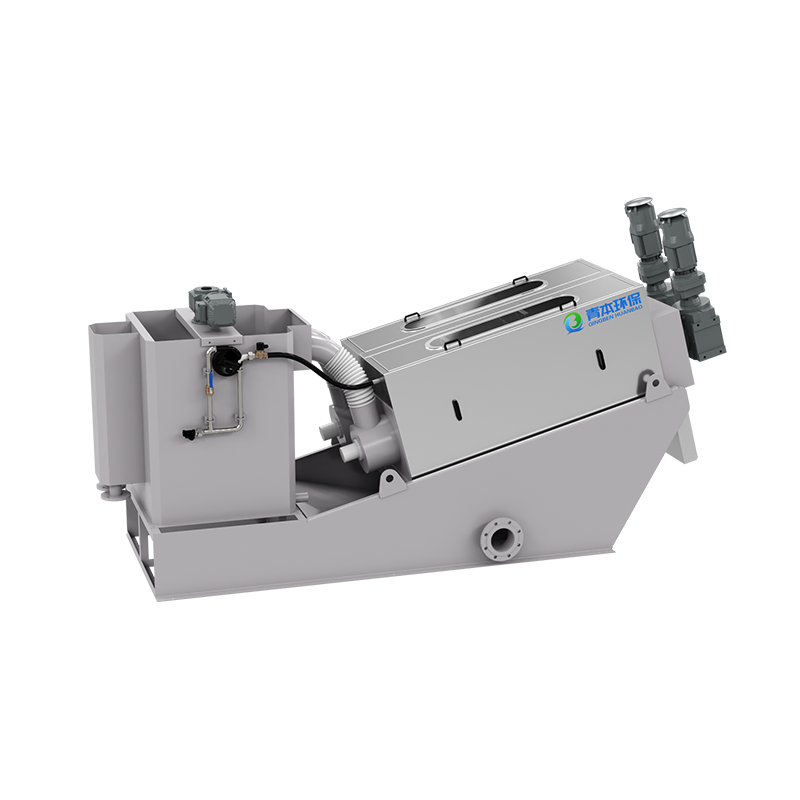 Screw Press Sludge Dewatering Machine for Continuous OperationIntegrated continuous thickening and dewatering unit with automatic flocculation, self-cleaning rings, and models sized by dry-solids capacity for municipal and industrial sludge.View Product →
Drying before long-distance hauling
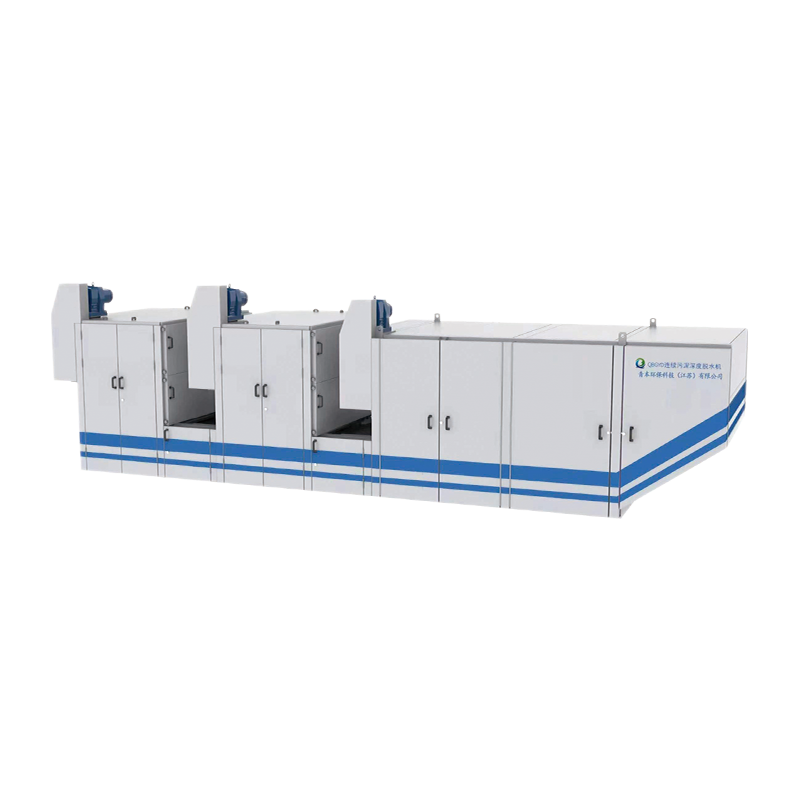
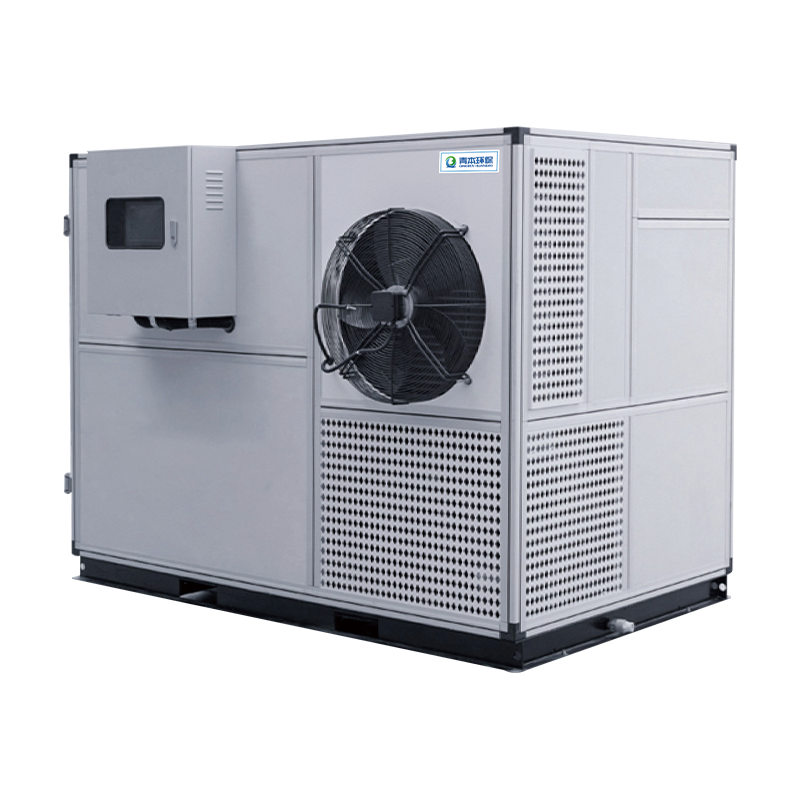
Thermal drying is usually justified by one of three conditions: a long haul, a kiln or incinerator that values the calorific content, or a zero-landfill policy. Low-temperature belt dryers run on waste heat at roughly 40-80 degrees Celsius and are gentler on the product than direct-fired drum dryers; the trade-off is footprint, residence time and the need for a stable heat source. A dryer sized without a heat balance is the most common reason drying projects miss their operating targets.
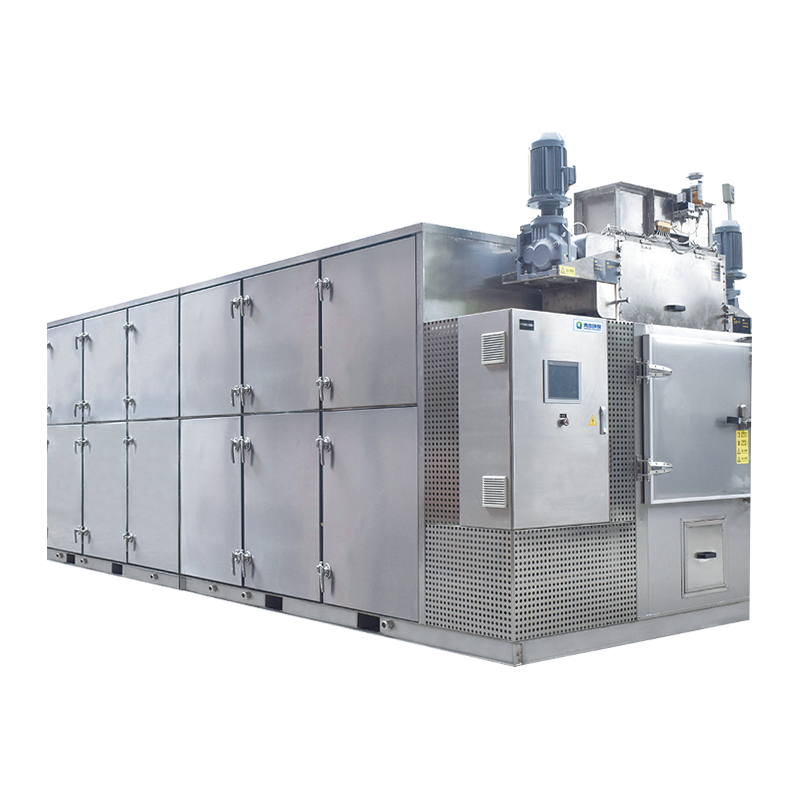 Low-Temperature Belt Sludge Dryer with Heat-Pump Energy RecoveryFully enclosed heat-pump belt dryer recovers latent heat to dry sludge at 48–56°C return and 65–80°C supply air, with modular water-removal capacities.View Product →
Land application and composting
Dewatered cake that meets pathogen and contaminant limits can go to land, but that outlet is seasonal and closely watched. Buffer storage matters as much as dryness here, because a campaign-based outlet needs somewhere for the cake to sit between windows. If you are weighing thermal drying against thermal destruction, our comparison of sludge drying versus sludge incineration sets out the energy and residue differences in plain terms.
Five procurement risks that appear after commissioning
- Sizing on wet flow. A line specified in cubic metres per hour without a dry-solids figure will underperform as soon as the sludge thickens or the load pattern changes.
- Assuming one sludge. Digested, thermally hydrolysed, oily and high-viscosity sludges behave differently in the same press; ask for a pilot or a reference on a comparable sludge before signing.
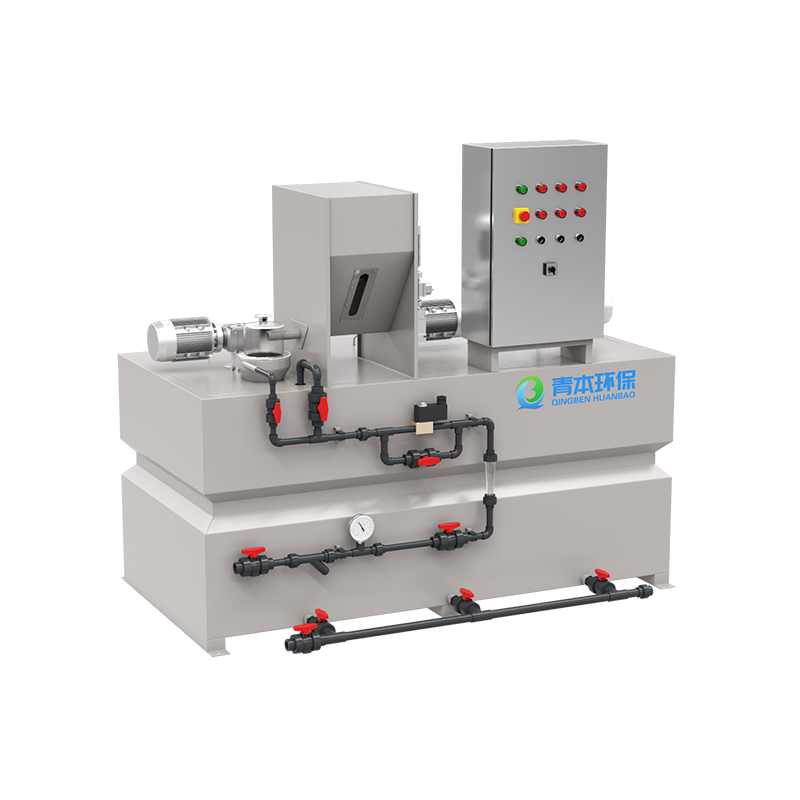
- Budgeting equipment but not chemistry. Polymer can dominate operating cost, so compare consumption per tonne of dry solids, not price per kilogram.
- No bypass or redundancy. A single dewatering unit with no standby capacity turns routine maintenance into an emergency hauling contract.
- Forgetting the temporary case. Seasonal dredging, tank cleaning and remote sites rarely justify a fixed line that idles for months.
That last point is where mobility earns its place. A mobile screw press sludge dewatering truck can be moved between lagoons, satellite plants or one-off cleanouts, and it usually pays for itself against the cost of hauling liquid sludge from scattered sites.
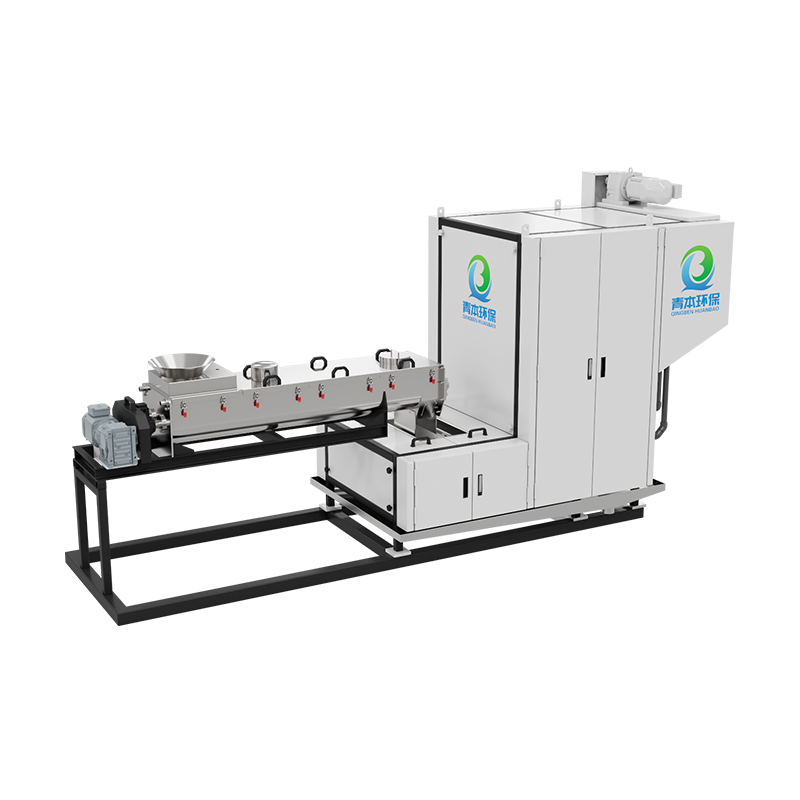
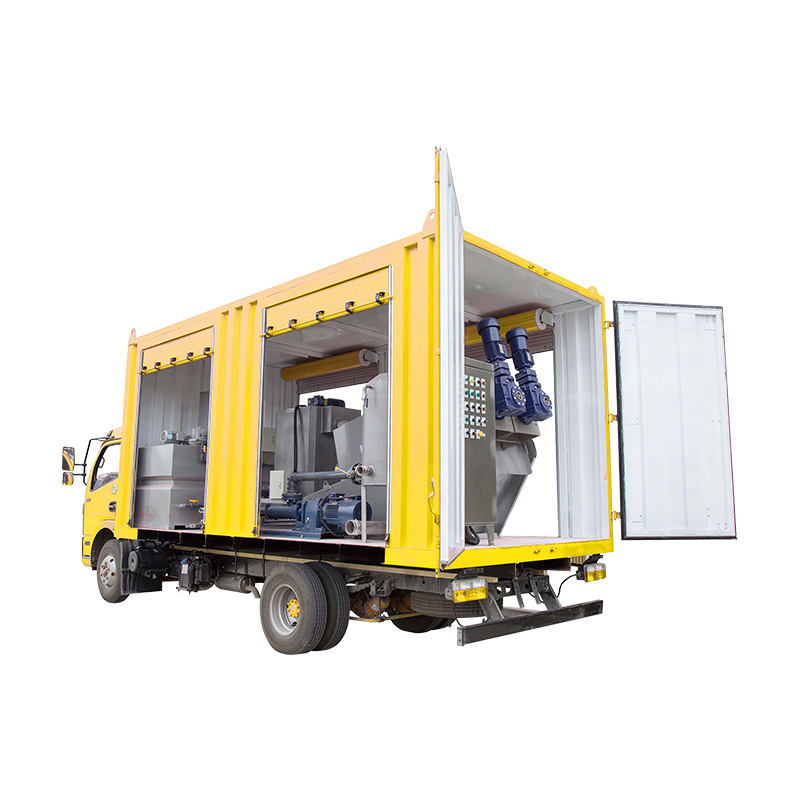 Mobile Screw Press Sludge Dewatering TruckIntegrated vehicle-mounted separation and dewatering system for septic tank and sludge tank cleanouts, with continuous operation, stainless-steel main parts, and optional high-pressure cleaning.View Product →
Records that keep a disposal route open
Every route above depends on evidence. Keep dry-solids records per batch rather than per month, retain laboratory results for the parameters your receiving facility actually tests, and store manifests with the transport documents so a chain of custody can be reconstructed years later. When a landfill or kiln tightens its acceptance criteria, plants that can show a consistent, documented product quality are the ones that keep their outlet, and they are also the ones that negotiate from a position of strength.
Sludge disposal: frequently asked questions
Q1. What is sludge disposal?
It is the final, irreversible step: landfill, incineration, land application, composting or co-processing in a kiln. Dewatering and drying are treatment steps that prepare sludge for one of those routes.
Q2. How much does sludge disposal cost per tonne?
Gate fees vary widely by region and are normally charged per wet tonne, so cost per tonne of dry solids depends on cake dryness. Always compare quotes on the same dry-solids basis.
Q3. What dry solids content is needed for landfill?
Many facilities accept dewatered cake from about 20% dry solids upward, and some refuse liquid sludge outright. Confirm the exact limit with the receiving site before specifying equipment.
Q4. What is the difference between sludge treatment and sludge disposal?
Treatment reduces volume, water content and biological activity through thickening, dewatering, drying or stabilisation. Disposal is the destination of the treated material.
Q5. Can dried sludge be used as fuel or fertiliser?
Dried sludge can be co-processed as fuel where calorific value and chlorine or sulphur limits allow, and stabilised biosolids can go to land where contaminant limits are met. Both depend on local rules.
Q6. How do you reduce sludge disposal volume?
Attack water, not solids: pre-concentrate before dewatering, dewater to the driest practical cake, and dry only when the downstream route genuinely needs it. That sequence cuts tonnage with the least energy.