

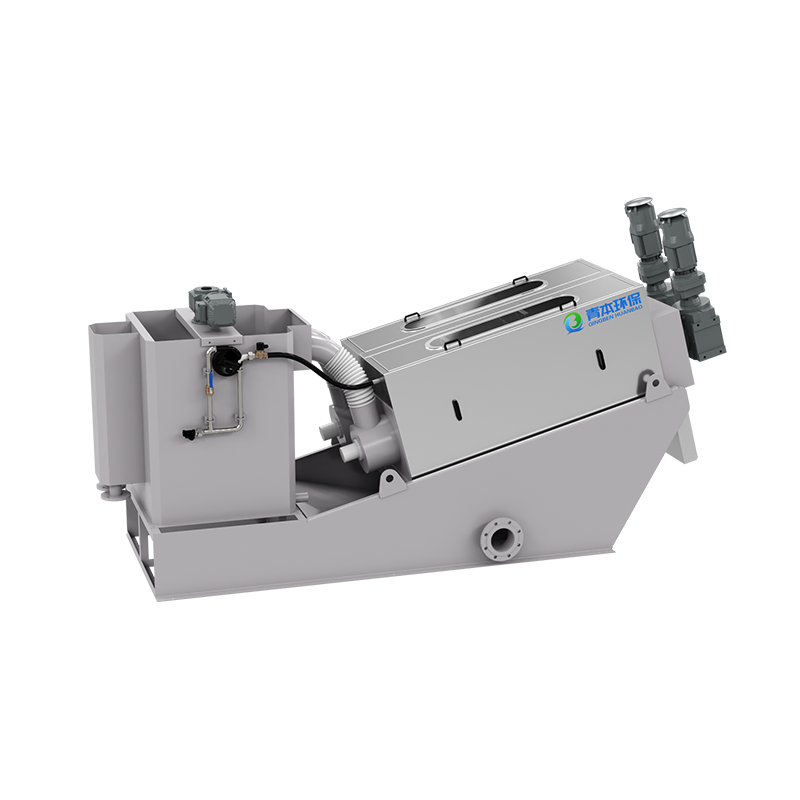
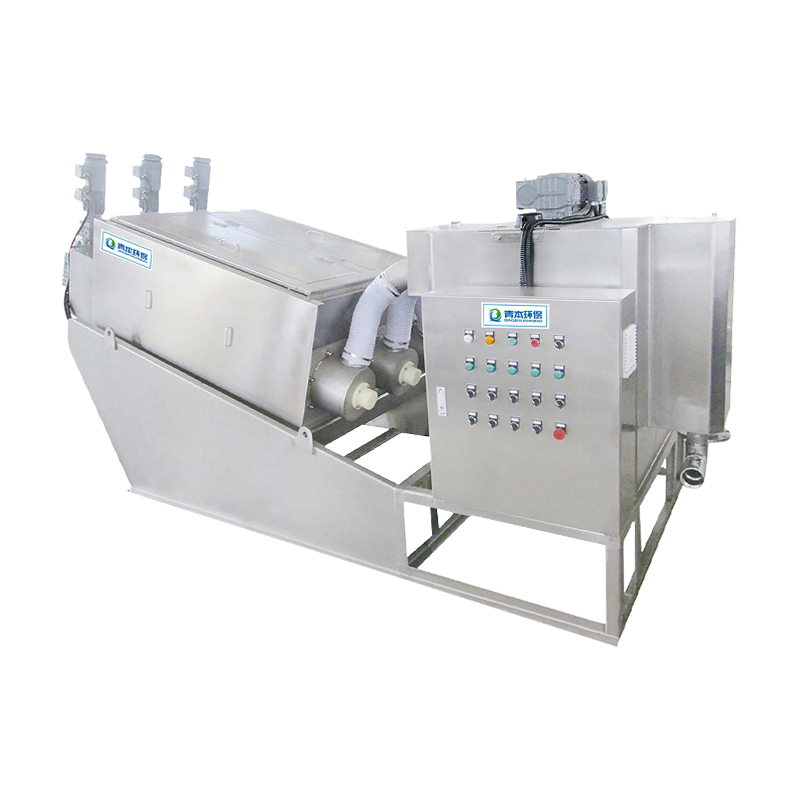
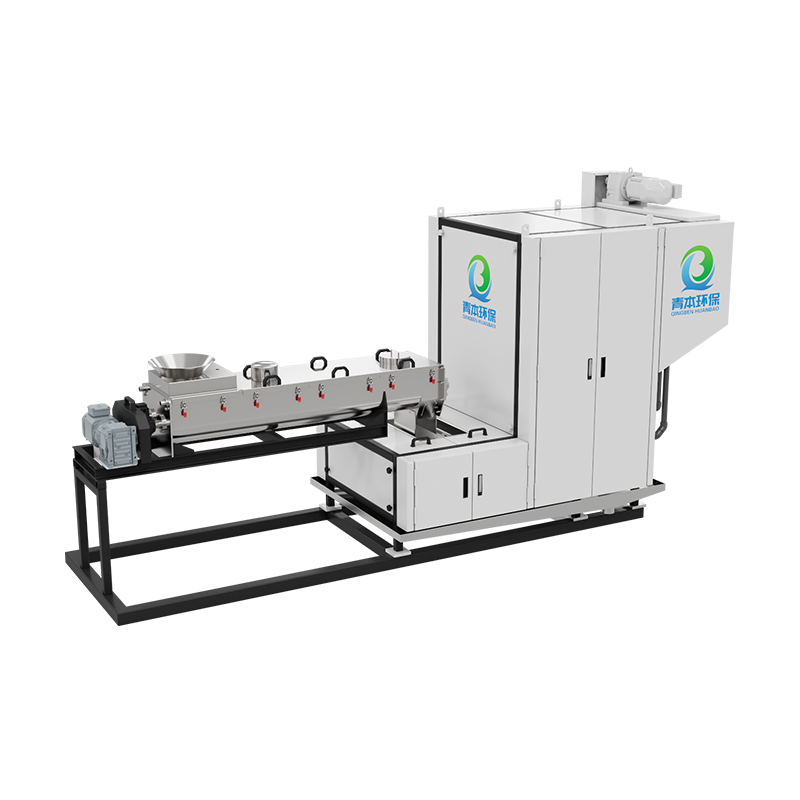
Take one tonne of dewatered sludge cake at 80% moisture. About 200 kg of it is dry solids, and the other 800 kg is water. Sludge drying is the thermal step that removes most of that remaining water, lifting dry solids from the 20–30% a mechanical dewatering machine can reach up to 60–90% and turning a sticky, odorous mass into a stackable granule.
So the short answer comes first: sludge drying is a heat-driven process that evaporates water from mechanically dewatered sludge. It is not dewatering, and it is not incineration. Dewatering squeezes free water out with pressure; drying uses heat to drive off the water that pressure cannot touch.
Why plants care is simple economics. Landfill, cement kiln co-processing, haulage and co-incineration are almost always priced by the wet tonne, and a kiln or landfill operator usually sets a minimum dry solids requirement. Reduce a 1,000 kg cake to roughly 280–330 kg and you have cut transport and disposal volume by about 70% before any thermal treatment.
Content
- 1 What Is Sludge Drying? The Definition That Matters
- 2 How a Sludge Drying Line Actually Runs
- 3 Low-Temperature or High-Temperature: The Choice That Sets Your Power Bill
- 4 What Drying Changes: Mass, Volume and Disposal Options
- 5 Specifying a Dryer: What to Put in the Inquiry
- 6 Operating Costs and Mistakes That Show Up Later
- 7 Frequently Asked Questions
- 7.1 Q1. What is sludge drying in wastewater treatment?
- 7.2 Q2. What is the difference between sludge dewatering and sludge drying?
- 7.3 Q3. What moisture content can sludge drying achieve?
- 7.4 Q4. How much energy does sludge drying consume per ton?
- 7.5 Q5. Can dried sludge be reused or sold?
- 7.6 Q6. What should I check before buying a sludge dryer?
What Is Sludge Drying? The Definition That Matters
Water in sludge sits in four states: free water between particles, interstitial water trapped in flocs, surface-adhesion water bound to particle surfaces, and intracellular or bound water inside the cells themselves. Mechanical dewatering — screw press, belt filter press, centrifuge — removes mostly the free water. The remaining three states stay locked in the cake, which is why a dewatered cake still looks wet and weighs several times its dry solids content.
Thermal drying attacks those remaining states with heat and airflow. Water evaporates, the solids fraction rises, and the material changes from a paste that smears on a conveyor into a granular product that can be stored, bagged, trucked or fed into a kiln.
The chart above is a general industry picture, not a guarantee: results shift with sludge type, polymer dosing and machine design. But the gap between the blue and green bars is the whole point of adding a drying stage.
How a Sludge Drying Line Actually Runs
In practice a drying line is a short sequence of linked steps, and each one has its own failure mode:
- Feeding and forming. Dewatered cake is transferred by screw conveyor or hopper and shaped into a continuous strip or thin layer, so the surface area exposed to hot air is as large as possible.
- Evaporation. The material passes through a heated chamber — multi-layer belts in a belt dryer, trays in a chamber dryer — where 60–90 °C air (low-temperature) or much hotter gas (high-temperature) picks up moisture.
- Discharge and cooling. Dried granules leave at a controlled moisture level; overdrying wastes energy and creates dust, underdrying creates re-wetting and odour problems downstream.
- Exhaust handling. Dust removal, odour control and condensate collection are part of the system, not accessories. Condensate usually returns to the head of the wastewater plant.
- Conveying and storage. Screw conveyors and hoppers move the finished product to a bin or truck loading point.
Heat source selection usually decides the running cost. Heat pump dryers run on electricity and recover latent heat internally; waste-heat dryers use 70–90 °C hot water from biogas engine jackets, air compressors or plant cooling loops; steam and gas-fired units sit at the high-temperature end. A plant that already dumps low-grade hot water to a cooling tower has a very different payback calculation from one buying electricity at industrial tariff.
Low-Temperature or High-Temperature: The Choice That Sets Your Power Bill
Evaporating water is inherently energy-hungry. Standard design references put the latent heat of vaporisation at roughly 2,260 kJ per kilogram of water — which is why water removal, not solids handling, dominates the energy bill. The two mainstream routes handle that cost very differently.
| Aspect | Low-temperature drying | High-temperature drying |
|---|---|---|
| Air / heat medium temperature | About 60–90 °C | Roughly 120–450 °C |
| Typical outlet dry solids | 60–85% | Up to about 90% |
| Common heat source | Heat pump, waste hot water, low-pressure steam | Natural gas, high-pressure steam, flue gas |
| Exhaust gas volume | Small, easier to condense and treat | Large, needs scrubber or thermal treatment |
| Dust and odour risk | Low dust, odour easier to contain | Higher dust load, higher odour potential |
| Fire and explosion safeguards | Moderate requirements | Strict temperature and inerting controls |
| Footprint | Larger, long belt runs | Compact, high throughput per square metre |
| Best fit | Municipal plants with waste heat, odour-sensitive sites | Large centralised plants needing maximum reduction |
A working rule: if the site has recoverable waste heat and neighbours close by, low-temperature belt or chamber drying usually wins on total cost and permits. If land is tight and the goal is the smallest possible cake leaving the gate, high-temperature drying earns its complexity. Mixing the two — low-temperature for bulk reduction, high-temperature only for the final few percent — is rarely worth the extra equipment.
What Drying Changes: Mass, Volume and Disposal Options
The mass balance is the most persuasive number in any dryer proposal. Dry solids stay constant; only water leaves. Drying a tonne of 80% moisture cake down to 30% moisture leaves roughly 286 kg, of which 200 kg is still solids.
That reduction opens disposal routes that a wet cake cannot use: co-processing in cement kilns, co-incineration in municipal incinerators, mono-landfill where dry solids limits apply, and in some cases compost blending or soil conditioning subject to local contaminant rules. Dry product is also easier to store without leaching and cheaper per tonne to haul, which matters a lot for remote plants and for municipal wastewater treatment plants that truck cake to a distant facility.
It is worth being clear about where drying stops. Drying is not combustion: it removes water, not organic matter, and the product still contains the full calorific value and the full contaminant load of the original sludge. If the question is destruction rather than volume reduction, the comparison between sludge drying and sludge incineration is the one to read next.
Specifying a Dryer: What to Put in the Inquiry
Most disappointing dryer projects trace back to a vague specification. Before requesting quotations, confirm four numbers: wet cake throughput in tonnes per hour, inlet moisture content and its normal variation, target outlet dry solids, and the heat source actually available on site. Add footprint limits, exhaust and odour requirements, and the level of automation the operating team can realistically maintain.
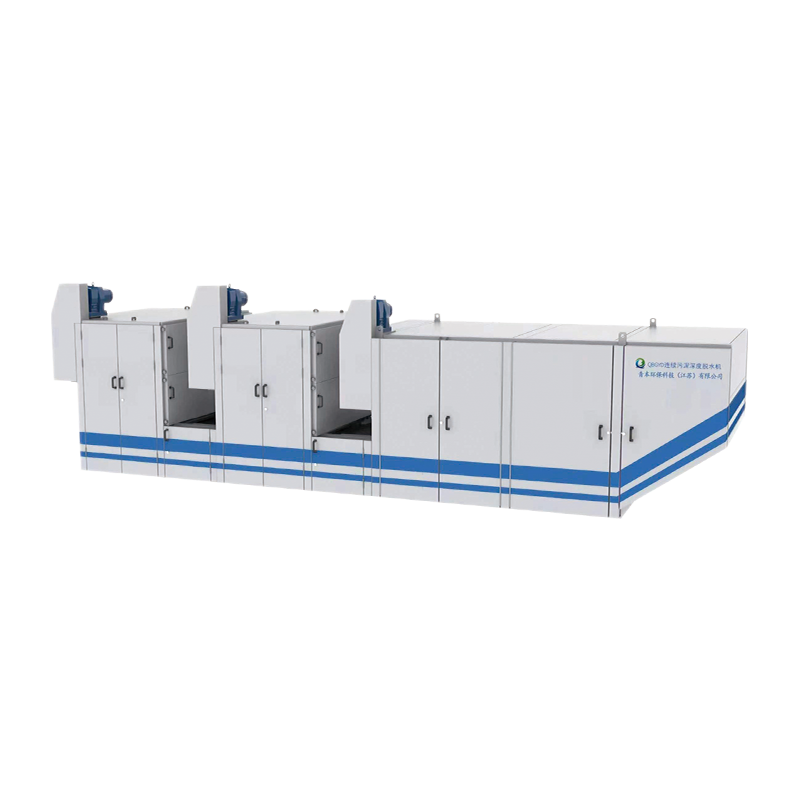
Low-temperature belt drying machines
The workhorse choice for municipal and food-industry sludge where waste heat exists and neighbours are close. Cake travels on multiple slow-moving belts through a temperature-controlled chamber; exhaust volume is small, dust is limited, and the outlet product is a stable granule with roughly 60–85% dry solids.
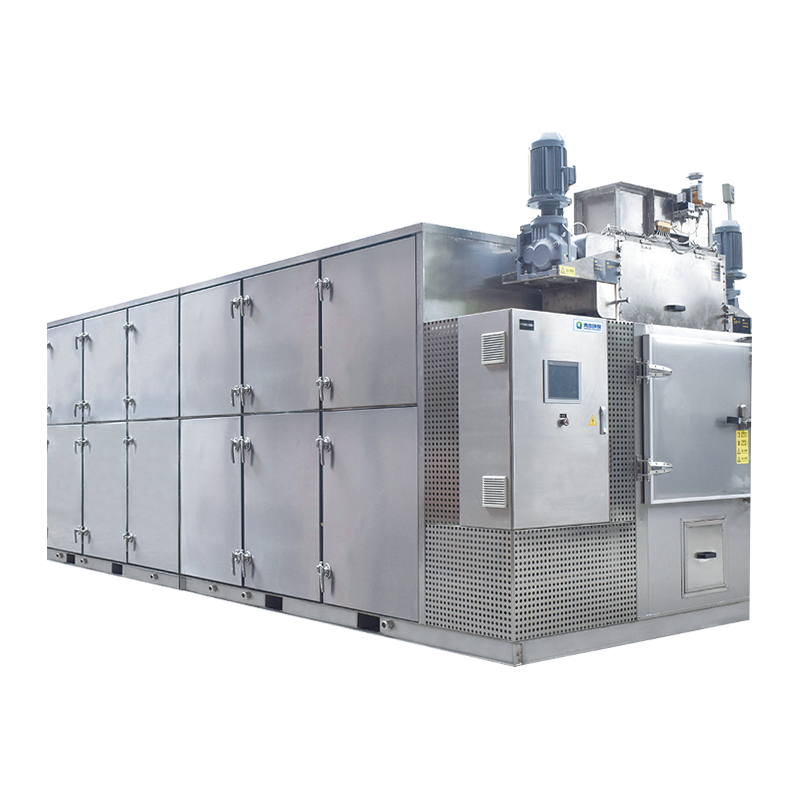 Low-Temperature Belt Sludge Drying Machine SeriesBelt-type low-temperature heat-pump dryer for municipal or food-industry sludge, offering enclosed dehumidification and standard water removal of 750–32,400 kg/24h.View Product →
Cryogenic chamber drying machines
Batch-style chamber units suit smaller or intermittent sludge volumes, and vacuum-freezing based variants alter the material structure so water leaves more readily at low temperature. They are typically the practical answer for plants with limited space and unpredictable daily cake output.
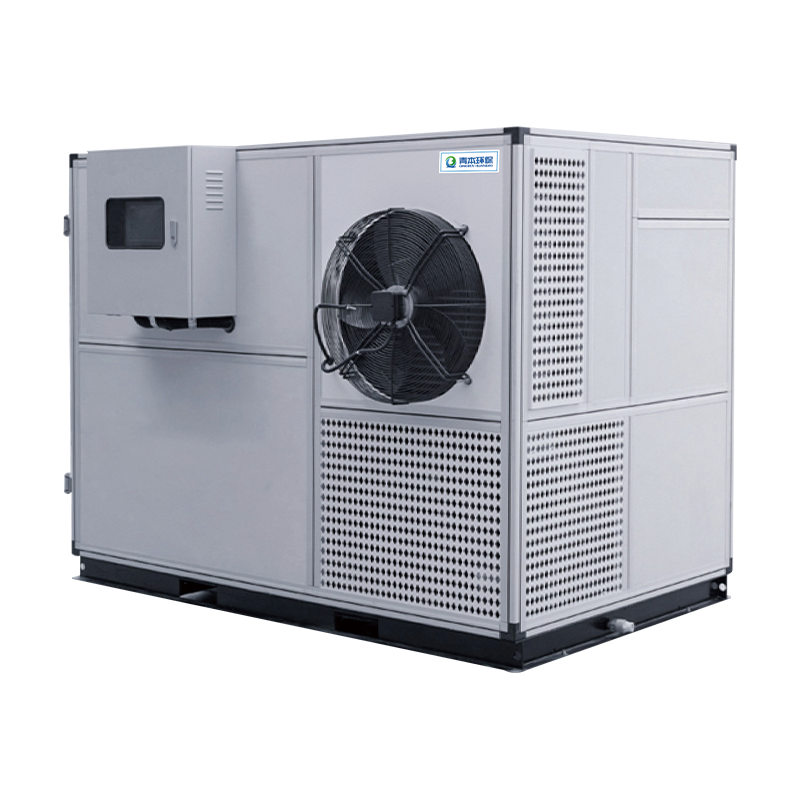 Cryogenic Chamber Sludge Drying Machine SeriesBatch chamber dryer for smaller or intermittent sludge volumes, with four models and standard water discharge of 200–900 kg/24h at low drying temperatures.View Product →
Waste-heat drying machines
Where a plant already produces 70–90 °C hot water from biogas engines, compressors or cooling loops, a waste-heat dryer converts an existing disposal problem into free evaporation capacity. Running cost can drop sharply compared with electric heating, and payback typically depends on how many hours per year that heat is genuinely available.
Low-Temperature Waste-Heat Sludge Drying Machine SeriesModular waste-heat sludge dryer recovering low-temperature industrial heat for deep dewatering, with standard water removal of 10,000–50,000 kg/24h and PLC control.View Product →
Four checks worth writing into the technical agreement:
- Size on dry solids per hour, not wet tonnage — inlet moisture varies seasonally and a wet-tonne rating hides the shortfall.
- State the acceptable outlet moisture range, with a tolerance, and how it will be measured.
- Require dust and odour control to be included in the scope, with the exhaust treatment principle named.
- Confirm condensate quantity and quality, and where it will be returned in your existing process.
Operating Costs and Mistakes That Show Up Later
Energy is normally the largest single operating cost of a drying line, followed by maintenance of belts, seals and heat exchangers. Electrical consumption per tonne of evaporated water is the number to benchmark across quotations, because it lets you compare machines on the same basis instead of on purchase price alone.
The recurring mistakes are consistent. Plants install a dryer sized on a perfect cake and then discover the dewatering stage delivers 82% instead of 78% moisture on rainy weeks. They accept a dryer without a surge buffer, so a brief dewatering stoppage trips the whole line. They treat odour control as a future upgrade and then face complaints within the first month. And they overlook that dried sludge is dusty and slightly self-heating, so storage bins need proper ventilation and discharge design. Addressing these at the specification stage costs far less than retrofitting them into a running building.
Frequently Asked Questions
Q1. What is sludge drying in wastewater treatment?
It is the thermal stage after dewatering that evaporates remaining water from sludge cake, raising dry solids from around 20–30% to 60–90% and reducing mass by roughly 70%.
Q2. What is the difference between sludge dewatering and sludge drying?
Dewatering removes free water mechanically with pressure; drying removes interstitial, surface and bound water with heat. You need dewatering first — a dryer cannot economically handle liquid sludge.
Q3. What moisture content can sludge drying achieve?
Low-temperature belt or chamber dryers usually reach 60–85% dry solids, while high-temperature dryers can exceed 90%. The practical target is set by your disposal route, not by the machine's maximum.
Q4. How much energy does sludge drying consume per ton?
It depends mainly on how much water must be evaporated and where the heat comes from. Because latent heat is about 2,260 kJ per kg of water, waste-heat and heat-pump systems usually cost far less to run than gas or electric heating.
Q5. Can dried sludge be reused or sold?
Yes, subject to local rules and contaminant limits. Common outlets are cement kiln co-processing, co-incineration as fuel, landfill cover, and in some regions agricultural or landscaping use after stabilisation.
Q6. What should I check before buying a sludge dryer?
Verify the dry-solids throughput rating, inlet moisture variation, available waste heat, exhaust and odour limits, footprint, and whether dust control and condensate return are included in the scope of supply.