

Product Introduction
Sludge volume reduction means removing water in stages so that less sludge has to be stored, hauled and disposed of. Because most of sludge is water, solids content decides volume: for the same dry solids, sludge at 5% solids is about one fifth of the volume at 1%, and at 30% solids about one thirtieth. Disposal and transport cost are usually quoted per wet tonne, so each stage matters.
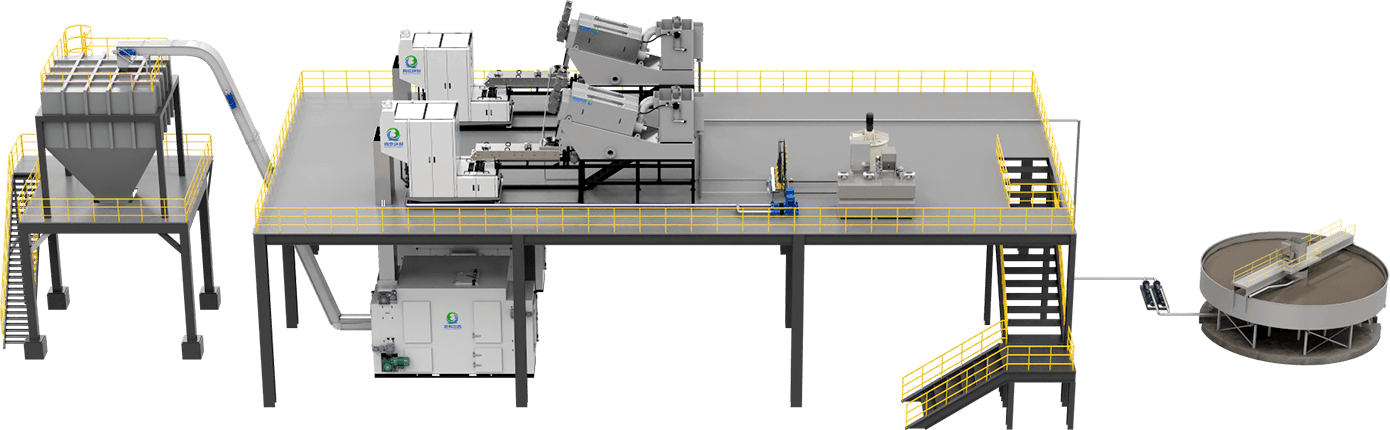
Qingben Environmental Technology (Jiangsu) Co., Ltd. is a sludge treatment equipment manufacturer and supplier in Yangzhou, China. Our volume reduction solutions follow a four-stage train: thickening, mechanical dewatering, low-temperature drying, and reuse or disposal. Each stage uses a different machine, and the right combination depends on how the sludge will finally leave your site.
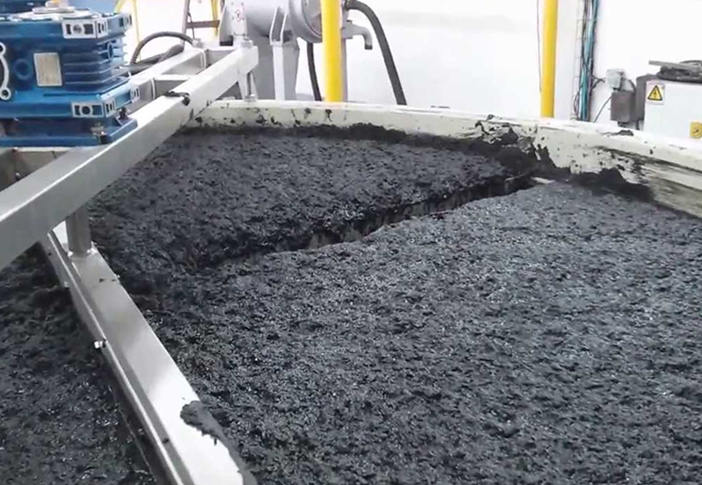
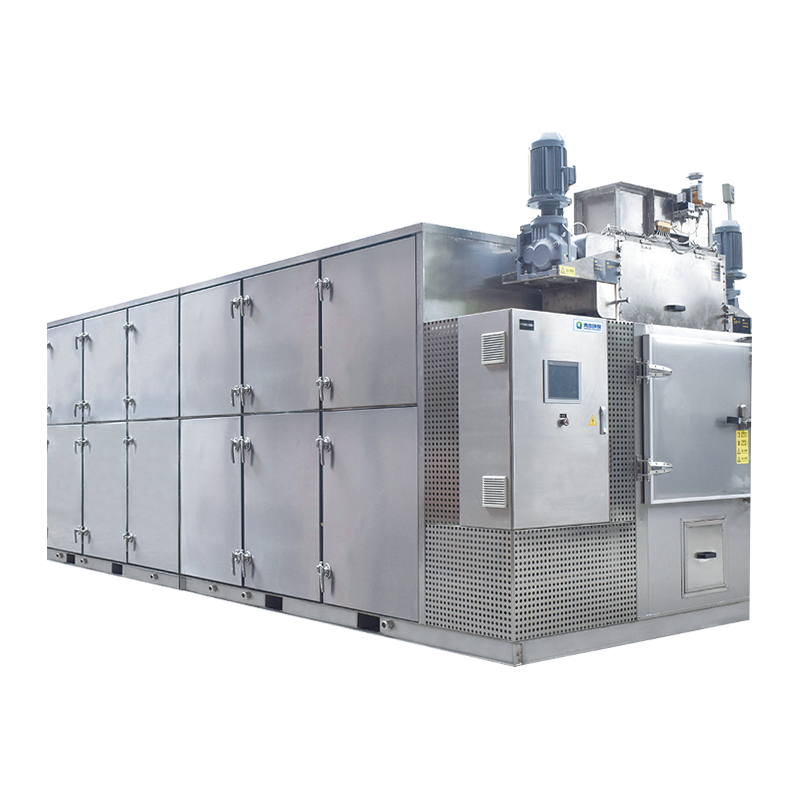
Typical working ranges are about 1% to 5% solids after thickening, 20% to 30% solids after dewatering, and 70% to 90% solids after drying. The published low-temperature dryer specification takes sludge at around 83% moisture to 10% to 30% moisture, with volume reduction above 90% and sterilization above 90%.
Buyers include municipal wastewater plants, industrial wastewater operators, EPC contractors and distributors. Equipment capacity, final dryness and utility interfaces are matched to the project. MOQ, lead time, OEM/ODM and sample policy: please contact us for details.
Solution Type
Staged volume reduction: thickening, dewatering, drying.
Typical Solids After Thickening
About 1% to 5% DS, depending on unit and sludge.
Typical Solids After Dewatering
About 20% to 30% DS.
Dried Product
10% to 30% moisture from dewatered sludge at about 83% moisture.
Volume Reduction (Drying)
Above 90% as published for the low-temperature dryers.
Sterilization (Drying)
Above 90% as published.
Core Equipment
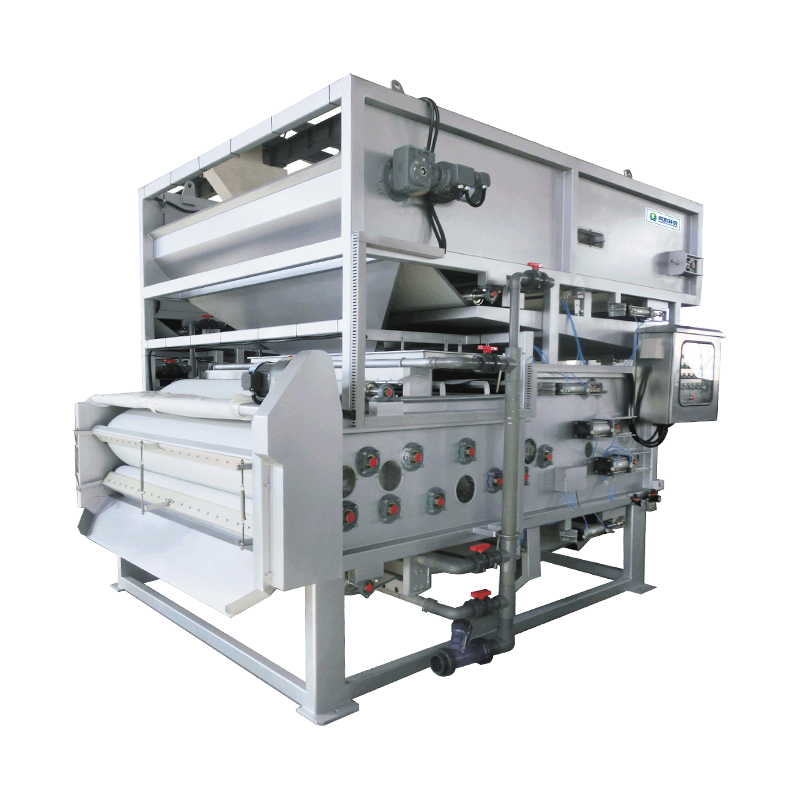
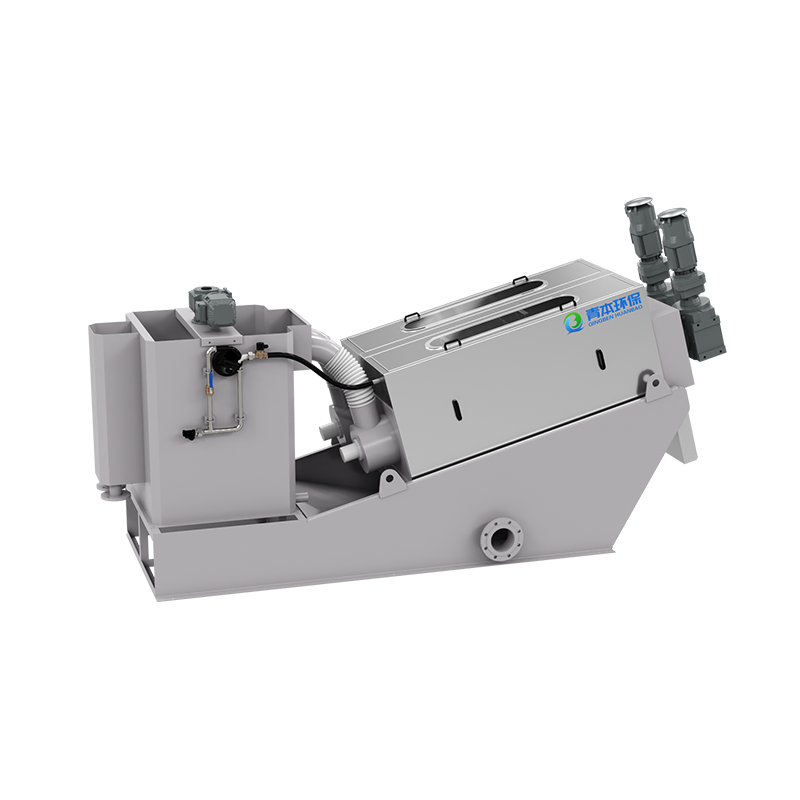
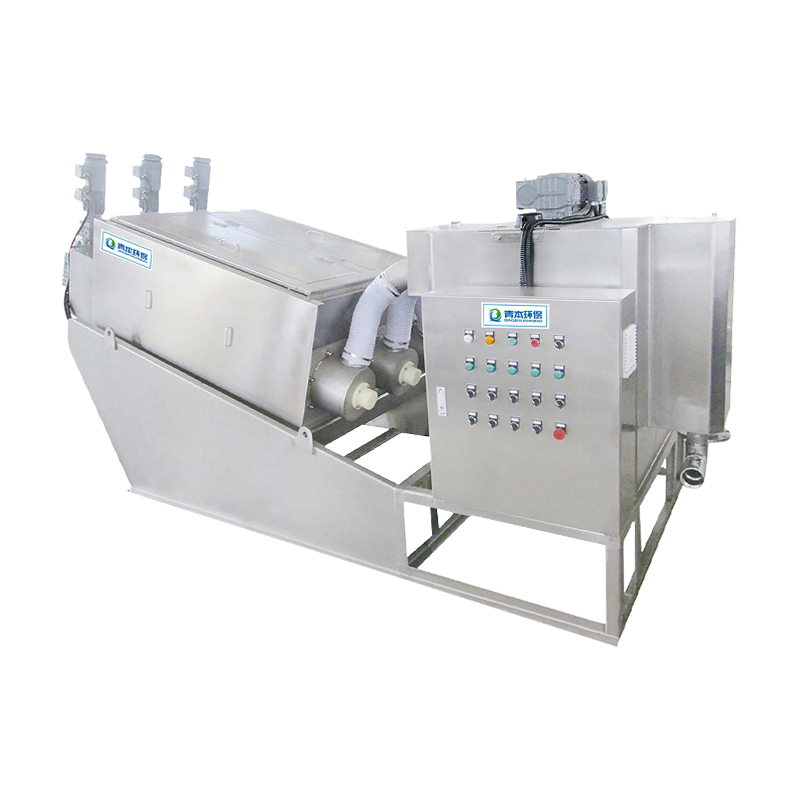
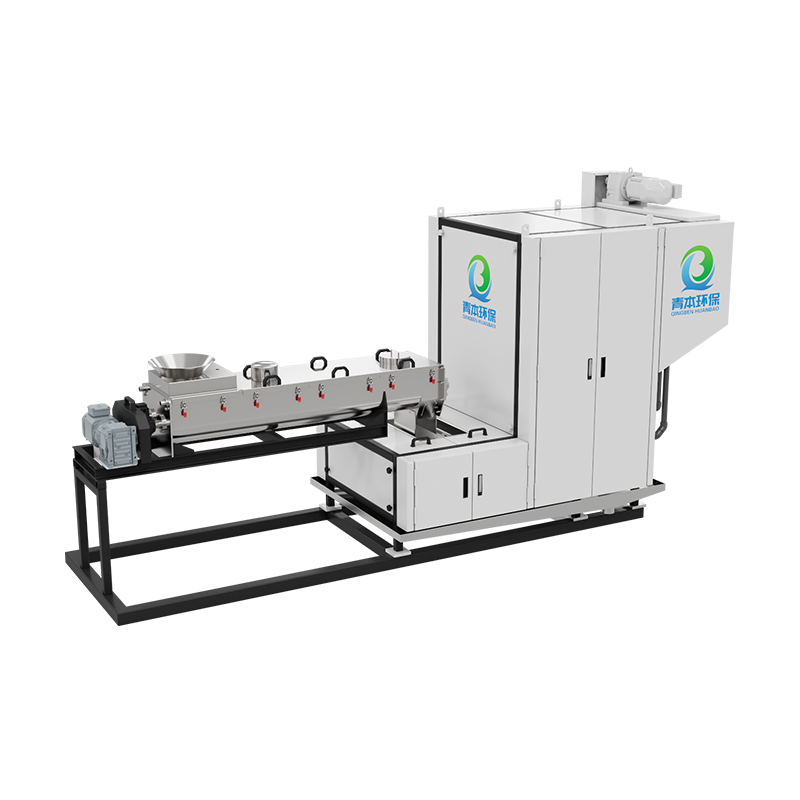
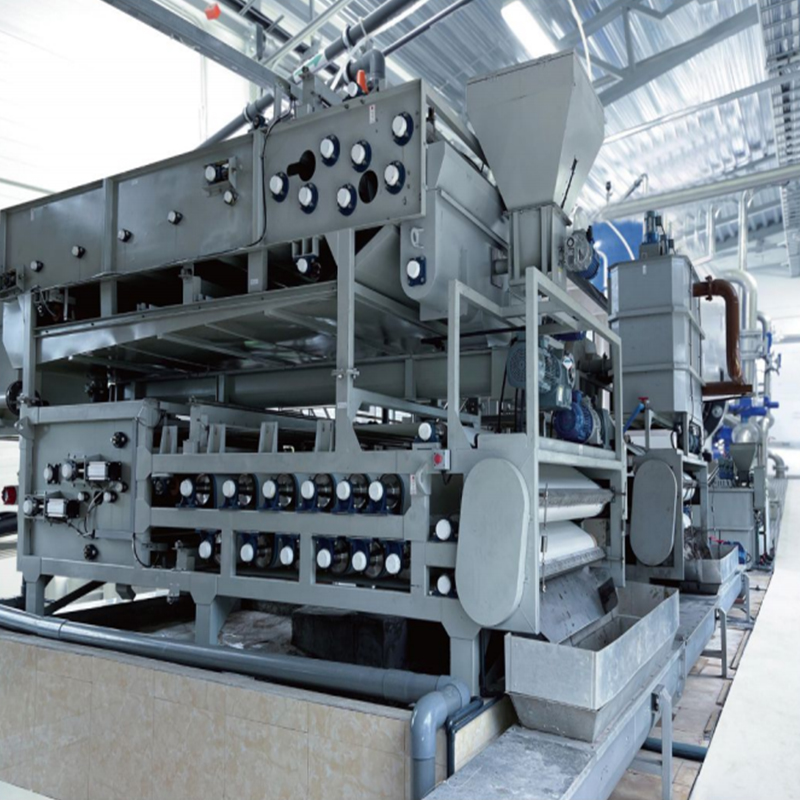
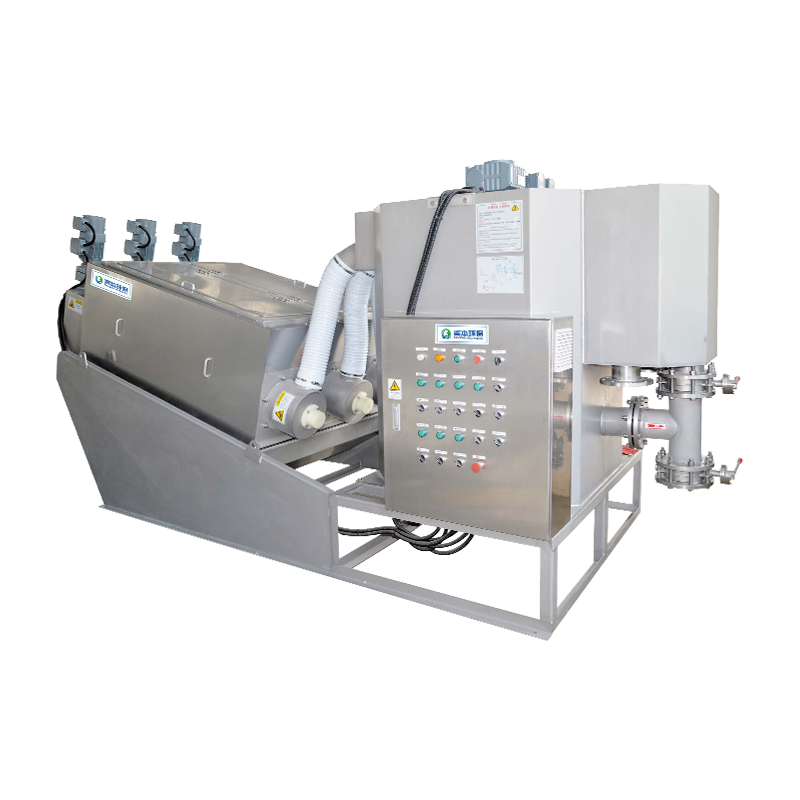
Pre-concentration machines, screw presses, belt presses, low-temperature dryers.
Supporting Equipment
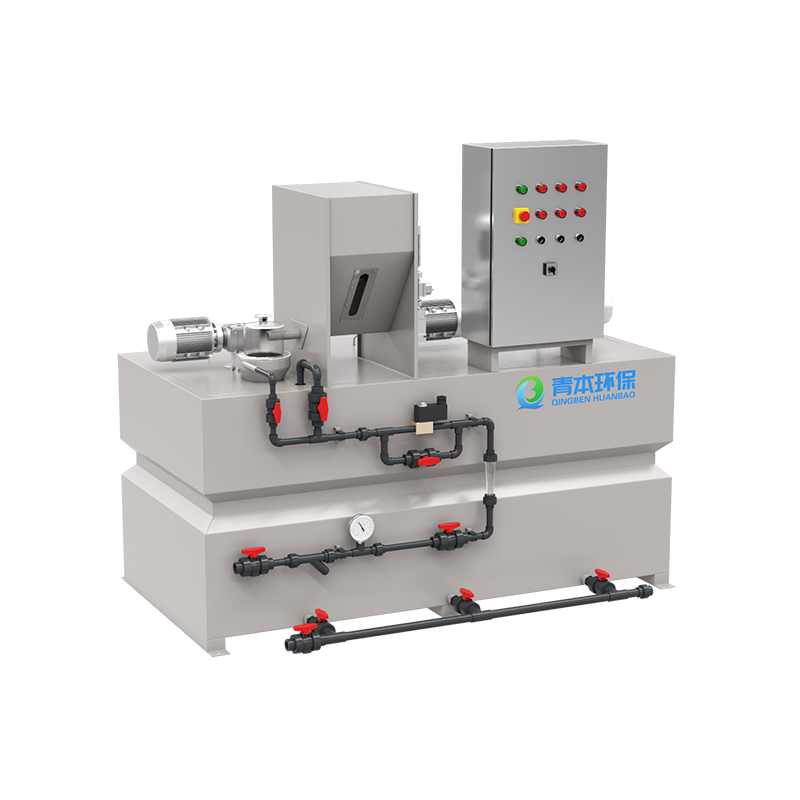
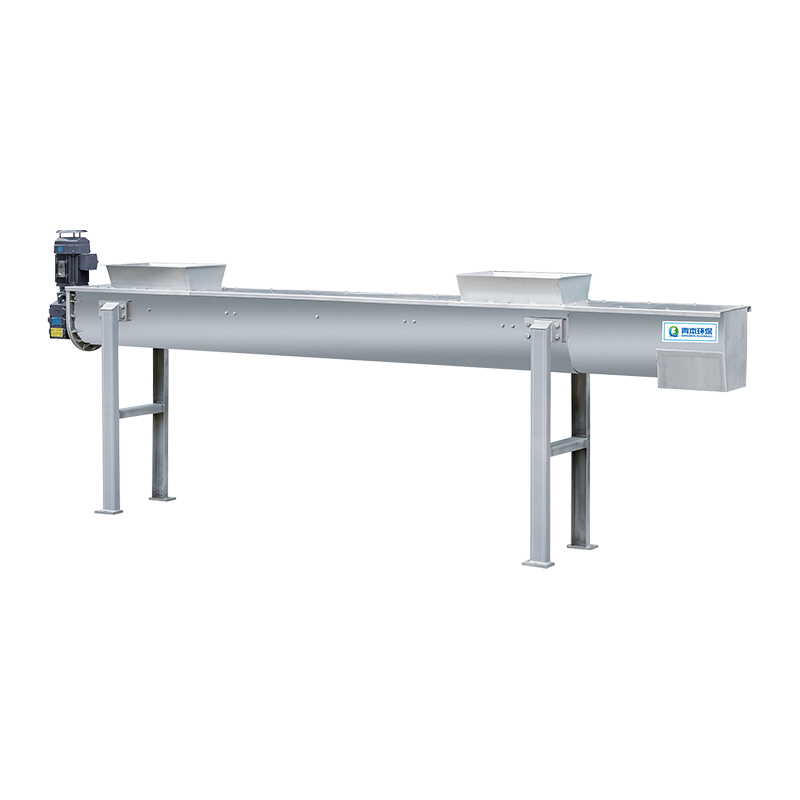
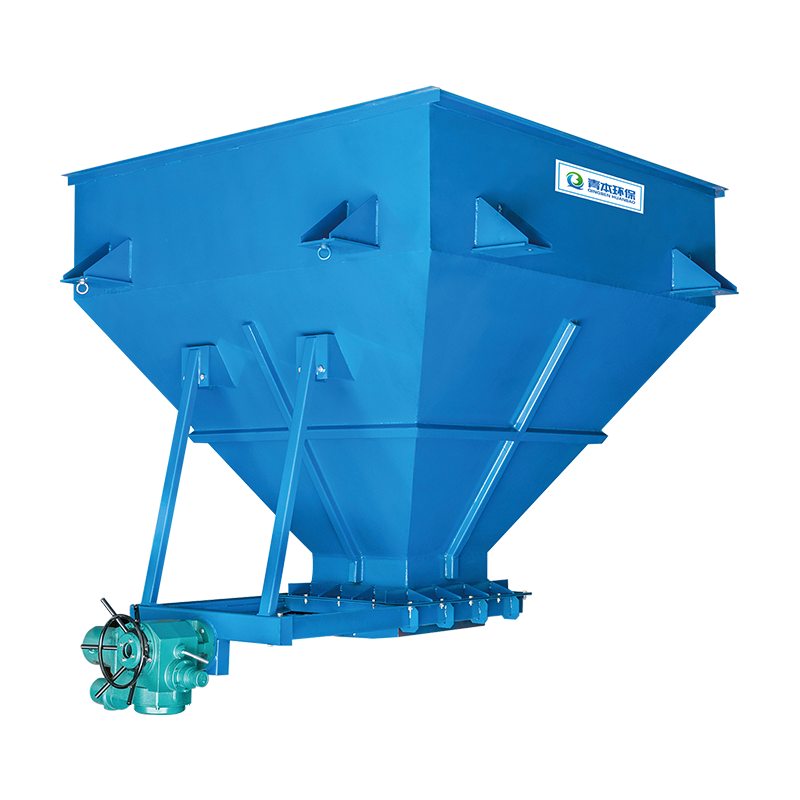
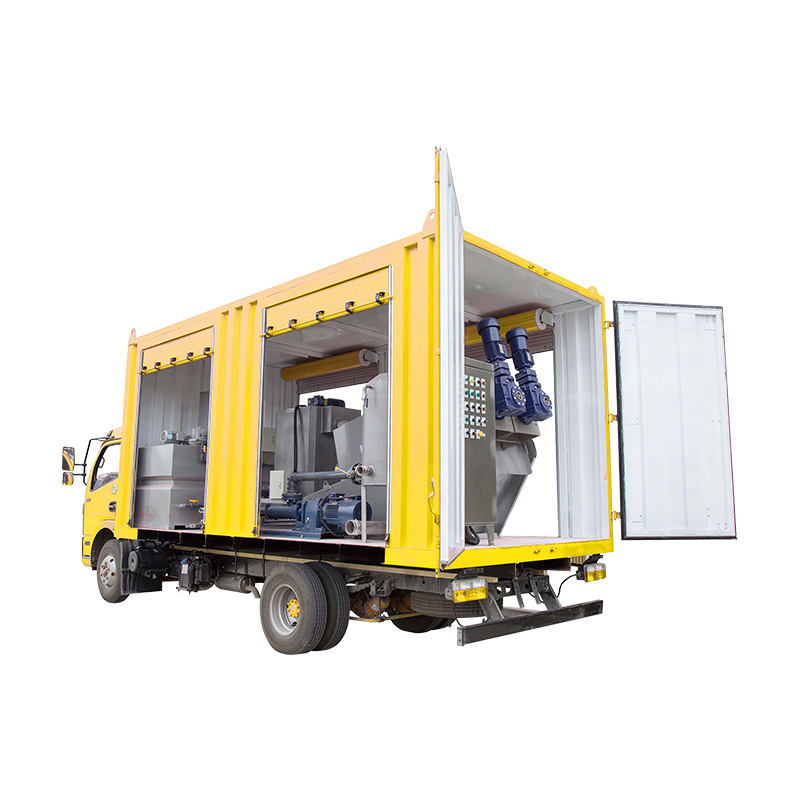
Dosing devices, screw conveyors and sludge hoppers.
Customization
Capacity, final dryness and utility interface matched to the line.
MOQ and Lead Time
Please contact us for details.
Specifications & Customization
Volume vs Solids Content (same dry solids)
| Solids Content | Relative Volume (1% = 100) | Typical Stage |
| 1% | 100 | Raw waste activated sludge |
| 2% | 50 | Gravity thickened |
| 5% | 20 | Mechanically thickened |
| 10% | 10 | Mechanically thickened / early dewatering |
| 20% | 5 | Dewatered cake |
| 30% | 3 | Deep dewatered cake |
Stage Equipment
| Stage | Equipment | Published Data |
| Thickening | QBDL-N pre-concentration screw press | 70 to 1,200 kg DS/h across models |
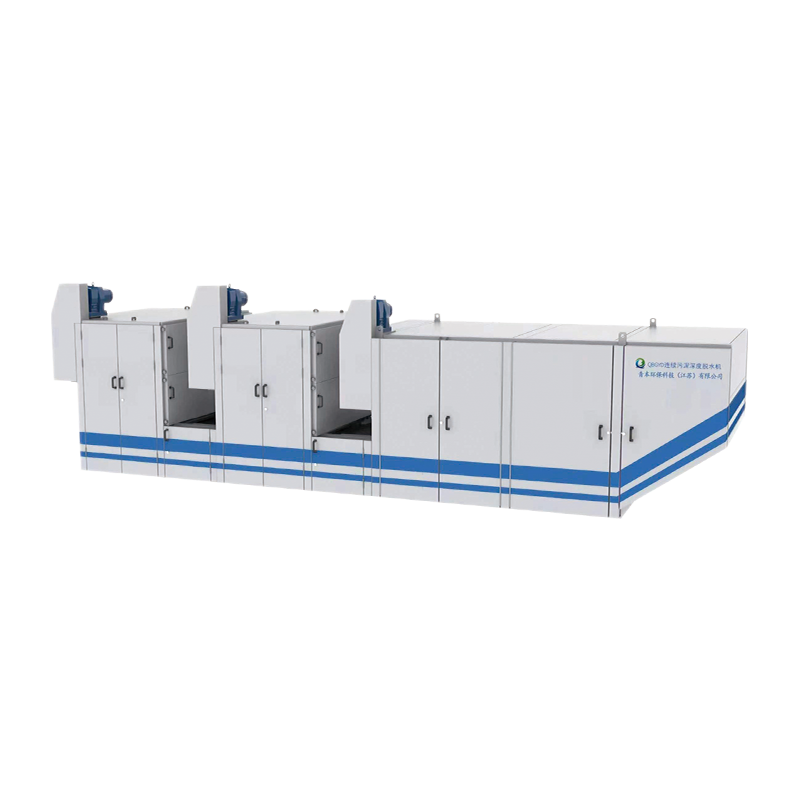
| Dewatering | Screw press, belt filter press, high-pressure belt deep dewatering | Models and data on product pages |
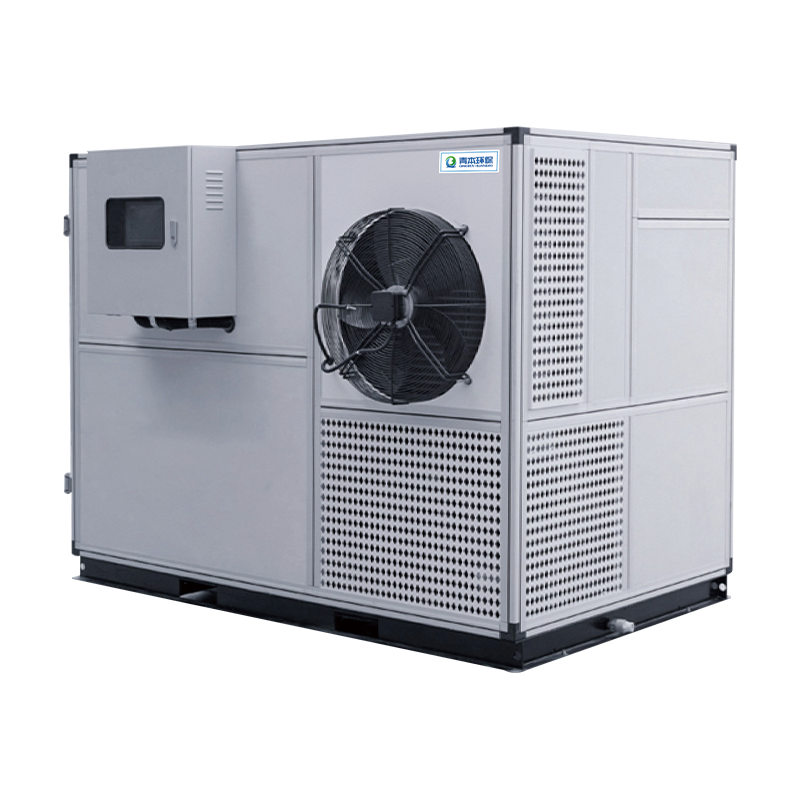
| Drying | Low temperature belt type dryer | 750 to 32,400 kg/24h water removal; 1 to 12 heat-pump modules |
| Drying | Low temperature waste heat dryer | 10,000 to 50,000 kg/24h; 4 to 20 modules |
| Drying | Cryogenic chamber dryer | Subject to product configuration |
| Dried output | Moisture 10% to 30% | From dewatered sludge at about 83% moisture |
| Reduction / Sterilization | Above 90% / above 90% | Published for low-temperature drying |
Volume ratios are arithmetic for the same dry solids. Equipment ratings are as published on product pages; confirm against the data sheet for your project.
Customization Options
Capacity MatchEquipment is matched to sludge quantity, feed solids and daily operating hours.
Final DrynessTarget dryness is configured for the disposal route.
Heat SourceElectric heat pump or waste heat, per site.
Supporting EquipmentDosing, conveying and hopper options.
Control InterfacePLC and touch screen; integration with plant systems on request.
OEM/ODM and BrandingPlease contact us for details.
Applications & Target Customers
Application Scenarios
| Industry / Application | Typical Use | Relevant Product Features |
| Municipal wastewater plants | Reducing hauled volume of waste activated sludge | Staged thickening, dewatering and drying |
| Printing and dyeing, papermaking | Reducing industrial sludge disposal volume | Dryer outputs 10% to 30% moisture |
| Electroplating and chemical | Reducing hazardous or costly-to-dispose sludge volume | Matched capacity and dryness |
| Leather and pharmaceutical | Reducing volume before external treatment | Enclosed, odor-collecting construction |
| River and lake dredging | Reducing sediment volume | Dewatering and drying options |
Target Customers
Municipal Plant Owners
Want lower hauling and disposal cost with stable operation.
Industrial Plant Managers
Need to cut sludge volume on site and meet disposal limits.
EPC and Engineering Firms
Need defined stage-by-stage data for design.
Distributors
Need a clear range for resale and project support.
Suitable and Unsuitable Uses
Suitable Uses
Projects with high hauling or disposal cost per wet tonne
Sites with limited storage space for sludge
Plants with a defined reuse route for dried product
Plants that can supply electricity, hot water or waste heat
Unsuitable Uses or Applications Requiring Additional Evaluation
Very small sludge flows where hauling is cheap
Projects with no defined disposal route or dryness target
Sites without utilities for a dryer: consider thickening and dewatering first
Unknown sludge composition: sampling is advisable
Selection Guidance
Application Requirements: Target solids and disposal route.
Technical Specifications: Capacity at your feed solids.
Working Environment: Indoor space, ventilation and odor control.
Material Compatibility: Check materials against sludge chemistry.
Installation Conditions: Foundation, power and water.
Budget and Order Quantity: Please contact us for details.
Usage Notes
- Product inspection: Check models against the order.
- Installation: Confirm foundation, connections and utilities.
- Operating environment: Check power, water and heat source.
- Daily maintenance: Follow the equipment manual for washing and checks.
- Dried product handling: Plan storage and the disposal route.
- Storage: Please contact us for storage requirements.
Advantages
Staged Approach
Each stage removes water at the lowest cost point. Thickening takes out free water, dewatering uses mechanical force, and drying evaporates what is left.
Verifiable basis: Process logic described on our sludge treatment guidance.
Buyer benefit: Buyers pay for only the stages they need.
Published Reduction Data
The low-temperature dryers are specified from about 83% moisture to 10% to 30% moisture, with volume reduction above 90%.
Verifiable basis: Published on the dryer product page.
Buyer benefit: A clear, checkable basis for disposal cost estimates.
Three Dryer Platforms
Belt-type, waste-heat and chamber dryers cover different capacities and energy sources.
Verifiable basis: Belt type: 750 to 32,400 kg/24h. Waste heat: 10,000 to 50,000 kg/24h.
Buyer benefit: Buyers can match the platform to their utilities.
Space-Saving Pre-concentration
QBDL-N reduces volume upstream of dewatering without a separate thickening tank.
Verifiable basis: Published QBDL-N description.
Buyer benefit: Fast volume reduction where floor area is limited.
Enclosed, Controlled Operation
Drying systems are enclosed to collect odor and use controls that allow continuous running with limited supervision.
Verifiable basis: Published dryer descriptions.
Buyer benefit: Cleaner rooms and lower labor.
Project Support
Consultation, design, installation, commissioning and training are offered under ISO9001, ISO14001 and ISO45001 systems.
Verifiable basis: Company certificates on our website.
Buyer benefit: One supplier from design to operation.
Frequently Asked Questions
- Q: How much volume can sludge drying remove?
- A: The published low-temperature dryer specification is volume reduction above 90%, from sludge at about 83% moisture to 10% to 30% moisture. Results depend on feed sludge and configuration.
- Q: Is it better to thicken, dewater or dry?
- A: They do different jobs. Thickening is cheapest per litre removed, dewatering gives most of the manageable volume, and drying is worthwhile mainly when disposal is expensive.
- Q: How does solids content change volume?
- A: For the same dry solids, volume is inversely proportional to solids content. Going from 1% to 5% solids cuts volume to about one fifth.
- Q: What heat source do your dryers use?
- A: The belt-type dryer uses heat-pump modules and the waste-heat model uses hot water at 85/65 deg C. Details are on the product pages.
- Q: What can I do with dried sludge?
- A: Dried sludge at 10% to 30% moisture can be used for blending and incineration, composting or building material feedstock, subject to local regulations.
- Q: What information do you need for a recommendation?
- A: Sludge source, solids content, daily volume, target dryness, disposal route, available utilities and site layout.
- Q: Do you offer custom or OEM/ODM supply?
- A: Configurations are matched to project data. OEM/ODM requests: please contact us for details.
- Q: What are MOQ, sample policy and lead time?
- A: These depend on model and configuration. Please contact us for confirmed information.
Contact Us to Learn More
Tell us your sludge source, solids content, daily volume and disposal route. Our team can recommend a thickening, dewatering or drying combination and prepare a quotation.
Stage selection, specifications, custom configuration, MOQ, delivery and technical support.
View More ProductsSend an Inquiry