

Content
- 1 What Is a Sludge Dewatering Machine and What It Does
- 2 Working Principle: How Sludge Dewatering Equipment Removes Water
- 3 Types of Sludge Dewatering Equipment
- 4 Applications Across Industries
- 5 Benefits: Cost, Environmental, and Efficiency Gains
- 6 Comparing Dewatering Technologies
- 7 How to Choose the Right Sludge Dewatering Machine
- 8 Frequently Asked Questions
- 8.1 Q1: How does a sludge dewatering machine work?
- 8.2 Q2: What is the purpose of sludge dewatering?
- 8.3 Q3: How much water can sludge dewatering remove?
- 8.4 Q4: Is sludge dewatering expensive to operate?
- 8.5 Q5: What sludge concentration is suitable for screw dehydrators?
- 8.6 Q6: Can dewatering equipment run without constant supervision?
- 9 Work With an Experienced Sludge Equipment Manufacturer
What Is a Sludge Dewatering Machine and What It Does
A sludge dewatering machine is industrial equipment that separates water from solid sludge produced during wastewater treatment, reducing moisture content so the resulting material becomes easier and less costly to transport, store, or dispose of. The direct answer for most facilities evaluating this equipment is that dewatering can typically reduce sludge moisture content from around 95-99 percent down to 60-80 percent, depending on the sludge type and technology used, dramatically cutting the physical volume that needs further handling.
This category of sludge dewatering equipment spans several distinct machine types, from compact screw press units suited to small facilities to high-capacity belt filter systems designed for continuous municipal-scale operation. Choosing correctly depends on sludge concentration, daily processing volume, available floor space, and how much automation the operating team requires.
Working Principle: How Sludge Dewatering Equipment Removes Water
Most sludge dewatering equipment operates on the same fundamental principle: applying mechanical pressure, gravity, or centrifugal force to force free water out of the sludge structure while retaining solid particles. The process generally follows a sequence, though the exact mechanism varies by machine type.
- Sludge is fed into the machine, sometimes after a conditioning or flocculation step using polymer dosing.
- Gravity or a rotating screw begins initial concentration, removing the loosest free water first.
- Mechanical pressure, belt tension, or centrifugal spin further compresses the sludge structure.
- Separated water, called filtrate, is collected and typically returned to the treatment process.
- The resulting dewatered material, or mud cake, is discharged for disposal, composting, or further drying.
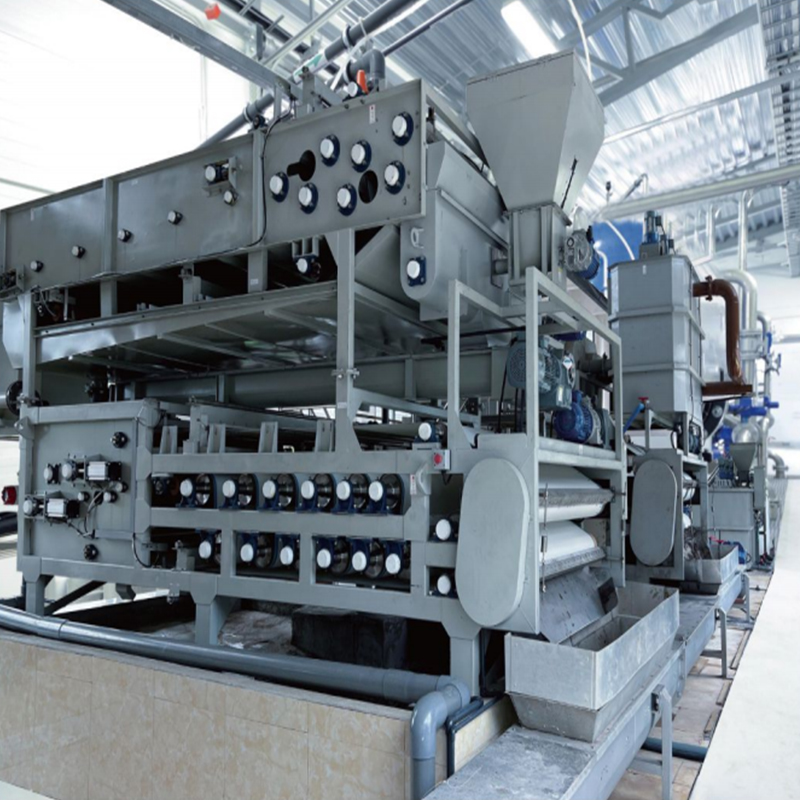
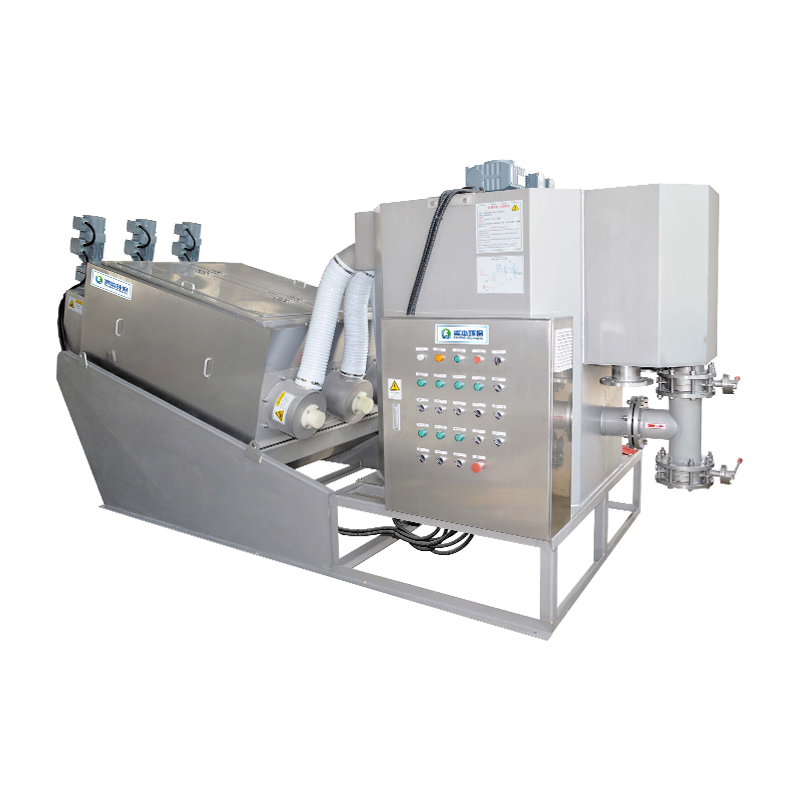
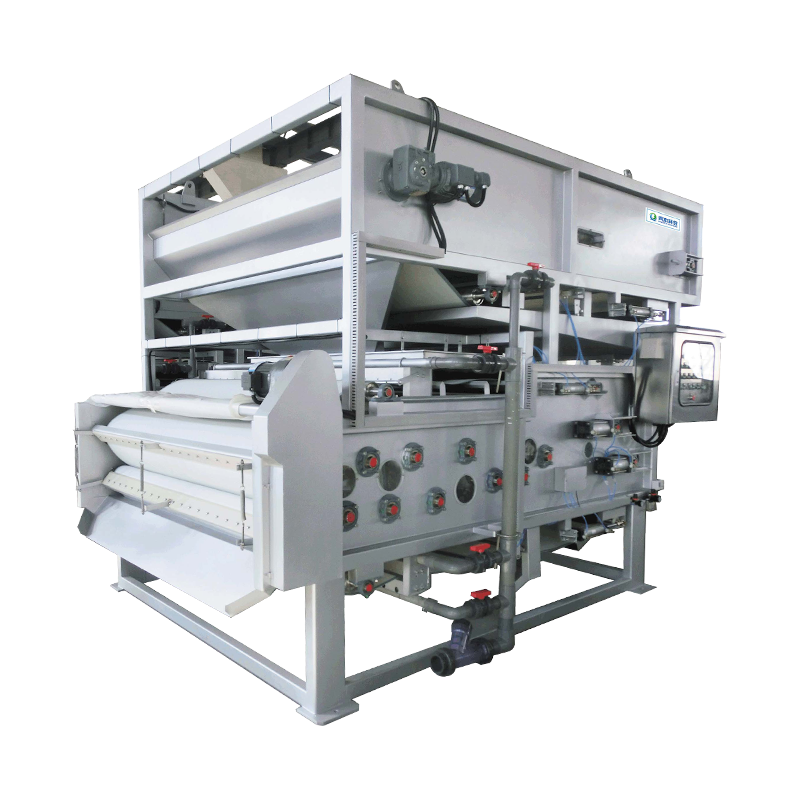
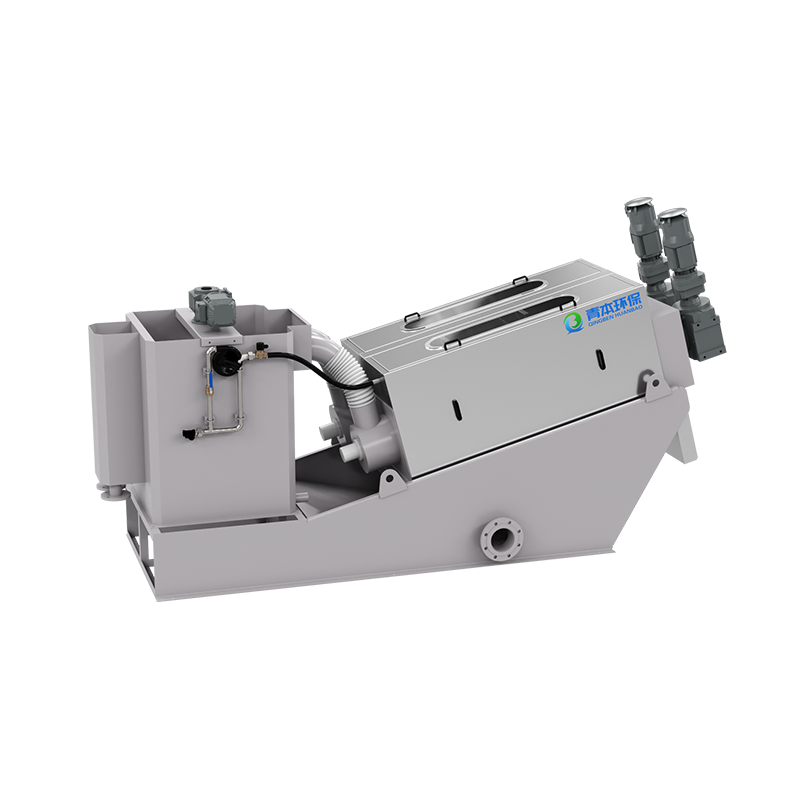
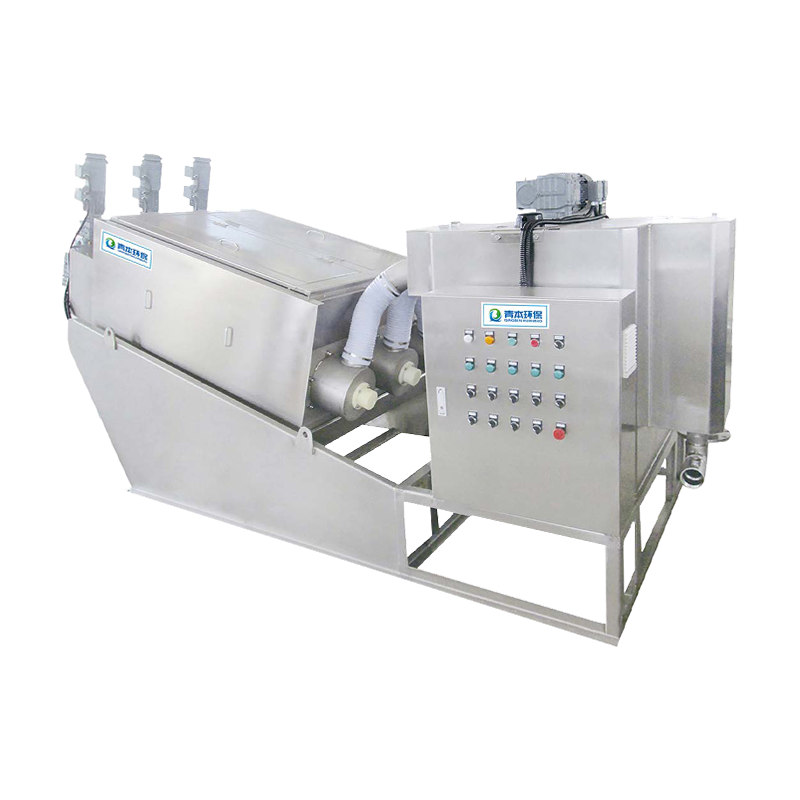
Screw stacking dehydrators, for example, use a slowly rotating screw within a stacked ring assembly that gradually compresses sludge as it moves along the shaft, with rings that self-adjust to prevent the common clogging problem seen in older dehydrator designs. Belt-type systems instead rely on gravity dewatering across a moving filter belt before applying roller pressure, making them well suited to larger, continuous processing volumes.
Types of Sludge Dewatering Equipment
Several distinct equipment categories serve different facility sizes and sludge characteristics. Understanding these differences is the starting point for narrowing down a purchase decision.
| Equipment Type | Best Suited For |
|---|---|
| Screw Stacking Dehydrator | Small to mid-size sites needing low energy use and small footprint |
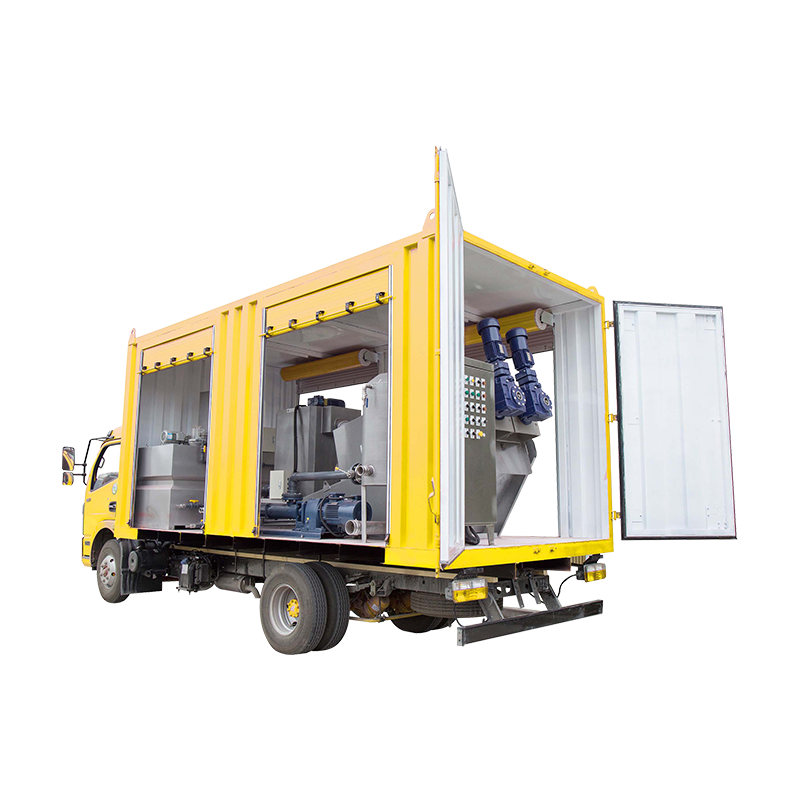
| Mobile Dehydration Truck | Septic tank cleaning and on-site solid-liquid separation |
| Belt Thickening and Dehydrating Machine | Larger volumes of unconcentrated sludge requiring combined thickening |
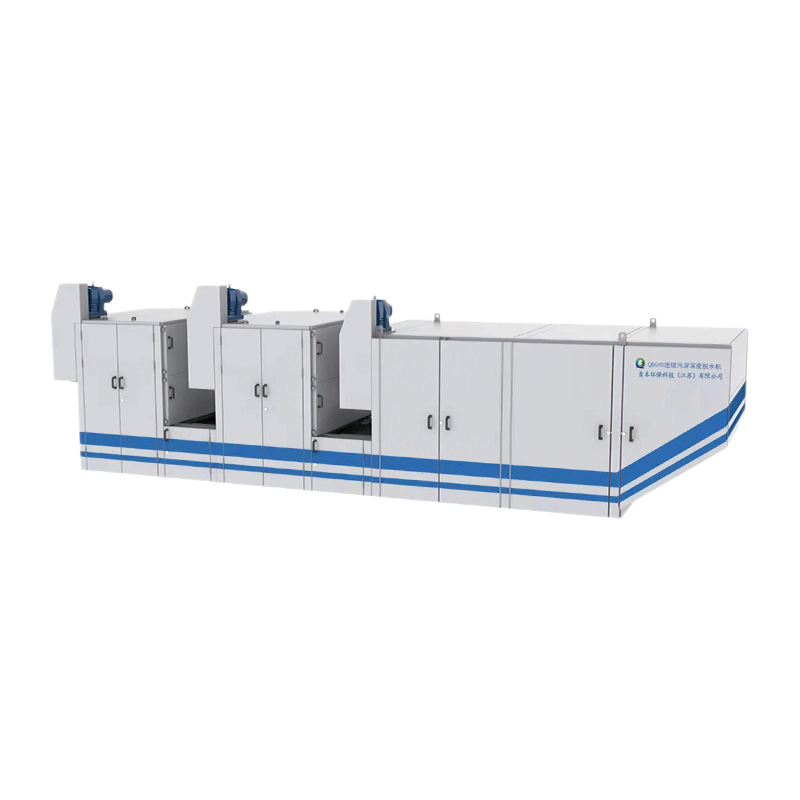
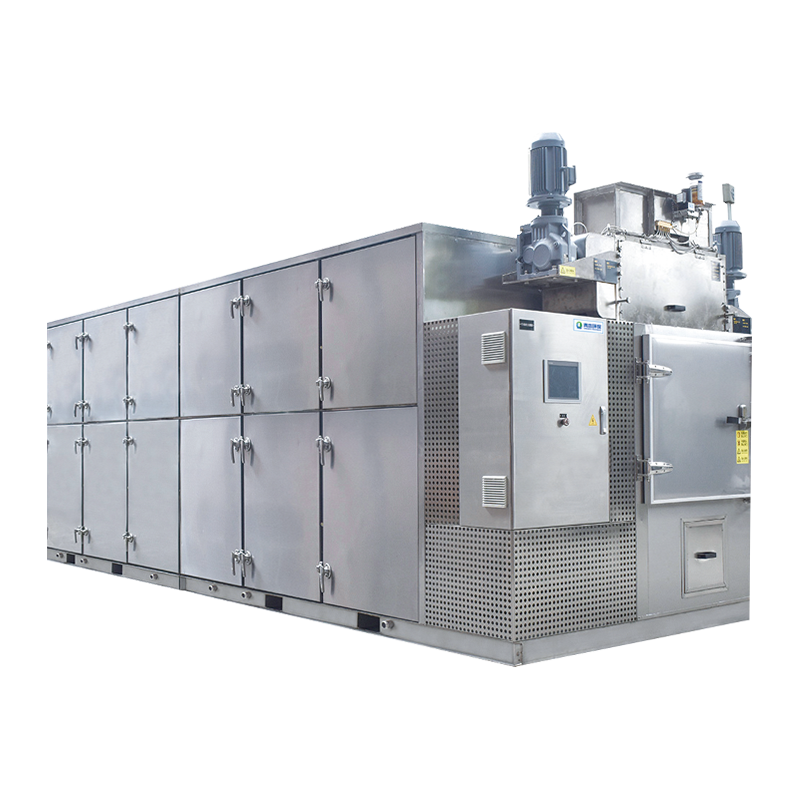
| Sludge Deep Dehydration Equipment | Facilities needing moisture reduced to 60 percent or below |
| High-Pressure Belt Continuous Press | High-shear, continuous processing with variable sludge properties |
A screw sludge dewatering machine is often the entry point for facilities with moderate volumes because it does not require a separate concentration mixing tank, eliminating the need for mixers and air compressors that add cost and maintenance complexity. Larger municipal operations, by contrast, more commonly rely on a belt filter press sludge dewatering system due to its higher continuous throughput capacity.
Applications Across Industries
Sludge dewatering equipment serves a wide range of industries, and matching the machine type to the source of sludge is essential for consistent performance.
- Municipal wastewater treatment plants processing daily influent sludge volumes.
- Chemical plants managing process byproduct sludge with variable concentration levels.
- Food and beverage processing facilities treating high-organic-content wastewater.
- Water treatment plants managing coagulation sludge byproducts.
- Breeding farms and slaughterhouses requiring mobile or on-site treatment solutions.
- River and lake sediment management projects requiring specialized drying equipment.
This horizontal bar chart reflects a general distribution of sludge dewatering equipment deployment across common industry sectors. Municipal wastewater treatment represents the largest share because treatment plants process sludge continuously and at high volume year-round, making dewatering efficiency directly tied to operating cost. Food and beverage processing follows closely due to the high organic load typical of that sector's wastewater, which often requires more frequent sludge handling than lower-organic industrial sources. Mobile dehydration solutions serve smaller but steady demand from farms and decentralized sites where a fixed installation is not practical.
Benefits: Cost, Environmental, and Efficiency Gains
The primary benefit of installing an industrial sludge press is a substantial reduction in downstream handling and transport cost, since dewatered sludge occupies significantly less volume and weight than untreated sludge. Beyond cost, dewatering equipment supports environmental compliance and operational efficiency in several concrete ways.
This line chart tracks how moisture content typically declines across sequential dewatering stages, from raw sludge at approximately 98 percent moisture down to a final cake around 60 percent after deep dewatering treatment. The steepest drop occurs during the initial press stage, where the majority of free water is removed mechanically, while later stages target the more tightly bound water within sludge particles. This staged reduction directly explains why facilities requiring the lowest possible final moisture content typically invest in deep dewatering equipment rather than relying on a single-stage press alone. Lower final moisture content translates directly into reduced transport weight and lower downstream disposal or composting costs.
Additional Operational Benefits
- Fully automated operation reduces the need for continuous manual oversight.
- Self-cleaning mechanisms in screw-type units help prevent clogging common in older designs.
- Fully enclosed designs support odor collection and containment for cleaner site operation.
- Remote and on-site control options allow flexible staffing across shifts.
- Compact integrated designs reduce civil engineering and installation footprint requirements.
Comparing Dewatering Technologies
Different technologies suit different operational priorities. The radar chart below compares screw stacking dehydrators against belt-type systems across five practical performance factors.
The darker shape represents a screw stacking dehydrator, while the lighter shape represents a belt-type filter press system. Screw units generally score higher on energy efficiency, footprint efficiency, and clog resistance, since their self-cleaning ring design and compact structure eliminate several auxiliary equipment needs. Belt filter press systems tend to score higher on throughput capacity, making them a better fit for facilities processing very large sludge volumes continuously. Automation level is comparable across both technologies in modern equipment, though the specific control features vary by manufacturer and model configuration.
How to Choose the Right Sludge Dewatering Machine
Selecting the correct equipment starts with understanding sludge concentration and daily processing volume, since these two factors narrow the technology options significantly before other considerations come into play.
| Factor | Why It Matters |
|---|---|
| Sludge Concentration | Determines whether pre-thickening is needed before dewatering |
| Daily Processing Volume | Defines required throughput capacity and machine sizing |
| Available Floor Space | Compact screw units suit tighter sites; belt systems need more room |
| Target Final Moisture | Determines whether deep dewatering stages are required |
| Automation Requirements | Impacts staffing needs and long-term labor cost |
For sites with sludge concentration between 5,000 mg/l and 50,000 mg/l, a screw sludge dewatering machine manufacturer can often provide a unit that skips the traditional concentration mixing tank entirely, simplifying installation. Facilities needing continuous high-volume processing, by contrast, are usually better matched with a belt filter press sludge dewatering system designed for sustained throughput without frequent downtime.
Frequently Asked Questions
Q1: How does a sludge dewatering machine work?
It uses mechanical pressure, gravity, or centrifugal force to separate water from solid sludge particles, producing a drier mud cake.
Q2: What is the purpose of sludge dewatering?
It reduces sludge volume and weight, lowering transport and disposal costs while supporting environmental compliance requirements.
Q3: How much water can sludge dewatering remove?
Moisture content can typically be reduced from around 98 percent down to 60 to 80 percent, depending on the equipment and sludge type.
Q4: Is sludge dewatering expensive to operate?
Operating cost depends on energy use, automation level, and sludge volume, though dewatering generally lowers overall downstream handling costs.
Q5: What sludge concentration is suitable for screw dehydrators?
Screw stacking dehydrators typically handle sludge concentrations ranging from 5,000 mg/l to 50,000 mg/l across various industries.
Q6: Can dewatering equipment run without constant supervision?
Many modern units offer fully automatic operation with remote monitoring, reducing the need for continuous on-site staffing.
Work With an Experienced Sludge Equipment Manufacturer
Qingben Environmental Technology (Jiangsu) Co., Ltd. specializes in the research, development, and manufacturing of sludge and wastewater treatment equipment, including decanter sludge dewatering machines, sludge drying equipment, complete wastewater treatment systems, and river and lake sediment drying equipment. The product range spans multiple models designed to adapt to different site sizes and sewage treatment specifications, from compact screw stacking dehydrators to high-pressure continuous belt dewatering systems.
For facilities evaluating a municipal sludge dewatering equipment supplier, an industrial wastewater sludge treatment machine partner, or an OEM sludge treatment equipment supplier for custom configurations, working with a manufacturer offering a full technology range allows equipment sizing to be matched precisely to sludge concentration, volume, and site constraints. Whether the requirement is a mobile dehydration truck for decentralized sites or a high efficiency sludge dewatering press system for continuous municipal operation, sharing sludge characteristics, daily volume, and target final moisture content early in the process supports a more accurate equipment recommendation.