

Picture an operator opening a digester hatch and finding several centimeters of sand cushioning the bottom. The desludging crew is already scheduled, the gas mixing nozzles are partially buried, and the question nobody asks out loud is how long that grit has been accumulating. In most plants, the answer begins at the headworks, where a grit chamber was either undersized, hydraulically overloaded, or quietly bypassed during maintenance. A properly designed grit removal system is the cheapest insurance a treatment plant can buy, because it protects every pump, diffuser, heat exchanger, and dewatering machine further downstream. This article explains what grit chambers do, how they work, the three main types, the design factors that matter most, and the practical questions operators ask when they need a reliable system.
Content
- 1 What Is a Grit Chamber and Why Does Grit Matter?
- 2 How Grit Chambers Work
- 3 Types of Grit Chambers
- 4 Grit Washing and Classification: Completing the Job
- 5 Design Considerations and Performance Factors
- 6 Frequently Asked Questions
- 6.0.1 Q1. What is a grit chamber?
- 6.0.2 Q2. What are the types of grit chambers used in wastewater treatment?
- 6.0.3 Q3. How does a grit chamber work?
- 6.0.4 Q4. What is the difference between a grit chamber and a sedimentation tank?
- 6.0.5 Q5. What grit removal efficiency can a plant expect?
- 6.0.6 Q6. How do you maintain a grit chamber?
What Is a Grit Chamber and Why Does Grit Matter?
A grit chamber is a pre-treatment unit that removes heavy inorganic solids—sand, gravel, eggshells, bone fragments, coffee grounds, seeds, and glass fragments—by letting them settle while the organic fraction stays in suspension. Grit is defined in design terms by particle size and density: mineral particles from about 0.15 to 0.21 mm upward, with a specific gravity close to 2.65, the value of quartz sand.
Grit does not degrade inside a treatment plant. It simply accumulates. Primary clarifiers develop dense bottom deposits, fine-bubble diffusers are abraded until their membranes fail, sludge lines wear through at bends, and anaerobic digesters lose usable volume to a layer of sand that no biological process can break down. In severe cases, grit reaches belt presses, centrifuges, and screw presses, turning routine polymer conditioning into a maintenance event.
- Abrasive wear on pump impellers and volutes, especially at grit-handling and return-sludge pump stations;
- Clogging of sludge transfer and biogas lines;
- Loss of effective capacity in aeration tanks and digesters;
- Dead zones that trap organics, become septic, and generate odor complaints.
Because the damage develops slowly, grit problems are often misread as equipment defects. A scraper that burns out repeatedly, or a pump that keeps losing efficiency, may simply be processing the consequences of an overloaded chamber.
How Grit Chambers Work
Grit removal is a gravity classification process. The designer selects a target particle size—commonly 0.21 mm for municipal projects—and maintains flow conditions that let particles of that size settle to the floor while lighter organic solids, with a specific gravity near 1.0, remain entrained. In practice, the average forward velocity is controlled near 0.3 m/s in horizontal-flow channels, while aerated and vortex designs use a spiral or tangential flow pattern to create a similar separation with a different hydraulic approach.
Settling velocity of mineral grit particles
Theoretical terminal settling velocity of quartz-density spheres (specific gravity 2.65) in clean water at 15°C.
The collected grit slides or is scraped into a trough or hopper at the chamber floor, then is conveyed to a separation and washing step. In a vortex chamber, the hopper sits at the center of the tank, where the rotational motion slows and the heaviest material drops out.
Vortex grit chamber layout and key components
Schematic of a vortex-type grit chamber. The tangential inlet creates a forced vortex; grit settles into the central hopper and is pumped away for classification.
Types of Grit Chambers
Horizontal-Flow Grit Chambers
Horizontal-flow channels, also called velocity-controlled grit chambers, keep wastewater moving forward at roughly 0.3 m/s. At that velocity, sand in the 0.2 to 0.3 mm range settles out while organics are carried through. The chamber is long and rectangular, with a proportional weir or a Parshall flume upstream to hold the velocity steady across a wide flow range. The main advantage is simplicity and low energy use; the main cost is footprint and the need for precise hydraulic control.
Aerated Grit Chambers
Aerated chambers are rectangular tanks with a line of diffusers along one side. The rising bubbles induce a spiral roll that keeps organic matter in suspension while heavier grit settles along the opposite wall. This scouring action produces cleaner grit than a horizontal channel and also strips volatile odors from the wastewater. The trade-off is continuous blower power and maintenance of diffusers, in addition to the grit conveyors.
Vortex Grit Chambers
Vortex, or swirl, grit chambers feed wastewater tangentially into a cylindrical tank, creating a forced vortex with a central impeller or propeller. Grit is carried toward the perimeter and settles into the center hopper, while organic particles ride the vortex out of the top. Compact construction and adjustable impeller speed make the design sensitive to control. A well-tuned vortex unit captures most particles in the 0.15–0.21 mm range at a fraction of the footprint of a channel system. For plants with limited site area or a fluctuating inflow, a compact cyclone sand settler built on the same vortex principle is a practical alternative to a full-depth concrete channel.
| Characteristic | Horizontal-flow | Aerated | Vortex |
|---|---|---|---|
| Grit capture | 0.21 mm with careful velocity control | 0.21–0.30 mm typical | 0.15–0.21 mm achievable |
| Organic content of collected grit | Moderate without washing | Lower due to air scrubbing | Low with proper impeller speed |
| Energy use | Low | Moderate to high | Low to moderate |
| Footprint | Large | Medium | Small |
| Typical maintenance | Chain, rake, conveyor | Diffusers, blowers, conveyor | Impeller, grit pump, propeller |
Typical municipal grit removal targets by particle size
Common design objectives for a vortex-type grit chamber in municipal service: percent removal by particle size at design flow.
Grit Washing and Classification: Completing the Job
A grit chamber that only collects material does not finish the job. Sand pulled from the hopper still carries 30–60% water and, in a poorly tuned chamber, enough organic matter to ferment and smell. Wet, odorous grit is expensive to truck, difficult to landfill, and varies in quality depending on the weather.
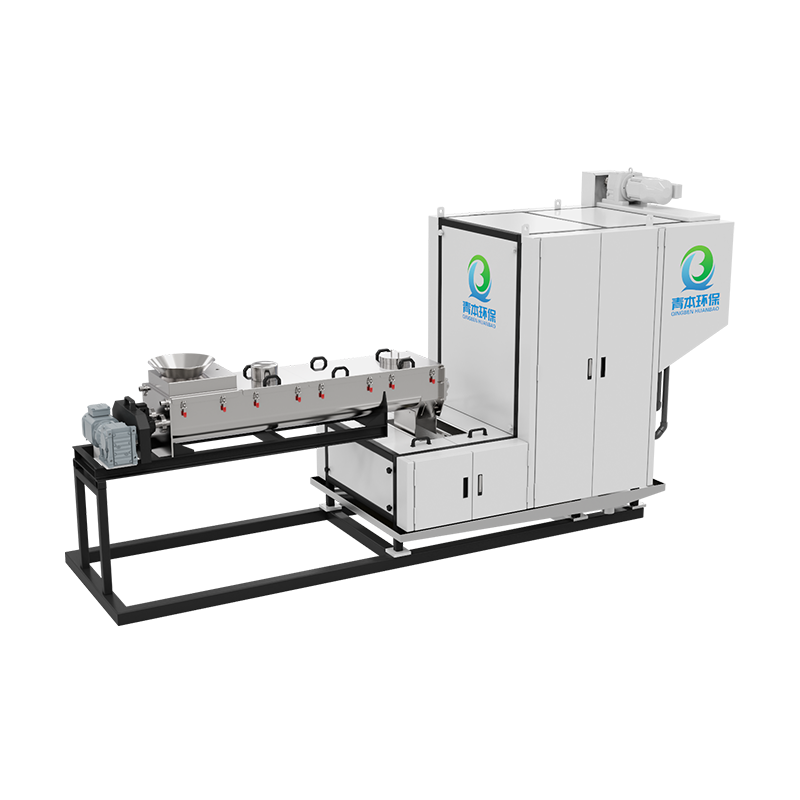
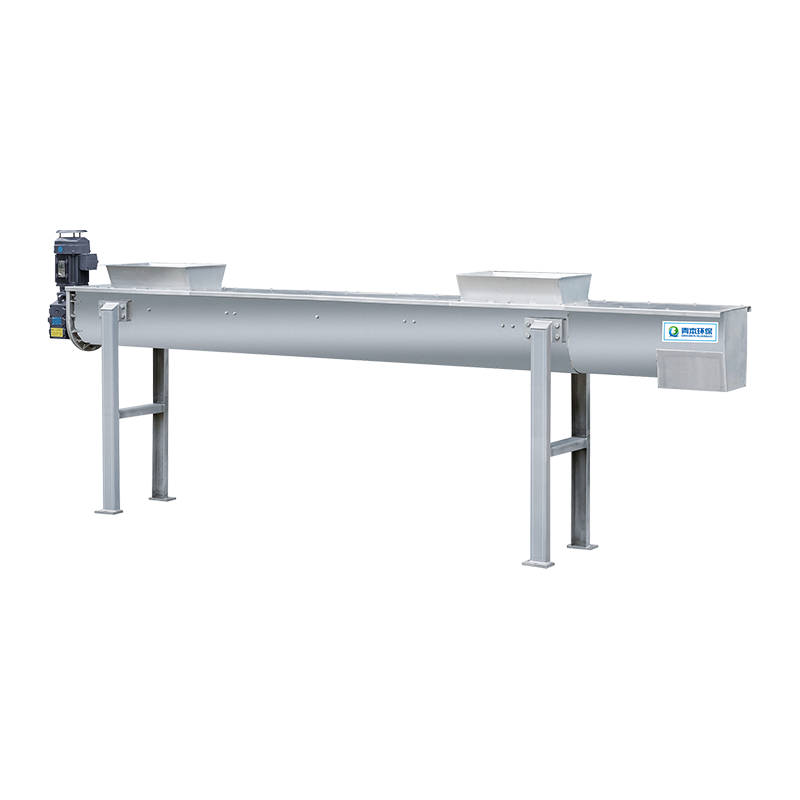
Grit classifiers combine a shallow settling basin with a screw conveyor that lifts the settled sand out of the water. As the screw rotates, it scours the grit against an inclined trough, and wash water returns the lighter organic matter to the process flow. The result is drained, deodorized grit with a significantly reduced disposal volume. A shaftless spiral grit classifier is particularly well suited to this duty because the spiral has no center shaft to clog, and the abrasion resistance of the flights extends service life in the demanding grit environment.
Design Considerations and Performance Factors
Most operational problems in grit removal trace back to a handful of decisions: the target grit size, peak-flow hydraulic loading, velocity control, and whether the chamber can be isolated for service. A chamber designed for average dry-weather flow will fail during wet weather, when the extra inflow pushes sand straight through the channel and into the biological stage. Designers therefore size the grit system on peak hour flow and, where practical, install at least two parallel units.
The headworks sequence also matters. Screening comes first; a tooth-rake bar screen removes rags, wipes, and coarse debris that would otherwise bridge the grit chamber inlet and disrupt flow distribution. Then the grit chamber protects the pumps and every downstream unit from abrasion. Municipal plants in particular need this sequence to keep their aeration systems quiet: see the municipal wastewater treatment overview for a full headworks picture. Industrial facilities face the same abrasive wear, and the choice of chamber depends on the nature of the solids; the industrial wastewater treatment page explains how the selection changes when upstream effluents are variable.
- Size for peak hour wet-weather flow, not the daily average;
- Set a clear target removal size and verify it with the equipment supplier;
- Plan the grit washer and classifier as part of the chamber package, not as an afterthought;
- Provide hopper heaters and drainage to keep the collected material workable in cold climates.
Frequently Asked Questions
Q1. What is a grit chamber?
A grit chamber is a headworks unit that removes sand, gravel, eggshells, and similar heavy inert solids from wastewater by gravity settling, protecting pumps, clarifiers, and dewatering equipment from abrasion and blockage.
Q2. What are the types of grit chambers used in wastewater treatment?
The three common types are horizontal-flow chambers, aerated grit chambers, and vortex-type units. Each suits a different combination of footprint, energy cost, and target particle size.
Q3. How does a grit chamber work?
Wastewater is slowed or guided into a controlled vortex so that dense mineral particles, with a specific gravity of about 2.65, settle quickly while organic solids remain suspended and move on downstream.
Q4. What is the difference between a grit chamber and a sedimentation tank?
A grit chamber removes heavy inert solids and deliberately keeps organics in suspension; a clarifier settles organic solids at much longer detention times and forms the biological solids separation stage of the plant.
Q5. What grit removal efficiency can a plant expect?
A well-designed, properly loaded chamber typically captures 85–95% of particles in the 0.21–0.30 mm range. Many municipal specifications target 85% removal of 0.21 mm (65 mesh) sand at peak flow.
Q6. How do you maintain a grit chamber?
Routine work includes removing accumulated grit, checking the grit pump or air lift, inspecting conveyor wear and alignment, cleaning air diffusers on aerated units, and flushing the inlet and outlet channels to prevent build-up.