

Picture a municipal secondary clarifier where effluent TSS has crept up by two to three milligrams per liter over two weeks. The biology looks healthy, the return-activated-sludge pumps run at their usual rate, and the polymer dose has already been optimized, yet the sludge blanket keeps getting deeper. Operators often chase these symptoms for days before someone checks the sludge collector.
Sludge collectors move settled solids out of clarifiers continuously and predictably. When a collector works well, nobody pays attention to it. When it does not, the entire downstream train, thickeners, dewatering presses, and the final discharge, pays the price. During commissioning and service visits, a quick way to diagnose a hidden solids problem is to look at the collector first: blade clearance, raking speed, and torque history.
Content
- 1 What Is a Sludge Collector and Why Does It Matter?
- 2 Sludge Collector Types: Scraper vs. Suction Designs
- 3 How to Select the Right Sludge Collector
- 4 Operation and Maintenance That Prevent Failures
- 5 Where Sludge Collectors Are Used
- 6 Frequently Asked Questions About Sludge Collectors
- 6.1 Q1. What is a sludge collector?
- 6.2 Q2. What is the difference between a sludge scraper and a sludge suction collector?
- 6.3 Q3. How does a sludge collector work?
- 6.4 Q4. How much does a sludge collector cost?
- 6.5 Q5. How do I choose a sludge scraper for a rectangular sedimentation tank?
- 6.6 Q6. How often should a sludge collector be serviced?
What Is a Sludge Collector and Why Does It Matter?
A sludge collector, also called a sludge scraper, sludge rake, or sludge suction machine, is the electromechanical assembly inside a sedimentation tank that removes settled solids from the tank floor and directs them to a hopper or outlet. It is the working interface between the clarifier and the whole sludge-handling chain.
A well-functioning collector does four jobs:
- Keeps the sludge blanket thin and even, which protects effluent clarity.
- Moves solids out before they become septic and release phosphorus.
- Delivers a consistent solids concentration to thickeners and dewatering equipment.
- Prevents localized accumulation so the full tank volume stays usable.
When solids stay on the floor too long, the blanket densifies, denitrification creates rising gas, and chunks of sludge float to the surface. Common operating guidance suggests that a blanket thicker than roughly one meter in a secondary clarifier begins to hurt TSS and phosphorus removal, even when the biology above it is healthy. In cold weather the decline is slower but harder to reverse, because sludge can compact into a dense plug in the hopper.
Sludge Collector Types: Scraper vs. Suction Designs
Sludge collectors divide into two broad families: scrapers, which push solids toward a hopper, and suction collectors, which withdraw sludge through pipes. Drive arrangement determines the rest of the design.
Center-Drive Scrapers
The drive unit sits at the tank center on a column or bridge and rotates a pair of rake arms. Blades sweep the floor at low speed, usually around one to three revolutions per hour for medium and large clarifiers. Center-drive scrapers suit circular tanks from about 10 to 40 meters in diameter, especially for primary sludge that only needs to travel a short distance to a central hopper.
Peripheral-Drive Scrapers
For larger circular basins, a peripheral drive moves the motor and gear to the tank wall, where a rotating bridge pulls the rake arms around a stationary center column. This keeps heavy equipment at the rim, out of the sludge zone, and makes torque protection easier to inspect. Typical working diameters run from about 20 to 60 meters. The peripheral-drive sludge scraper in the Qingben product line represents this configuration, with the drive sized for the full diameter range.
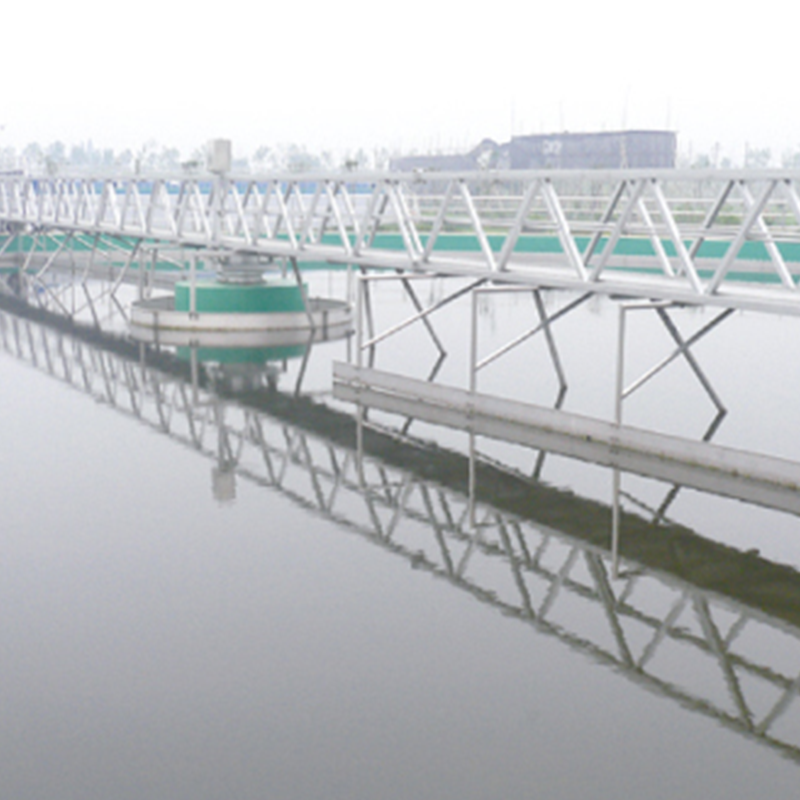 Peripheral Drive Mud Scraper Manufacturers, Custom Factory - Qingben EnvironmentQingben Environmental Protection is a China Peripheral Drive Mud Scraper manufacturers and factory, Professional custom Peripheral Drive ...View Product →
Suction-Header Collectors
A suction collector does not wait for sludge to travel to a hopper. Hydrostatic pressure lifts dilute sludge into headers or a single suction tube and carries it to a discharge trough. This gives a short sludge retention time, which suits activated-sludge clarifiers where solids are light and must be returned quickly. The center-drive single-tube suction dredger uses one rotating tube to draw sludge across the floor, reducing the number of plugged headers that can be a problem with multi-port designs.
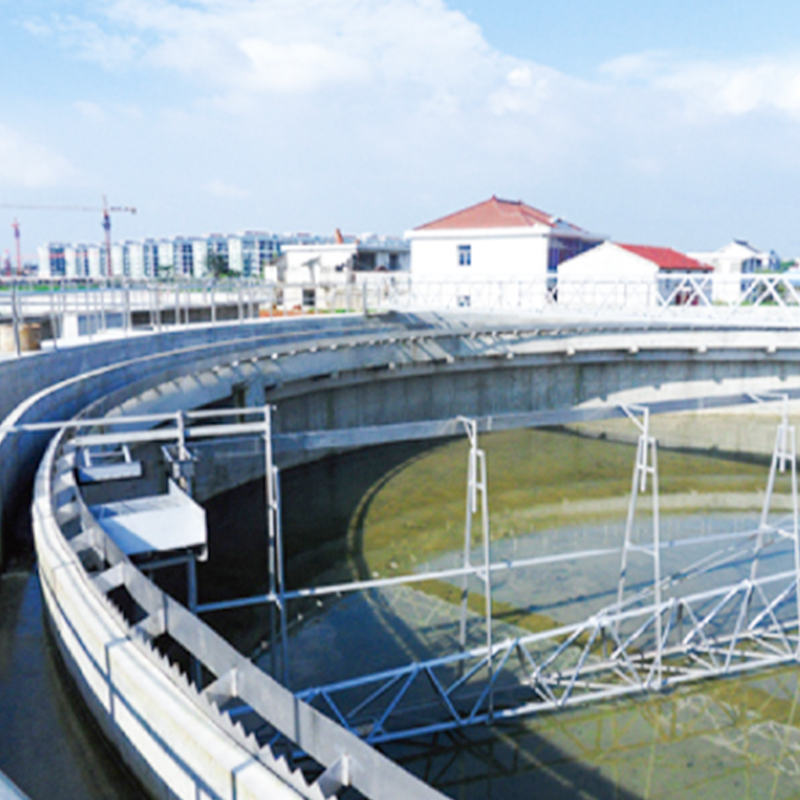 Center Drive Single Tube Suction Dredger Manufacturers, Custom Factory - QingbenQingben Environmental Protection is a China Center Drive Single Tube Suction Dredger manufacturers and factory, Professional custom Cente...View Product →
Truss-Bridge and Traveling Scrapers
Rectangular tanks use a traveling bridge that spans the tank width and pulls a truss-and-blade assembly along the length. These machines fit pre-treatment lanes and high-rate clarifiers where several narrow tanks are more practical than one large circle.
Labeled isometric view of a center-drive sludge collector in a circular clarifier. The drive is the main above-water component, while rake arms, blades, and the sludge hopper work below the surface.
Qualitative ratings (1 to 5) for typical applications. Use this only as a first screening, not as a final design basis.
The radar comparison is meant for an early screening. On dense or sticky sludge, scrapers usually allow heavier solids removal; on light biological flocs, suction collectors clear the floor faster. Many plants end up with scrapers in primary tanks and suction collectors in secondary clarifiers, which is why both types often appear in the same project.
How to Select the Right Sludge Collector
Selection starts with the clarifier, not the catalogue. Four inputs matter: tank diameter and floor slope, sludge source and density, solids loading, and the budget for maintenance over the equipment life. The table below is a fast cross-check of the two families.
| Criterion | Scraper collector | Suction collector |
|---|---|---|
| Best sludge type | Primary, dense, or sticky sludge | Light activated sludge with low settling velocity |
| Removal mechanism | Rake blades push solids to a central hopper | Hydrostatic head lifts sludge into withdrawal pipes |
| Typical tank form | Circular, center-drive or peripheral-drive | Circular or rectangular with traveling bridge |
| Solids hold time | Longer, which helps gravity thickening | Short, so return sludge is withdrawn almost immediately |
| Main maintenance point | Blade clearance, drive gearbox, torque limiter | Suction pipes, flow balancing, seal and valve wear |
Several rules keep projects out of trouble:
- Match raking speed to sludge type. Primary sludge tolerates slower sweeps, while biological sludge should be withdrawn fast before it turns septic.
- Confirm the drive torque rating against the heaviest sludge load, not the average load.
- Check how blade clearance is adjusted in the field. A scraper that cannot be reset after floor wear becomes a maintenance trap.
- Specify wetted materials against corrosion and abrasion. Mining and chemical plants usually need harder alloys than municipal plants.
Operation and Maintenance That Prevent Failures
Most collector failures are slow and subtle. The torque overload trips a little more often, the gear oil darkens, or blade clearance quietly grows as the floor wears. Catching these signs early is cheap.
- Measure rake blade clearance twice a year and adjust it to the manufacturer's specification.
- Record drive current or torque weekly. A steady upward trend means heavy sludge or increasing mechanical drag.
- Inspect rubber wipers and blades for wear, and replace them before they damage the floor liner.
- Clear rags, stringy fiber, and grit from the center column and suction inlet regularly.
- Test the torque limiter and its alarm before winter, when sludge becomes thicker and less predictable.
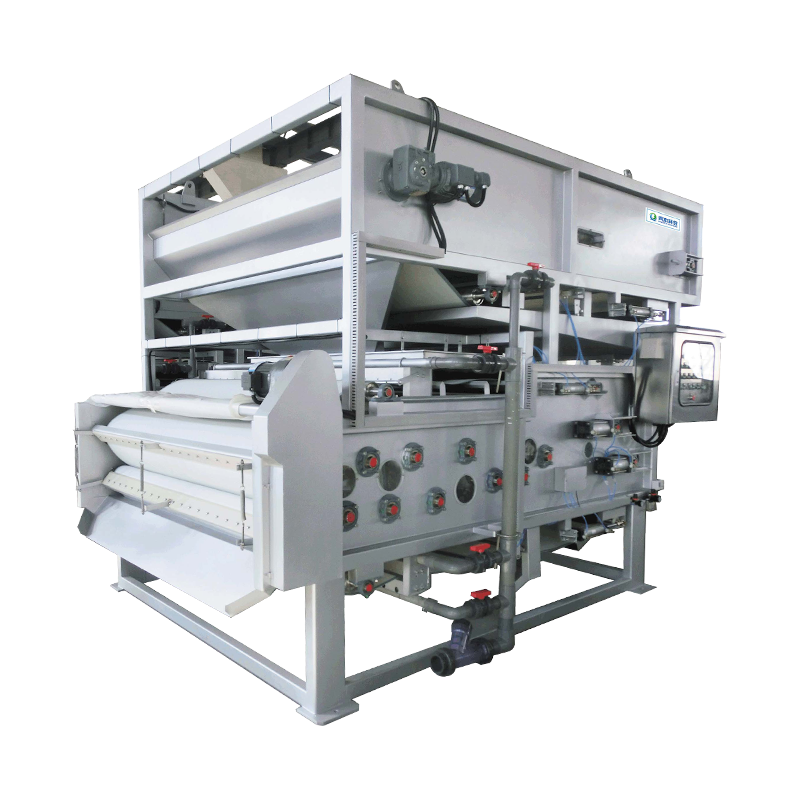
A collector that keeps solids moving also stabilizes the feed to downstream dewatering, so belt presses and screw presses run more consistently.
Where Sludge Collectors Are Used
Municipal and industrial plants use the same collector families with different priorities. In municipal wastewater treatment, suction-type collectors dominate secondary clarifiers because return sludge must be removed quickly, while primary clarifiers normally run scraper types.
Food and beverage plants face high organic loads and extreme batch variation, so a scraper with a generous torque margin handles the sudden solids rush after cleaning cycles. Mining and construction applications carry abrasive, high-density solids; peripheral-drive scrapers with hardened blades and deep hoppers reduce wear and downtime. Industrial pre-treatment lines often have rectangular basins, which is why the truss scraper machine is frequently specified for oil-water separation and grit settling stages.
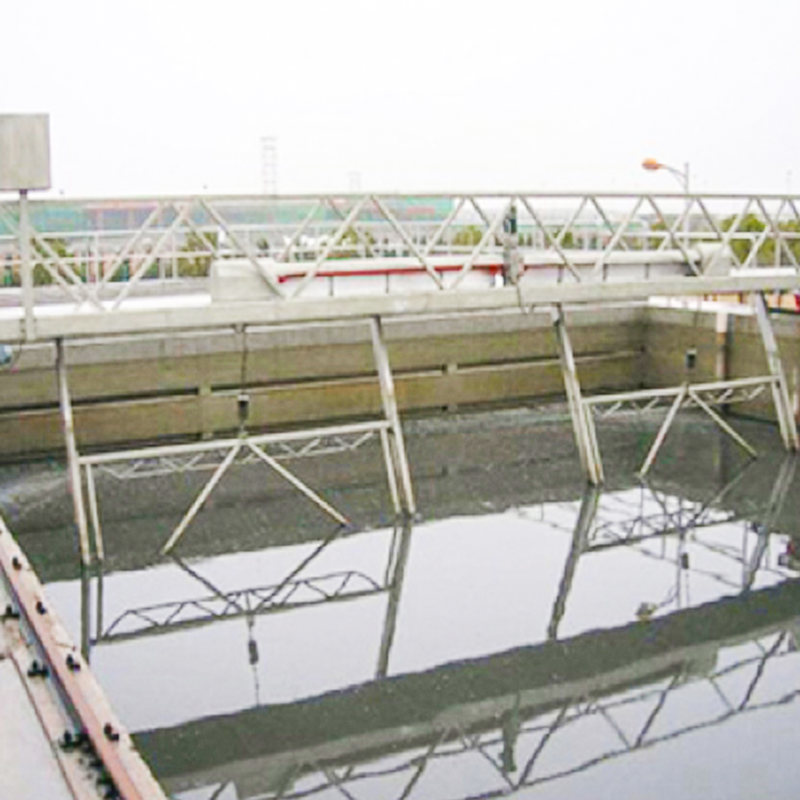 Truss Scraper Machine Manufacturers, Custom Factory - Qingben Environmental TechQingben Environmental Protection is a China Truss Scraper Machine manufacturers and factory, Professional custom Truss Scraper Machine, H...View Product →
Documented project references on this site cover pharmaceutical, brewery, new materials, and petrochemical plants. Each project followed the tank geometry and sludge behavior rather than a standard layout, which is the practical way to avoid a collector that is over-sized in one aspect and under-sized in another.
Frequently Asked Questions About Sludge Collectors
These are the questions we hear most often from wastewater plant operators, engineering consultants, and project owners.
Q1. What is a sludge collector?
A sludge collector is a mechanical system in a sedimentation tank that gathers settled sludge from the floor and moves it to a central hopper or outlet pipe. The two common forms are scrapers, which push solids, and suction collectors, which lift them through pipes.
Q2. What is the difference between a sludge scraper and a sludge suction collector?
A scraper pushes settled solids across the tank floor into a hopper, so sludge stays on the floor longer. A suction collector uses water pressure to lift dilute sludge into pipes immediately, which gives a shorter sludge retention time, a major advantage in activated-sludge clarifiers.
Q3. How does a sludge collector work?
A drive unit rotates rake arms in a circular tank or moves a traveling bridge in a rectangular tank. Blades or suction headers sweep the floor at low speed, usually around one to three revolutions per hour for medium and large circular clarifiers, continuously steering solids to the removal point.
Q4. How much does a sludge collector cost?
The price depends mainly on tank diameter, drive type, wetted materials, and the control package. A small rectangular truss scraper costs a fraction of a large peripheral-drive clarifier machine. Prepare tank drawings and sludge data first, and suppliers can quote accurately.
Q5. How do I choose a sludge scraper for a rectangular sedimentation tank?
Match the bridge length to the tank width, verify that the drive can pull the full truss under the heaviest sludge load, and choose chain or rubber-seal designs based on whether heavy abrasives are present. Also confirm that blade clearance can be adjusted without draining the tank.
Q6. How often should a sludge collector be serviced?
At a minimum, inspect the drive, torque limiter, blade clearance, and suction lines quarterly. Annual service should include a gear oil change, scraper blade replacement if worn, and a full rotation test. Plants handling abrasive grit often cut those intervals in half.