

Content
What Is Sludge in Wastewater Treatment?
Every wastewater treatment plant generates a residual stream that cannot be ignored: sludge. From the primary clarifier, the secondary clarifier and the chemical flocculation tank, settled pollutants collect as a dark, viscous slurry that is still 95–99% water by weight. In other words, the "waste" leaving a treatment works is mostly the water it was meant to remove from the incoming flow.
The U.S. EPA defines sewage sludge as the solid, semi-solid, or liquid residue generated during municipal wastewater treatment. Encyclopaedia Britannica uses a similar definition: the solid, semisolid, or slurry residual material produced as a by-product of wastewater treatment processes. Once sludge has been stabilized to meet regulatory standards for beneficial reuse, it is called biosolids.
Sludge composition changes with the source. In a municipal wastewater treatment plant, the sludge is rich in domestic organic matter, nitrogen and phosphorus; at an industrial site it may contain chemical precipitates, heavy metals or oils. What stays constant is the task: concentrate the solids, reduce the water content, and stabilize the remaining material before disposal or reuse.
The table below summarizes the fractions that matter most for treatment decisions.
| Component | Share of total mass | Effect on treatment |
|---|---|---|
| Water | 95–99% | Sets the volume to pump, store and transport |
| Organic matter | 50–70% of dry solids | Main driver of odor and decomposition; the target of digestion |
| Nutrients (nitrogen, phosphorus) | 1–5% of dry solids | Give fertilizer value; create nutrient-loading risks |
| Inorganic solids | 20–40% of dry solids | Sand and metal salts that wear pumps and screen surfaces |
| Trace contaminants | Variable | Microplastics, heavy metals and pathogens shape disposal rules |
How Is Sludge Generated in a Treatment Train?
Sludge is not a single material. It forms at different points in the process, and the point of origin controls how the sludge behaves in dewatering equipment.
Primary sludge
After screening and grit removal, the primary clarifier settles out the heaviest organic solids. Primary sludge carries about 50–60% of the suspended solids in conventional municipal flow. It is fibrous, gritty and strongly odorous, but it releases water relatively easily, which makes it the easiest sludge to thicken and dewater.
Secondary (biological) sludge
The biological reactor converts dissolved organic matter into bacterial biomass. When that biomass settles in the secondary clarifier, it is removed as waste activated sludge (WAS). WAS leaves the tank at only 0.5–1.5% dry solids, and its bacterial cells bind water so tightly that it demands more polymer and longer retention times in dewatering. Because different sludge types respond differently to dewatering, a machine sized for primary sludge alone will often struggle on a stream dominated by WAS. Most plants therefore blend the two streams to create a more consistent feed.
Chemical sludge
Chemical dosing for phosphorus removal or coagulation produces metal hydroxide flocs. Chemical sludge is dense, fine-grained and abrasive; it raises polymer demand and can shorten the life of pump seals and press screens. A buffer tank that homogenizes primary, secondary and chemical sludge before dewatering is a simple investment with large downstream benefits.
Figure 1. Settling tank schematic: feed enters near the center, clarified effluent overflows the rim, and the sludge blanket is drawn off as underflow for thickening.
Moisture Content Is the Real Problem
Moisture content is the single most important number in sludge management. Raw municipal sludge is typically 97–99% water. Thickening removes the free water between particles, dewatering expels the bound water, and drying evaporates the remainder. The effect of each stage is shown below.
Moisture reduction across typical treatment stages. Stage values represent commonly achieved ranges for municipal sludge; actual figures depend on sludge source, polymer dosing and equipment performance.
The arithmetic is striking. One tonne of sludge at 99% moisture holds just 10 kg of dry solids. Dewatering that same solids mass to 25% dry solids produces about 40 kg of cake, a 25-times reduction in weight to store, pump and haul. This is why investments in dewatering equipment are usually repaid through transport savings within a short operating period.
Why Untreated Sludge Cannot Be Disposed of Directly
Untreated sludge is biologically unstable. Organic matter continues to decompose, releasing hydrogen sulfide and ammonia; the material smells, attracts vectors, and consumes oxygen if released to the environment. Pathogens such as Salmonella and enteric viruses survive for weeks in raw sludge, so direct land disposal brings real public-health risk.
Regulators have responded with strict rules. In the United States, the EPA's 40 CFR Part 503 rule requires biosolids to meet limits for pathogen indicators and heavy metals before land application. In Europe, the Urban Wastewater Treatment Directive and national follow-up laws have pushed the industry toward sludge stabilization and nutrient recovery. Treating sludge is therefore a permit requirement, not a choice.
Cost reinforces the case. Industry estimates typically attribute 20–50% of a wastewater plant's operating budget to sludge processing and disposal. Because haulage and tipping fees are charged by weight, leaving water in the cake converts directly into money.
The Sludge Treatment Train
Regardless of sludge type, the treatment sequence follows the same four-stage logic: thicken, stabilize, dewater, and, if necessary, dry. Each stage targets a different fraction of the water and prepares the material for the next step.
Thickening
Thickening concentrates sludge from about 1% to 4–6% dry solids by removing free water. Gravity belt thickeners, drum thickeners and flotation units are common choices. The water removed is returned to the plant inlet, and the smaller sludge volume allows downstream digesters or dewatering machines to be sized smaller.
Dewatering
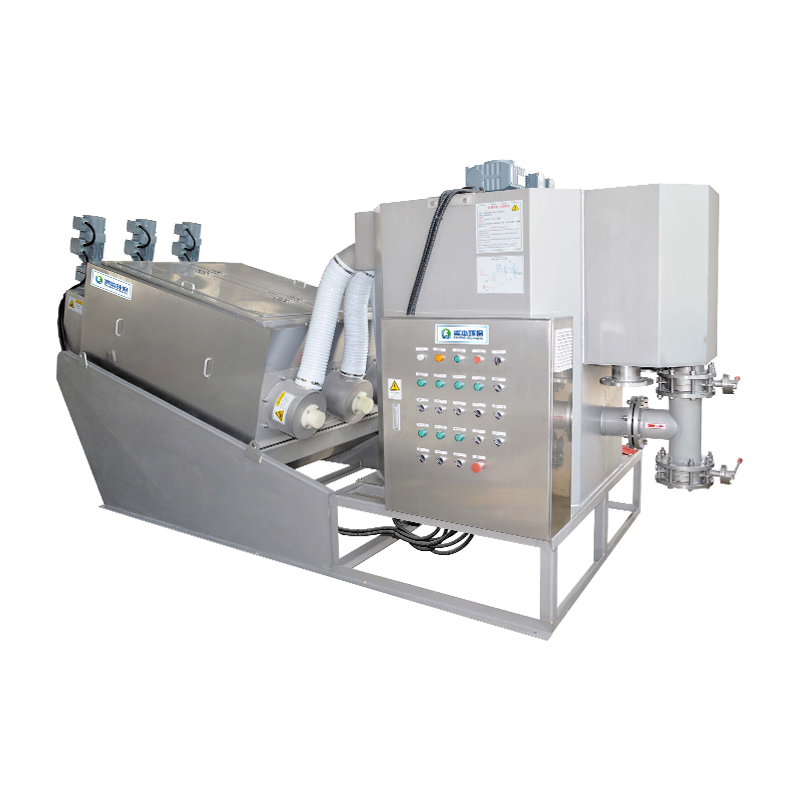
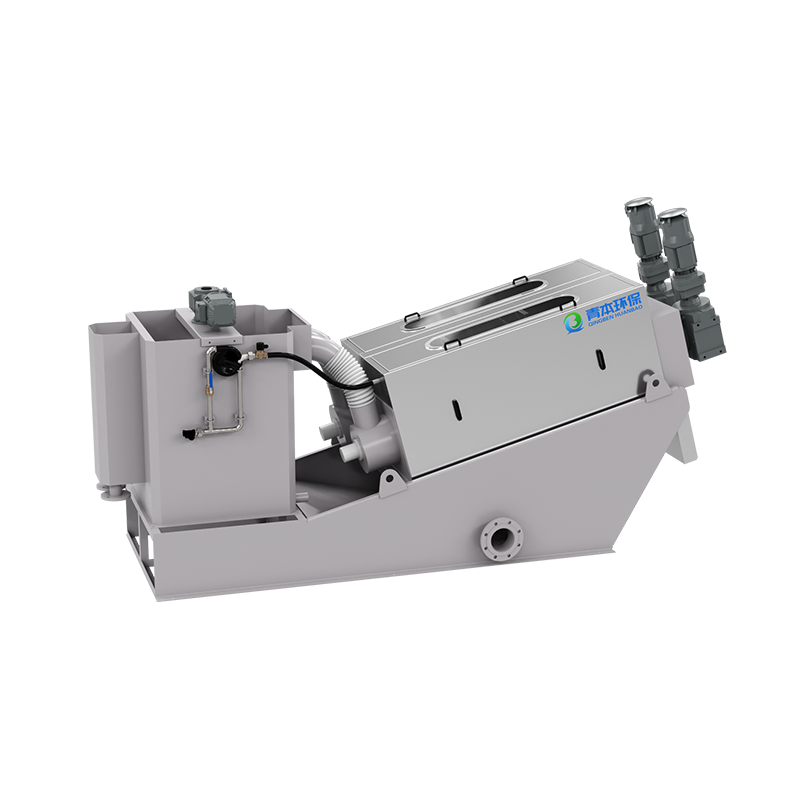
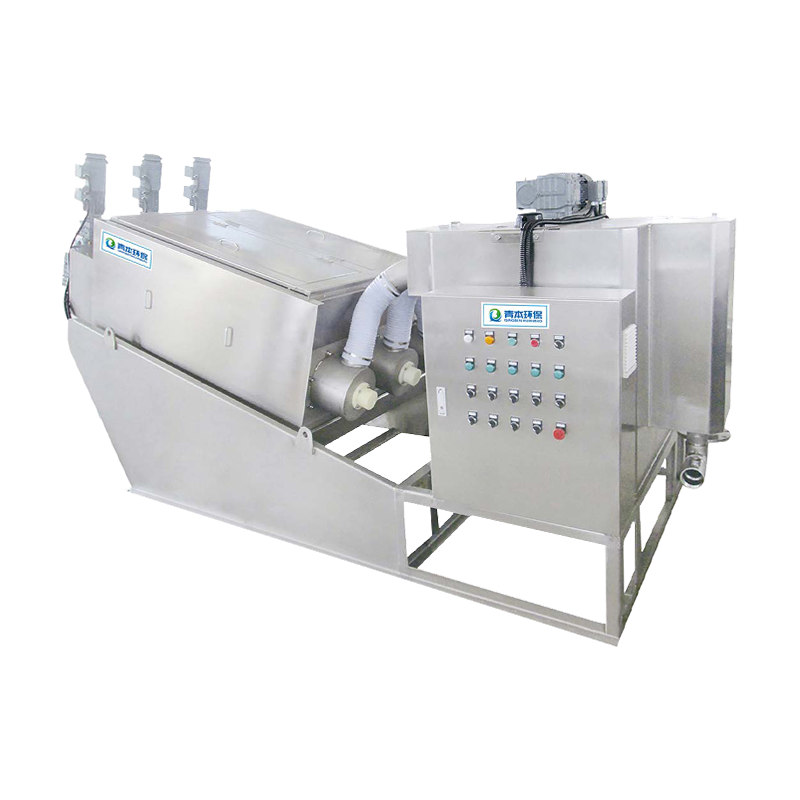
Mechanical dewatering removes the water that remains after thickening. Belt filter presses and centrifuges are workhorses for large flows, while chamber filter presses give high dryness in batch operation. A screw press sludge dewatering machine is a common choice for biological and industrial sludge because its slow-turning screw compresses the sludge against a wedge-wire screen without the high speeds and wash-water demand of a centrifuge.
 Screw Press Sludge Dewatering Machine, Solid-liquid Separator ManufacturersQingben Environmental Protection is a China screw press sludge dewatering machine manufacturers and solid-liquid separator factory, Profe...View Product →
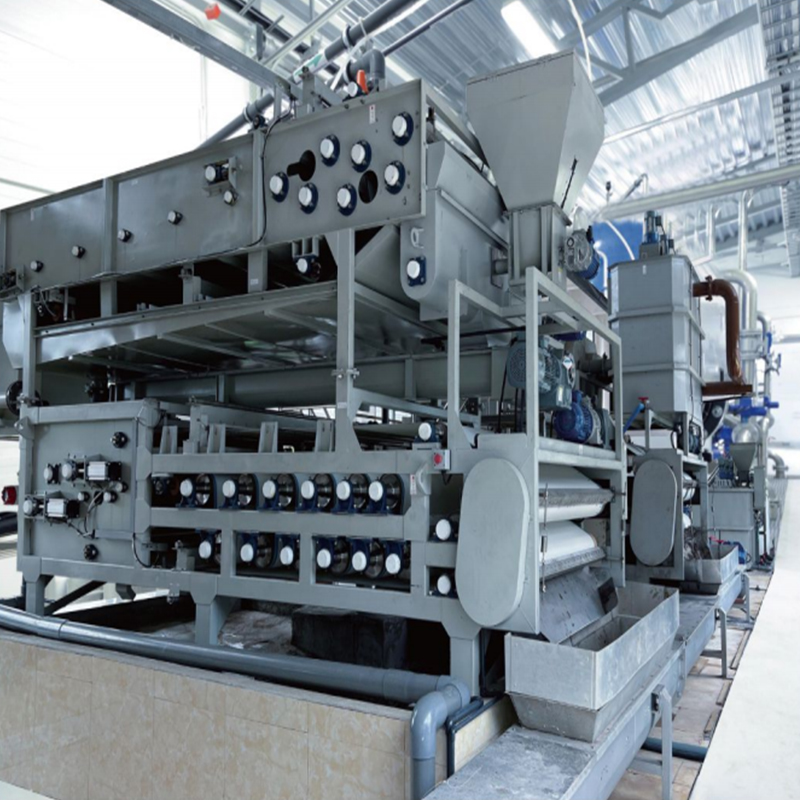
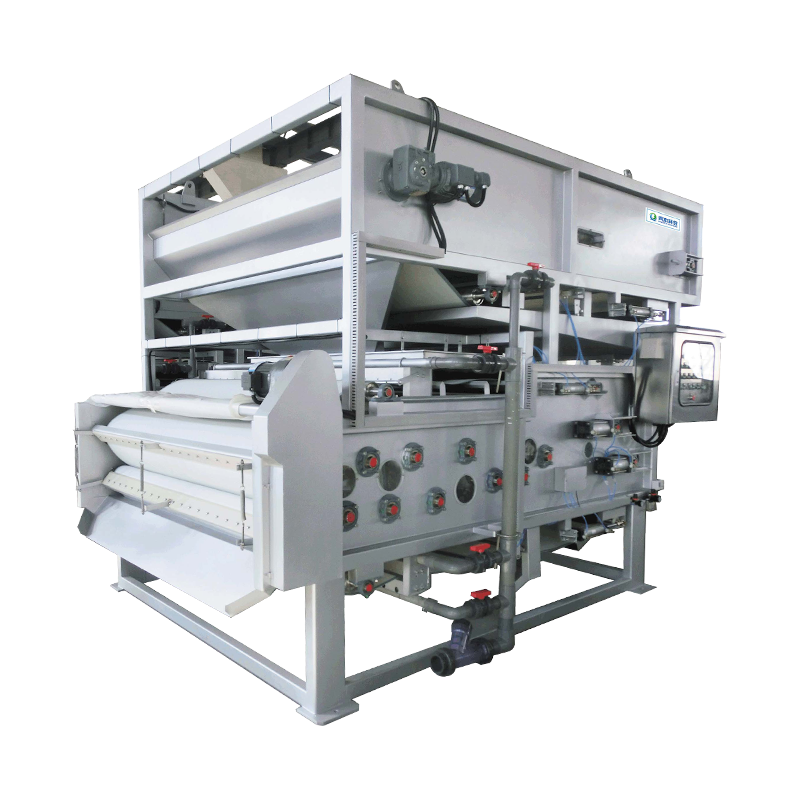
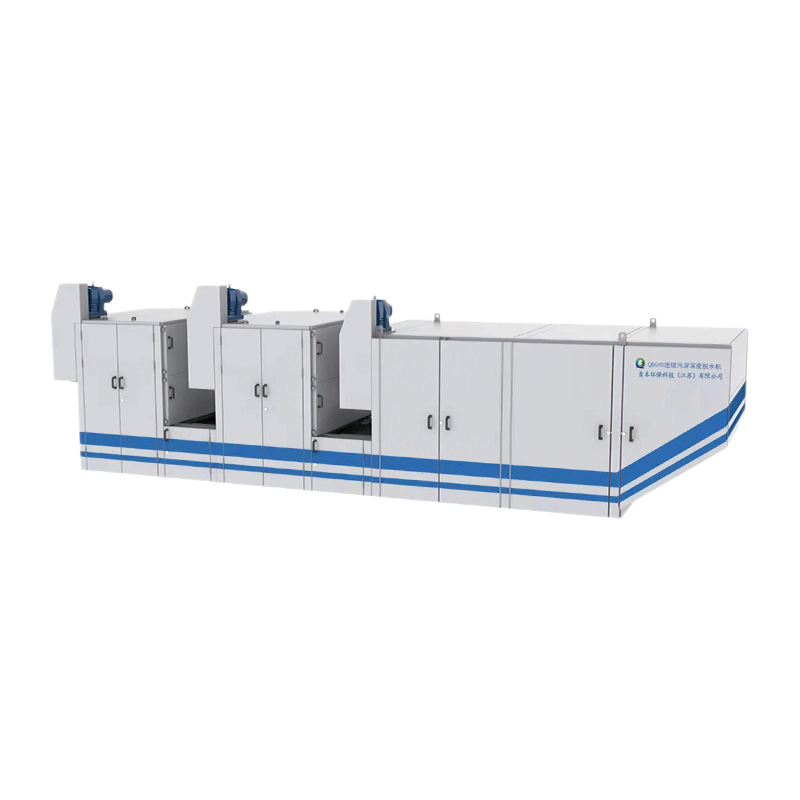
Where the disposal route demands an even drier cake, a high-pressure belt continuous sludge deep dewatering machine applies progressively higher pressure to push cake solids from roughly 25% up to 35–60%, cutting the tonnage sent to landfill or incineration by another wide margin.
 High Pressure Belt Continuous Sludge Deep Dewatering Machine ManufacturersQingben Environmental Protection is a China high pressure belt continuous sludge deep dewatering machine manufacturers and factory, Profe...View Product →
Typical cake dry-solids ranges for common dewatering and drying technologies. Bars span the minimum to maximum values reported in equipment datasheets and industry literature.
| Technology | Typical cake solids | Best suited for | Main trade-off |
|---|---|---|---|
| Screw press | 20–35% | Biological sludge, oily and variable feed | Lower energy and wash water; moderate dryness |
| Belt filter press | 18–25% | Large municipal flows | Continuous operation; cake depends on polymer quality |
| Centrifuge | 20–28% | High-throughput plants with stable feed | High power draw, noise and scroll wear |
| Chamber filter press | 30–45% | Batch polishing and small flows | Batch operation and higher labor input |
| High-pressure belt press | 35–60% | Landfill and incineration routes | Higher capital and chemical consumption |
Drying
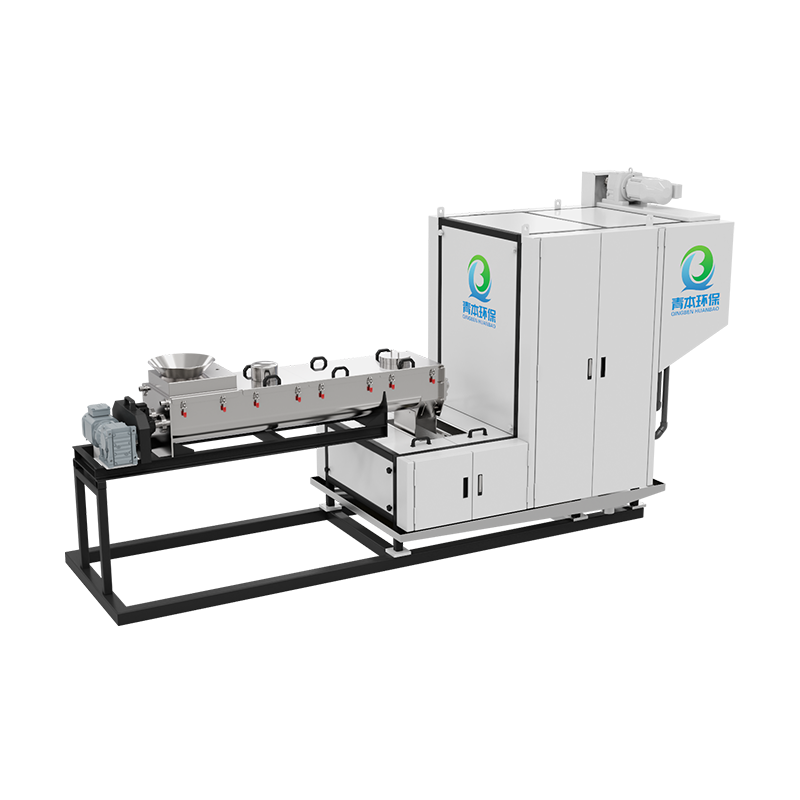
Thermal drying is reserved for plants that need products with 60–85% dry solids: stable granules that can be stored without odor, incinerated with higher energy recovery, or sold as alternative fuel. Low-temperature dryers operate at 40–75°C using heat pumps or waste heat, which makes them safer and more energy-efficient than high-temperature systems. A low-temperature belt type sludge drying machine fits well where residual heat is available or where the plant needs to reduce final mass sharply. Operators comparing low-temperature and high-temperature drying should calculate the full energy input per kilogram of water removed, not just the exit dryness.
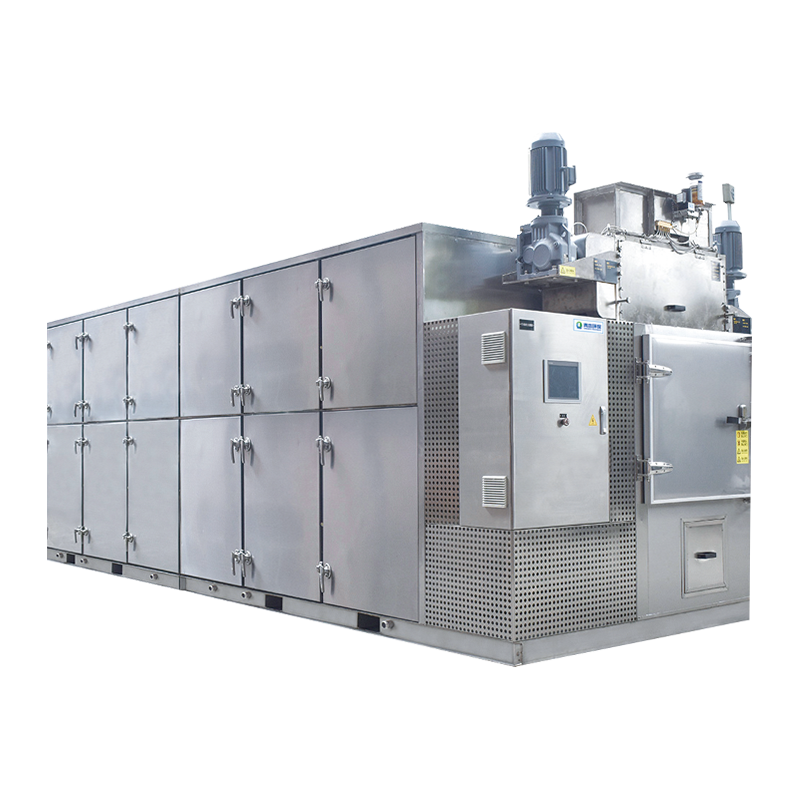 Low Temperature Belt Type Sludge Drying Machine Manufacturers, Custom Factory - Qingben Environmental Protection is a China Low Temperature Belt Type Sludge Drying Machine manufacturers and factory, Professional custo...View Product →
Where Treated Sludge Ends Up
The end point determines how much treatment is justified. Land application of stabilized biosolids is the dominant route in many regions; the U.S. EPA reports that more than half of the biosolids produced in the country are land-applied, and Eurostat figures show roughly half of EU sewage sludge is used on agricultural land. Where farmland is unavailable, dewatered cake goes to landfill, or to incineration with energy recovery.
The direction of regulatory change in Europe and China is toward phosphorus recovery, carbon-neutral operation and fewer landfill deliveries. For operators, the practical lesson is simple: a drier, more stable sludge keeps all these options open, while a wet, unstable cake limits them.
Frequently Asked Questions
Q1. Is sludge the same as biosolids?
No. Sludge is the untreated byproduct from clarifiers. Biosolids are sludge that has been stabilized by digestion, lime treatment or drying to meet standards for safe land application.
Q2. How much water does sludge contain?
Raw sludge is 95–99% water. Thickening lowers it to about 94–96% moisture, mechanical dewatering to 60–85%, and thermal drying can bring it down to 10–40%.
Q3. Which dewatering method gives the driest cake?
Among mechanical options, chamber filter presses and high-pressure belt presses reach 30–60% dry solids. Screw presses give moderate dryness but far better tolerance for oily and variable feeds.
Q4. Why does sludge smell so strong?
The odor comes from microbial decomposition of organic matter, which releases hydrogen sulfide and volatile fatty acids. Digestion, lime stabilization and drying suppress this biological activity.
Q5. Can sewage sludge be used as fertilizer?
Yes, if treated first. Stabilized biosolids contain nitrogen and phosphorus and are widely used as a soil conditioner, but heavy metal content and pathogen levels must meet local regulations.
Q6. How often should dewatering equipment be cleaned?
Most plants flush press screens and conveyors daily and perform a deeper weekly clean. Screw flights, screens and bearings deserve monthly inspection to avoid unscheduled downtime.