

Content
- 1 Why Choose a Screw Press for Sludge Dewatering
- 2 How a Screw Press Sludge Dewatering Machine Works
- 3 Key Advantages of Screw Press Sludge Dewatering Equipment
- 4 Screw Press vs Belt Filter Press: A Practical Comparison
- 5 Sludge Cake Dryness and Moisture Content Outcomes
- 6 How to Choose the Right Sludge Dewatering Machine Size
- 7 Where Screw Press Sludge Dewatering Machines Are Used
- 8 Related Sludge Dewatering Equipment Options
- 9 About Qingben: Sludge Dewatering Equipment Options
- 10 Frequently Asked Questions
- 10.1 Q1. What is a sludge dewatering machine?
- 10.2 Q2. How does a sludge dewatering machine work?
- 10.3 Q3. What is sludge dewatering?
- 10.4 Q4. Why is sludge dewatering important?
- 10.5 Q5. What are the different types of sludge dewatering equipment?
- 10.6 Q6. Which sludge dewatering machine is best?
- 10.7 Q7. How do I choose a sludge dewatering machine?
- 10.8 Q8. What size sludge dewatering machine do I need?
- 10.9 Q9. How much sludge can a dewatering machine process?
- 10.10 Q10. What is the capacity of a sludge dewatering machine?
Why Choose a Screw Press for Sludge Dewatering
A screw press is chosen for sludge dewatering because it operates with low energy consumption, a small equipment footprint, minimal clogging, and fully automatic operation, making it a practical choice for facilities that want to reduce both operating complexity and labor requirements. As a category of Sludge Dewatering Equipment, the screw press design uses a slowly rotating auger inside a filtering drum to gradually compress sludge and separate liquid from solids, producing a drier cake with fewer moving parts and less maintenance than several alternative dewatering methods.
The sections below explain how a screw press style Sludge Dehydrator works, compare it against other common dewatering technologies, and outline the practical factors that influence machine selection for a given site.
How a Screw Press Sludge Dewatering Machine Works
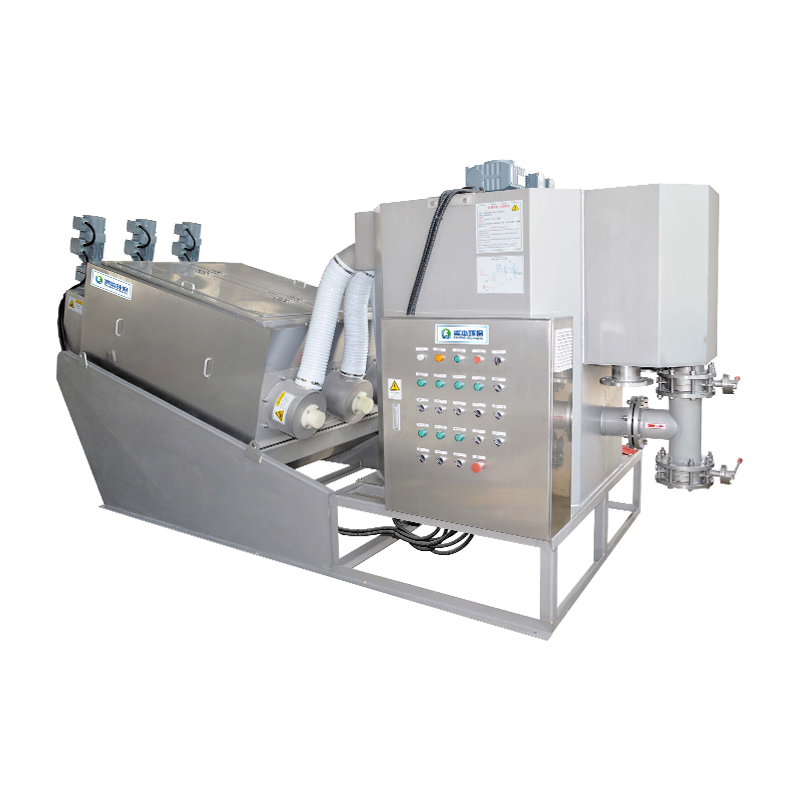
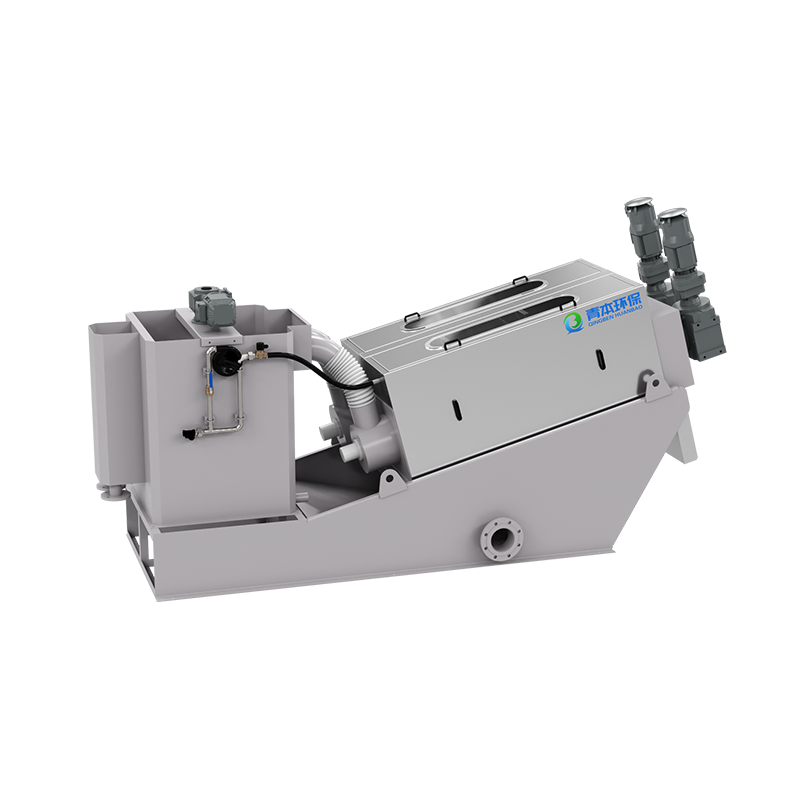
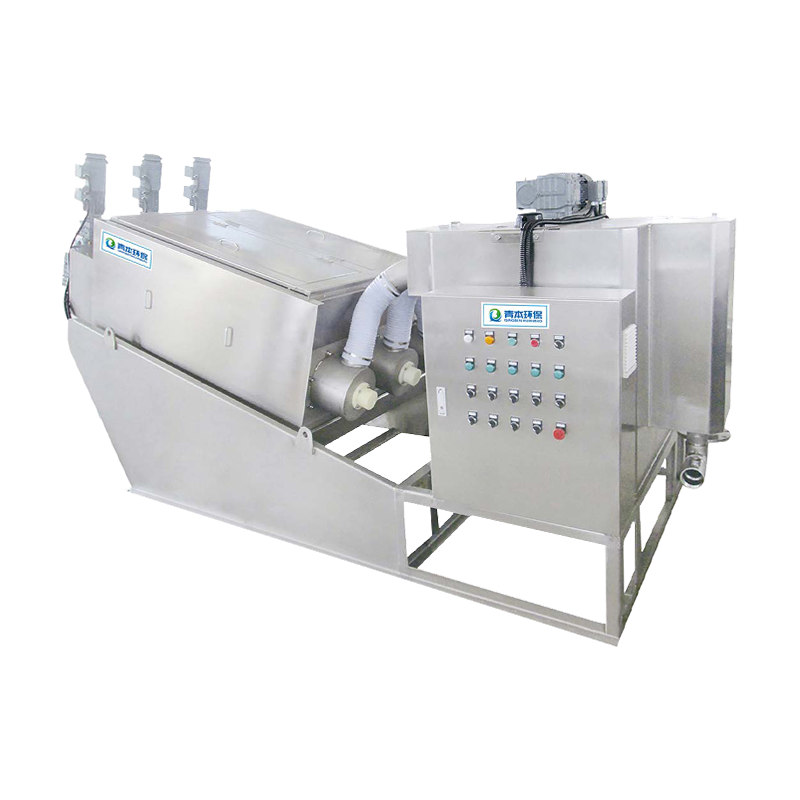
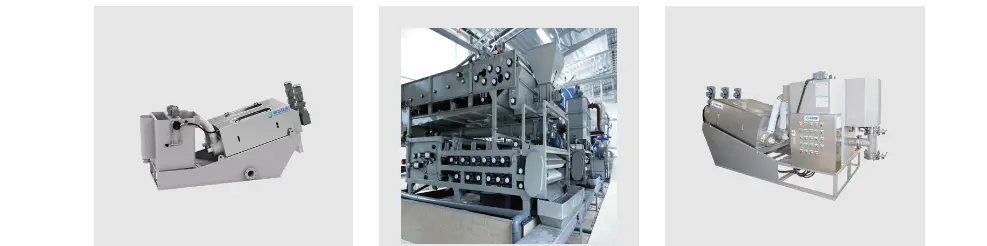
A screw press style dehydrator, sometimes called a snail stacking dehydrator, moves sludge through a cylindrical filtering structure using a slow-turning screw. As the screw advances the material, the space between the screw and the filtering rings gradually decreases, applying continuous pressure that pushes liquid out through the rings while solids are carried forward and compacted into a cake. This gradual pressing action is a key reason screw press equipment resists the clogging that can affect other dewatering designs, since the self-cleaning action of the rotating rings helps prevent material buildup.
Core Components
- Feed inlet: introduces raw sludge into the filtering chamber
- Rotating screw shaft: gradually advances and compresses the sludge
- Stacked filtering rings: allow liquid to pass while retaining solids, with a self-cleaning action between rings
- Cake discharge outlet: releases the compacted, dewatered sludge cake
Key Advantages of Screw Press Sludge Dewatering Equipment
Compared with several other dewatering formats, screw press equipment offers a distinct combination of operational benefits. According to the operating characteristics commonly described for snail stacking dehydrators, the applicable sludge concentration range spans approximately 5000 mg/l to 50000 mg/l, which allows a single machine type to cover a wide range of source sludge conditions across municipal and industrial sites.
Why Full Automation Matters
Because a screw press style dehydrator can operate fully automatically, it does not require a separate concentration mixing tank, mixer, or air compressor in many configurations, which reduces both the equipment footprint and the number of components that need ongoing attention. This automated operation is a major reason facilities managing municipal sewage, water plant residuals, or industrial wastewater from chemical or food and beverage plants continue to specify screw press systems for routine sludge processing.
Screw Press vs Belt Filter Press: A Practical Comparison
Facilities evaluating Sludge Dewatering Equipment often compare screw press machines against belt filter press systems, since both are widely used across municipal and industrial sludge treatment. Each format has characteristics that make it more or less suitable depending on processing volume, available space, and sludge characteristics.
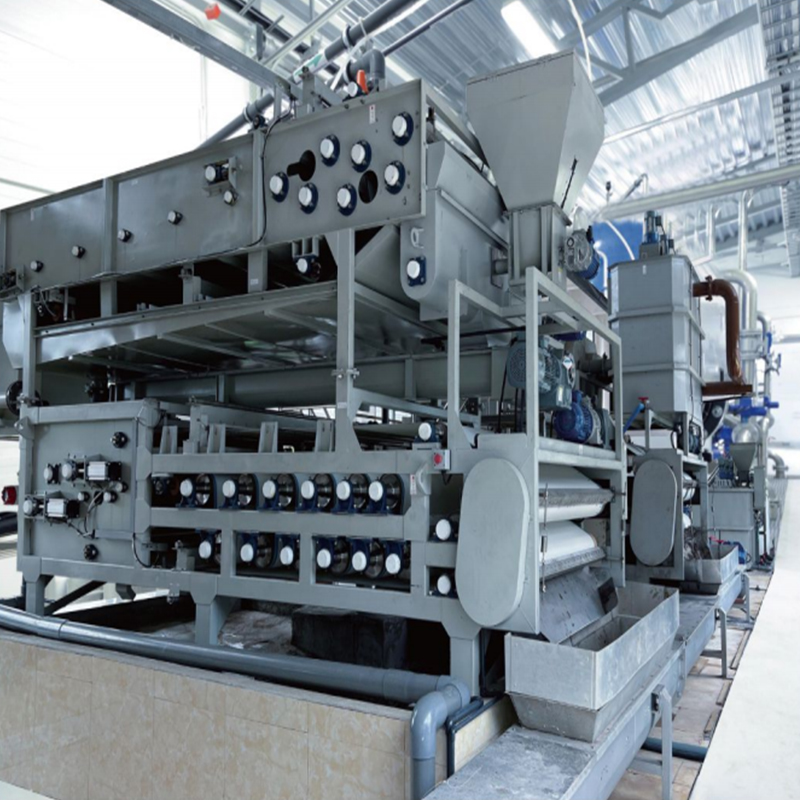
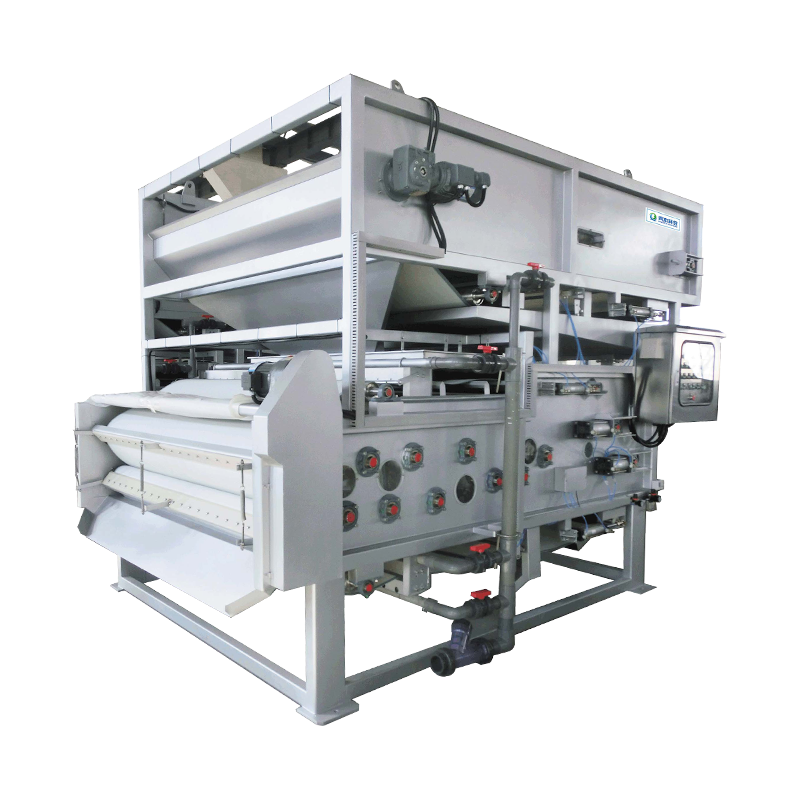
A belt filter press generally supports larger continuous processing volumes and is often paired with unconcentrated sludge feeds, relying on gravity dewatering through a filter belt. A screw press, by contrast, favors sites that prioritize a smaller footprint, lower energy use, and reduced maintenance frequency over maximum throughput. Understanding this trade-off helps facilities match equipment choice to actual site conditions rather than defaulting to a single format.
Sludge Cake Dryness and Moisture Content Outcomes
One of the most practical questions facilities ask when comparing dewatering technologies is how dry the final sludge cake will be, since sludge cake moisture content directly affects downstream handling, transport weight, and disposal or reuse options. Deep dewatering equipment, which applies additional pressing steps beyond standard mechanical dewatering, can further reduce sludge moisture content, with described outcomes moving from around 80 percent down to 60 percent or below through a staged pressing process.
What Affects Sludge Dewatering Dryness
Several factors influence achievable sludge dewatering dryness, including the incoming sludge concentration, whether a thickening or pre-concentration stage is used ahead of the main dewatering unit, and whether the process includes an additional deep dewatering stage. A preconcentration conch-screw press configuration, for example, combines concentration and dewatering functions in sequence, which can improve consistency in the final sludge cake dryness compared with dewatering unconcentrated sludge directly.
How to Choose the Right Sludge Dewatering Machine Size
Selecting an appropriately sized machine depends on several site-specific factors rather than a single capacity figure. The following considerations are commonly reviewed when matching equipment to a facility.
- Daily sludge volume: total volume generated determines minimum required throughput
- Sludge concentration: feed concentration affects processing time and achievable dryness
- Available site space: footprint constraints may favor compact screw press designs
- Operating hours: continuous versus batch operation changes required processing capacity
- Downstream handling needs: target cake dryness affects whether a deep dewatering stage is needed
| Site Condition | Suggested Equipment Direction |
|---|---|
| Limited floor space | Screw press sludge dewatering machine |
| Unconcentrated sludge feed | High dry belt type sludge dewatering machine |
| Need for lower final moisture content | Sludge deep dewatering equipment |
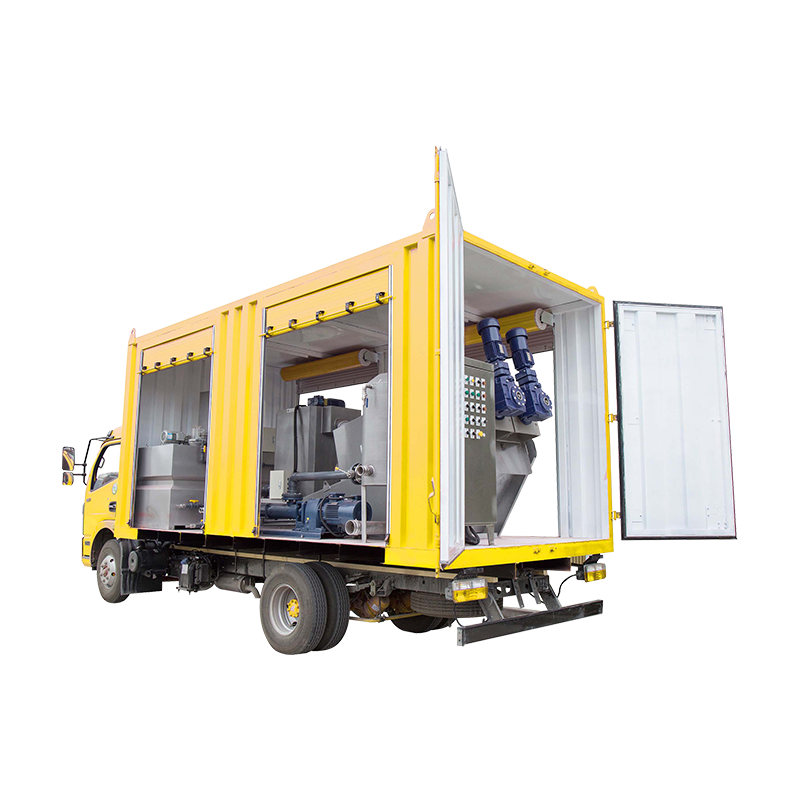
| Septic tank or mobile site service | Mobile screw press sludge dewatering truck |
Where Screw Press Sludge Dewatering Machines Are Used
Screw press style dewatering equipment is used across a wide range of municipal and industrial sites. A municipal sludge dewatering machine handles residuals from wastewater treatment plants, while similar screw press configurations also serve chemical plants, food and beverage plants, water treatment plants, breeding farms, and slaughterhouses.
About Qingben: Sludge Dewatering Equipment Options
Qingben environmental protection sludge dehydration equipment includes a variety of models designed to adapt to different site sizes and different sewage treatment specifications. The snail stacking dehydrator line occupies a small area, consumes low energy, and does not require a separate concentration mixing tank, which saves the need for mixers, air compressors, and related supporting equipment. The equipment supports fully automatic operation to reduce labor costs and includes self-cleaning function to help avoid the clogging issues common with some traditional dehydrator designs.
The belt thickening and dehydrating machine line handles sludge that has not yet passed through a thickening tank, combining concentration and dehydration functions through gravity dewatering across a filter belt, suited to occasions with larger processing volumes. The integrated fuselage design supports smooth operation with reduced noise, and the machine can be controlled either on-site or remotely.
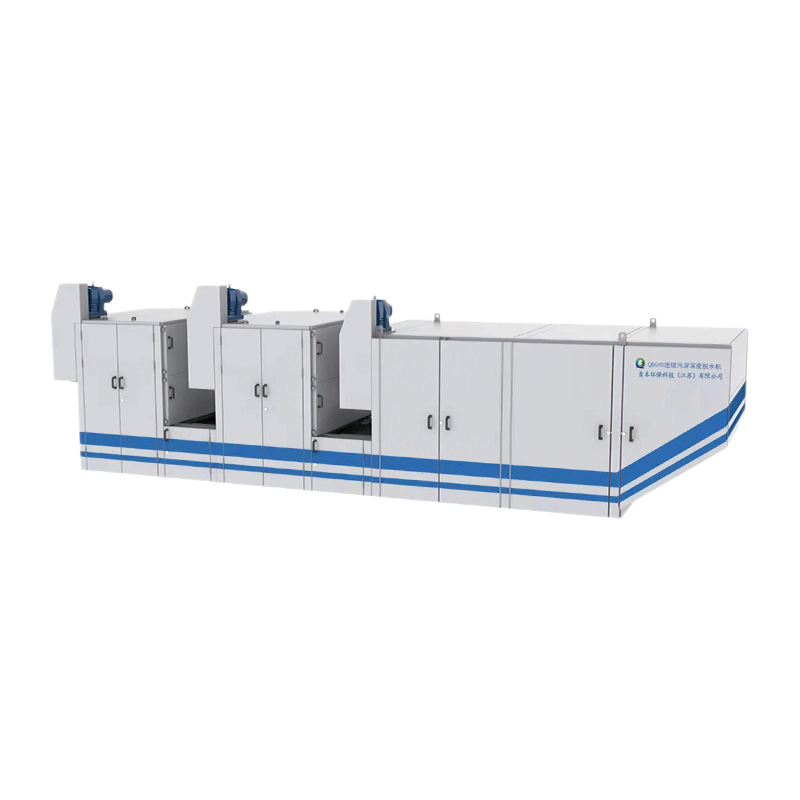
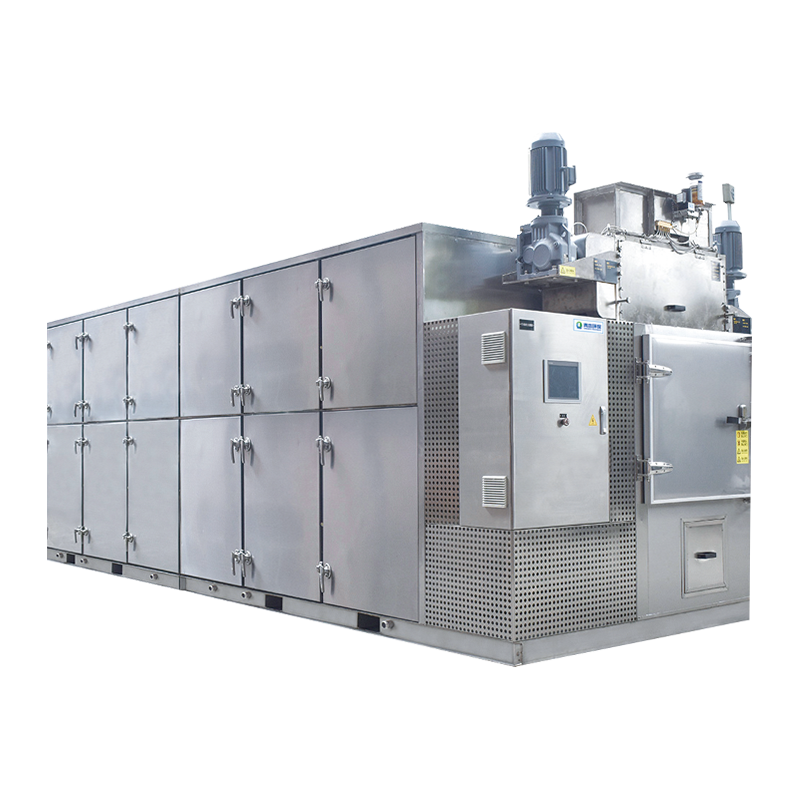
For sites requiring lower final moisture content, sludge deep dewatering equipment can reduce sludge moisture content from around 80 percent to 60 percent or below through a staged pressing process, with a fully enclosed design that supports odor collection, continuous operation, and automatic mud cake discharge under an intelligent integrated monitoring system.
Equipment Line Summary
- Screw Press Sludge Dewatering Machine for compact, low energy operation
- High Dry Belt Type Sludge Dewatering Machine for larger unconcentrated volumes
- Preconcentration Conch-Screw Press Sludge Dehydrator for combined concentration and dewatering
- Mobile Screw Press Sludge Dewatering Truck for on-site septic tank service
- Sludge Deep Dewatering Equipment for further moisture reduction
- High Pressure Belt Continuous Sludge Deep Dewatering Machine for demanding sludge properties
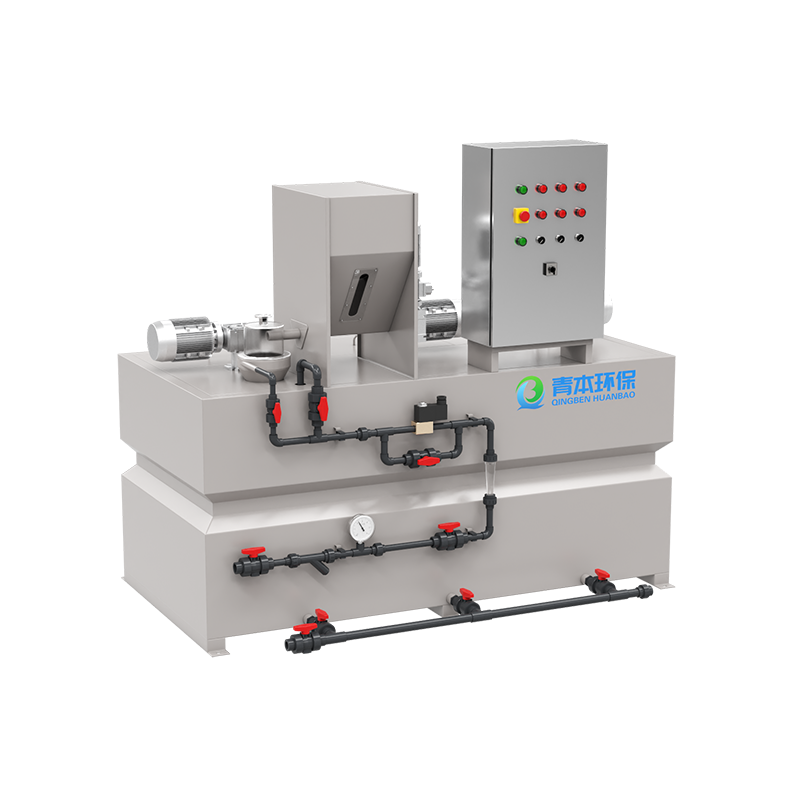
- Sludge Modification Mixer for adapting to varying mud quality and modification requirements
Frequently Asked Questions
Q1. What is a sludge dewatering machine?
A sludge dewatering machine is equipment used to separate liquid from solid sludge, reducing sludge volume and weight to simplify handling and disposal.
Q2. How does a sludge dewatering machine work?
Most machines apply mechanical pressure or gravity filtration to force water out of sludge while retaining solids, producing a drier sludge cake as output.
Q3. What is sludge dewatering?
Sludge dewatering is the process of reducing the water content of sludge generated from wastewater or sewage treatment, making the resulting material easier and less costly to transport and manage.
Q4. Why is sludge dewatering important?
Reducing sludge moisture content lowers transport weight, supports easier downstream processing, and helps facilities manage sludge volume more efficiently.
Q5. What are the different types of sludge dewatering equipment?
Common types include screw press dewatering machines, belt filter presses, high dry belt type machines, and deep dewatering equipment, each suited to different sludge conditions and site requirements.
Q6. Which sludge dewatering machine is best?
There is no single best machine for every site, since the right choice depends on sludge concentration, available space, processing volume, and target final moisture content.
Q7. How do I choose a sludge dewatering machine?
Consider daily sludge volume, feed concentration, available footprint, operating schedule, and downstream handling needs before selecting a specific machine type and size.
Q8. What size sludge dewatering machine do I need?
Machine sizing is based on daily sludge volume and desired throughput, which is why site assessment is generally recommended before finalizing equipment selection.
Q9. How much sludge can a dewatering machine process?
Processing capacity varies by machine model and configuration, with screw press machines generally supporting sludge concentrations from approximately 5000 mg/l to 50000 mg/l.
Q10. What is the capacity of a sludge dewatering machine?
Capacity depends on the specific model and application, and is typically matched to a facility's daily sludge generation volume and target operating hours.