

Screw press dewatering outperforms most conventional sludge treatment methods in energy efficiency, operational simplicity, and total lifecycle cost — particularly for municipal wastewater plants, food processing facilities, and industrial operations handling low-to-medium solids concentrations. While belt filter presses and centrifuges remain widely used, the screw press sludge dewatering machine has become the preferred solid-liquid separator in an expanding range of applications due to its continuous operation, low wash water demand, and minimal maintenance requirements.
This article provides a direct technical comparison between screw press technology and other major sludge dewatering methods — with performance data, application guidance, and practical selection criteria.
Content
- 1 How Screw Press Dewatering Works
- 2 Comparison with Belt Filter Press
- 3 Comparison with Centrifuge Dewatering
- 4 Comparison with Plate Filter Press
- 5 Side-by-Side Performance Data
- 6 Cake Dryness Across Sludge Types
- 7 When to Choose Screw Press Over Other Methods
- 8 About Qingben Environmental Technology (Jiangsu) Co., Ltd.
- 9 Frequently Asked Questions
How Screw Press Dewatering Works
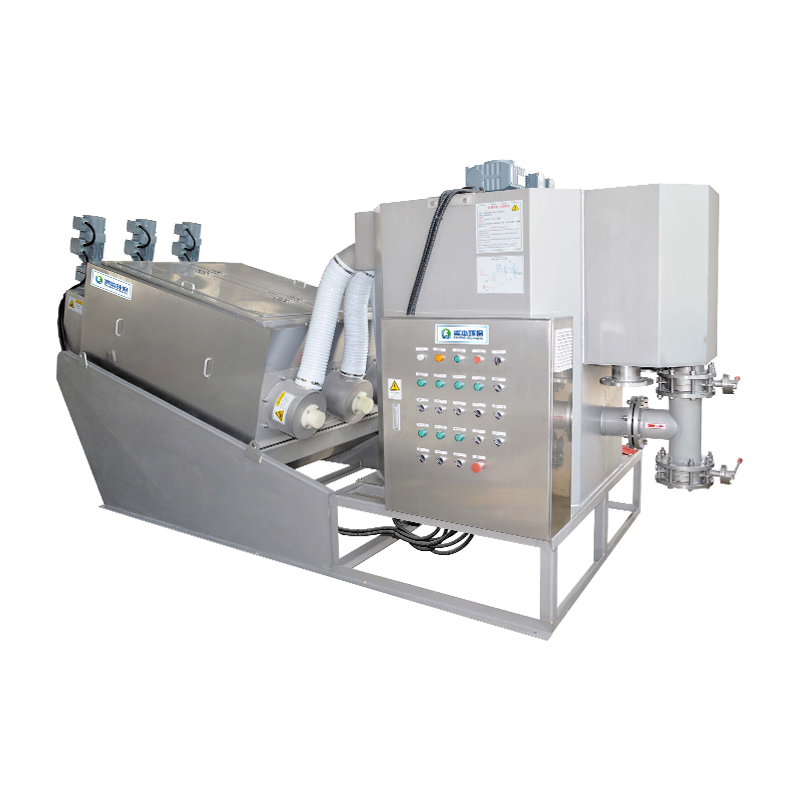
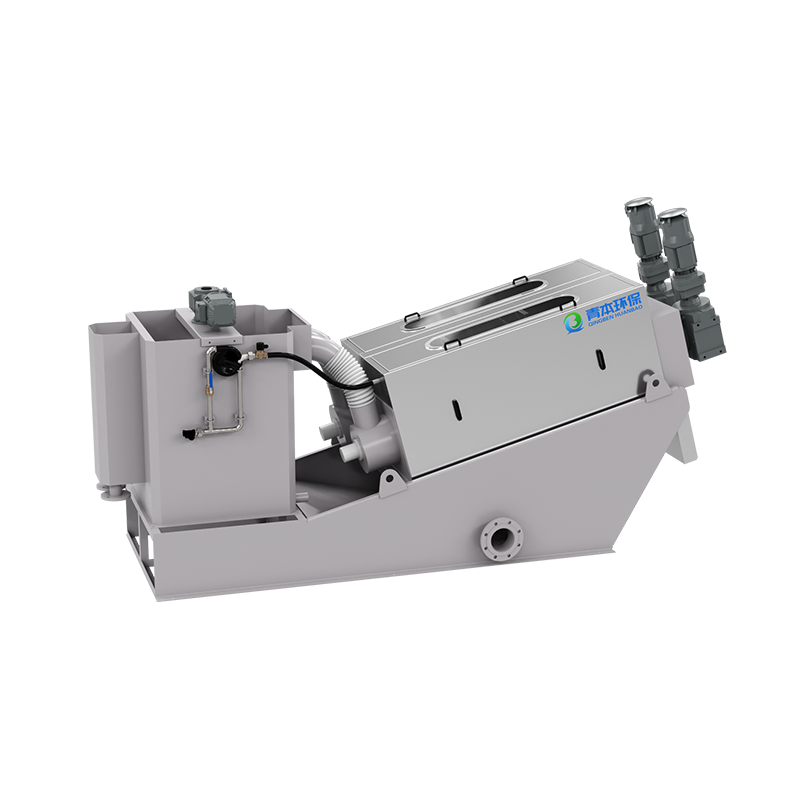
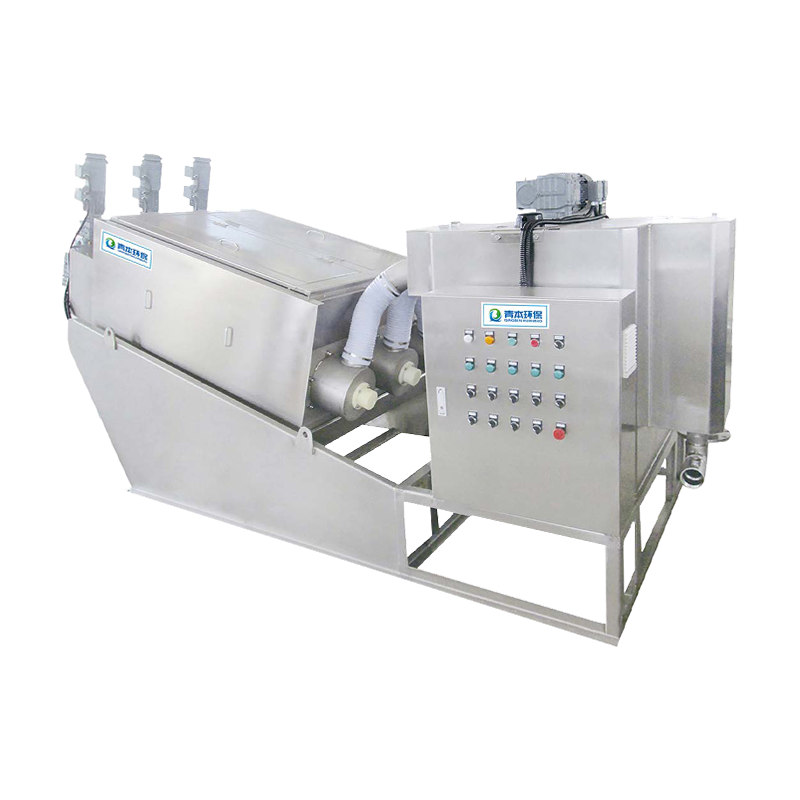
A screw press sludge dewatering machine operates by feeding conditioned sludge into a cylindrical screen drum, where a rotating screw conveyor progressively compresses the material as it advances toward a discharge end. The filtrate drains through the screen openings, and the dewatered cake is discharged at a controlled back pressure.
The key mechanical principle is gradual, progressive compression — the screw pitch decreases along the shaft length, increasing pressure continuously without shock loading. This makes the process well-suited to biological and fibrous sludges that would blind or damage more aggressive dewatering equipment.
Core Operating Parameters
- Feed solids concentration: typically 0.2% to 3% TS (total solids)
- Cake solids output: 18% to 28% TS depending on sludge type and polymer dosing
- Power consumption: 0.01 to 0.05 kWh per kg of dry solids — significantly lower than centrifuges
- Wash water usage: minimal, typically 1 to 3 m³/hour for self-cleaning screen models
- Operational noise level: typically below 75 dB, suitable for enclosed facilities
Comparison with Belt Filter Press
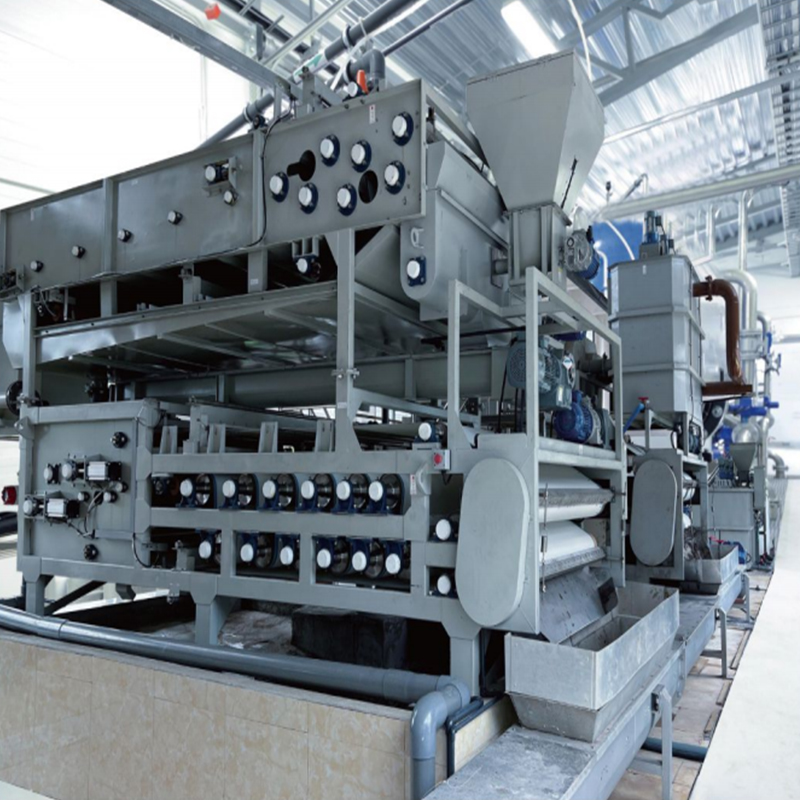
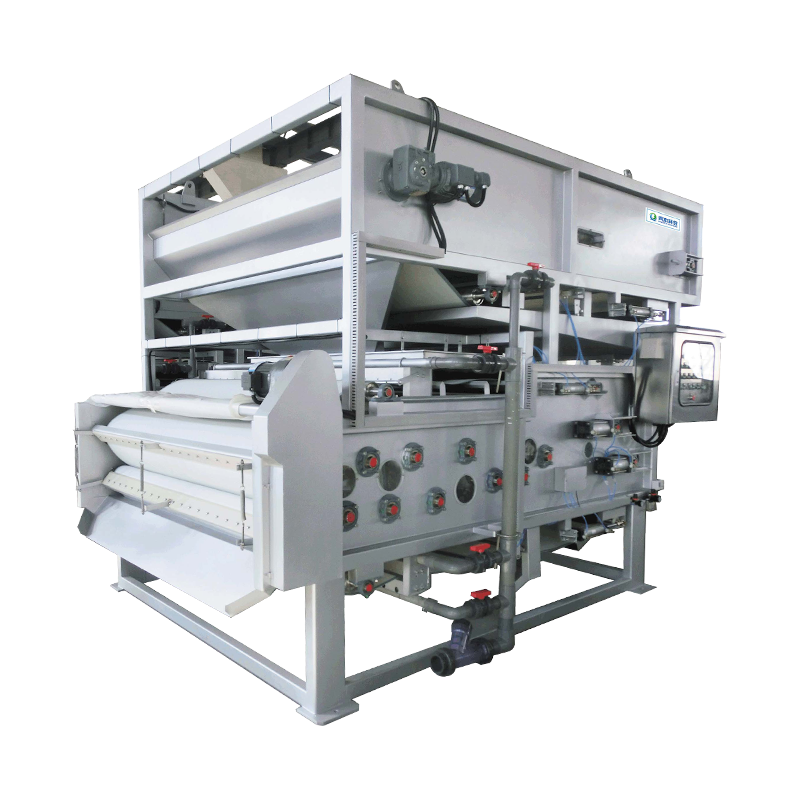
Belt filter presses have been a standard in municipal sludge dewatering for decades. They apply mechanical pressure through a series of rollers onto sludge sandwiched between two tensioned belts. While effective, they require substantial wash water — commonly 15 to 30 m³ per hour — and demand frequent belt inspection, tensioning, and replacement.
The screw press solid-liquid separator, by contrast, uses a self-cleaning screen design that requires only minimal intermittent flushing. This alone can reduce wash water consumption by over 80% compared to belt press systems. In water-scarce regions or facilities with high wastewater treatment costs, this difference is operationally significant.
Belt presses also require open installation environments due to spray mist generation, limiting placement options. Screw press dewatering equipment is fully enclosed and can be installed in compact indoor spaces without odor or aerosol concerns.
Comparison with Centrifuge Dewatering
Centrifuges (decanter centrifuges) achieve higher cake dryness than screw presses — typically 22% to 35% TS — and are well-suited for high-volume industrial operations where throughput takes priority. However, they consume substantially more energy: 0.3 to 1.0 kWh per kg DS, versus 0.01 to 0.05 kWh for screw press units.
Centrifuges also generate significant noise (often exceeding 85 dB), require vibration isolation mounting, and involve complex rotating assemblies with higher maintenance frequency and parts cost. For small-to-medium facilities processing under 50 m³/hour of sludge, the energy and maintenance overhead of centrifuge systems is difficult to justify.
The screw press sludge dewatering machine is the more practical choice where energy costs are a concern, where operator expertise is limited, or where quiet, low-vibration operation is required.
Typical energy consumption comparison across common sludge dewatering technologies
Comparison with Plate Filter Press
Plate filter presses (chamber filter presses) deliver the highest cake dryness of any dewatering method — up to 40% to 50% TS — making them a preferred choice for applications where minimum cake volume is critical, such as hazardous sludge disposal or specific industrial effluents.
However, plate filter presses operate in batch mode, not continuously. Each cycle — including filling, pressing, cake discharge, and cloth washing — typically takes 2 to 4 hours. This batch limitation means larger installations require multiple units running in rotation, increasing capital cost and footprint.
For facilities that require continuous, unattended, 24-hour operation, screw press dewatering is the more appropriate technology. The screw press solid-liquid separator runs automatically with minimal intervention, controlled by simple PLC systems, and can be integrated into fully automated sludge handling lines.
Side-by-Side Performance Data
| Parameter | Screw Press | Belt Filter Press | Centrifuge | Plate Filter Press |
|---|---|---|---|---|
| Cake Dryness (% TS) | 18 – 28% | 18 – 25% | 22 – 35% | 35 – 50% |
| Energy (kWh/kg DS) | 0.01 – 0.05 | 0.05 – 0.12 | 0.3 – 1.0 | 0.08 – 0.15 |
| Wash Water Demand | Very Low | High | Low | Medium |
| Operation Mode | Continuous | Continuous | Continuous | Batch |
| Maintenance Level | Low | Medium–High | High | Medium |
| Noise Level | < 75 dB | 75 – 80 dB | > 85 dB | 70 – 78 dB |
| Odor / Enclosure | Fully enclosed | Open / mist | Semi-enclosed | Semi-enclosed |
Cake Dryness Across Sludge Types
The output dryness of screw press dewatering varies meaningfully depending on sludge origin and polymer conditioning. The chart below shows typical cake solids ranges achievable with a screw press solid-liquid separator across common sludge categories.
Typical screw press dewatering output by sludge type with optimized polymer conditioning
When to Choose Screw Press Over Other Methods
The screw press sludge dewatering machine is the most suitable option under the following conditions:
- Small to medium flow volumes — plants processing 5 to 200 m³/day of sludge benefit most from screw press economics
- Energy cost sensitivity — facilities in regions with high electricity tariffs where centrifuge costs are prohibitive
- Limited wash water availability — water recycling plants, arid regions, or facilities with high water treatment costs
- Indoor installation requirements — enclosed units with low noise and no aerosol are suited to urban treatment facilities
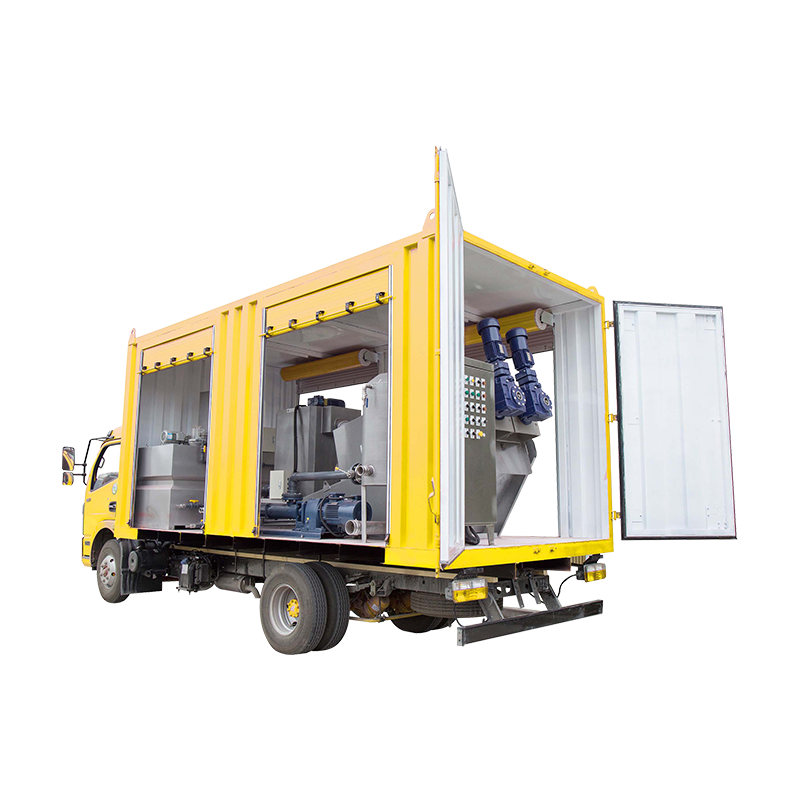
- Unattended or remote operation — screw presses integrate easily with SCADA and PLC systems for fully automated 24-hour runs
- Biological and fibrous sludge types — activated sludge, food waste slurries, and similar materials are well-handled by progressive compression
Conversely, if maximum cake dryness above 35% TS is a hard requirement — such as for incineration or certain landfill specifications — a plate filter press or centrifuge may be more appropriate despite higher operating costs.
About Qingben Environmental Technology (Jiangsu) Co., Ltd.
Qingben Environmental Technology (Jiangsu) Co., Ltd. is a professional enterprise specializing in the manufacturing and service of sludge and wastewater treatment equipment. We are based in the field of sludge and wastewater treatment equipment research and development, and we specialize in providing sludge dewatering machines, sludge drying equipment, complete sets of wastewater treatment equipment, river and lake sediment drying equipment, and technical services.
As a professional custom screw press sludge dewatering machine manufacturer and solid-liquid separator factory, we provide comprehensive technical support from project consultation, design, construction to operation and maintenance — ensuring the successful implementation and efficient operation of sewage treatment and sludge treatment projects.