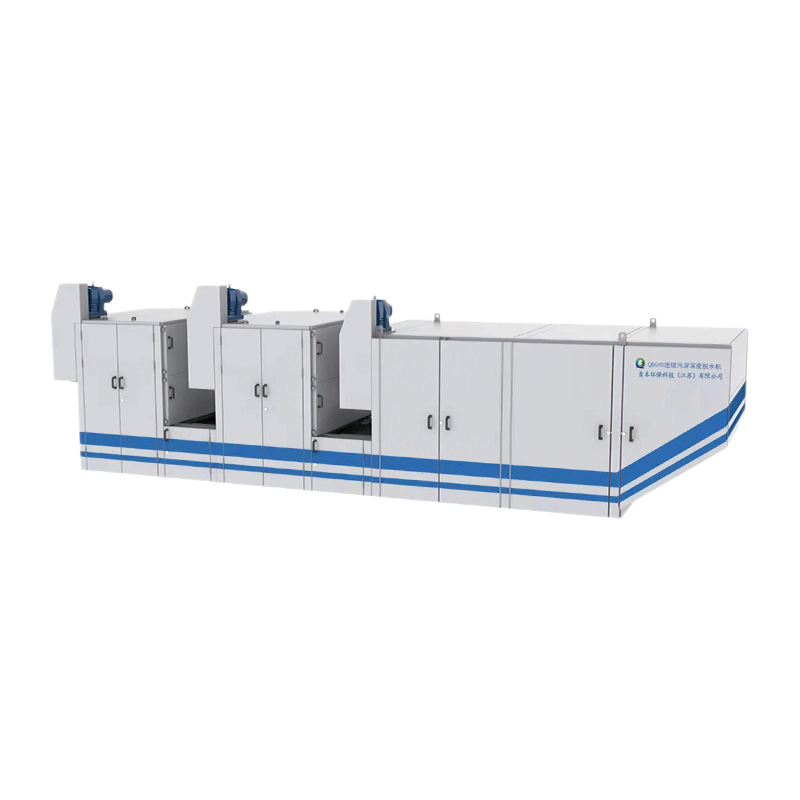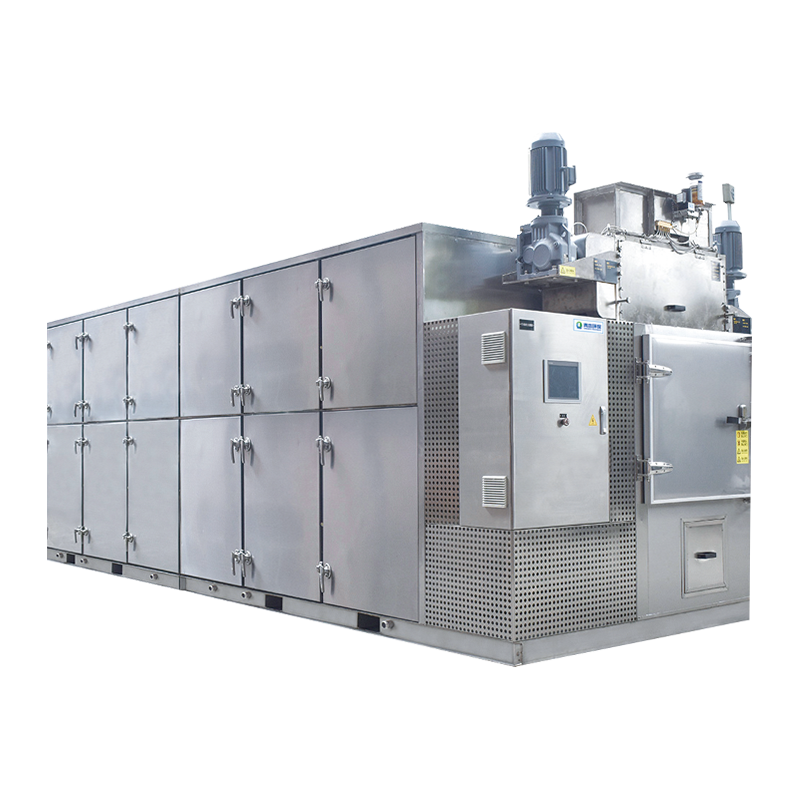


Direct answer: A screw press sludge preconcentration conch machine delivers measurable advantages over conventional dewatering equipment in four areas: it reduces the moisture content of incoming sludge by 15 to 25 percentage points before downstream dewatering, cuts polymer consumption by 20 to 40%, lowers dewatering energy consumption by up to 50% compared to belt presses and centrifuges, and operates continuously with minimal operator intervention. These combined benefits reduce total sludge treatment cost per tonne of dry solids by a documented 30 to 45% in municipal and industrial wastewater treatment plants.
Content
- 1 What the Screw Press Sludge Preconcentration Conch Machine Actually Does
- 2 Key Performance Benefits With Supporting Data
- 3 Low Maintenance Design: Why the Conch Geometry Matters
- 4 Comparison With Alternative Sludge Thickening Methods
- 5 Energy Saving Screw Press Sludge Preconcentration Equipment: The Operational Economics
- 6 Sludge Types and Applications Where the Conch Machine Performs Best
- 7 About Qingben Environmental Technology (Jiangsu) Co., Ltd.
- 8 Frequently Asked Questions
What the Screw Press Sludge Preconcentration Conch Machine Actually Does
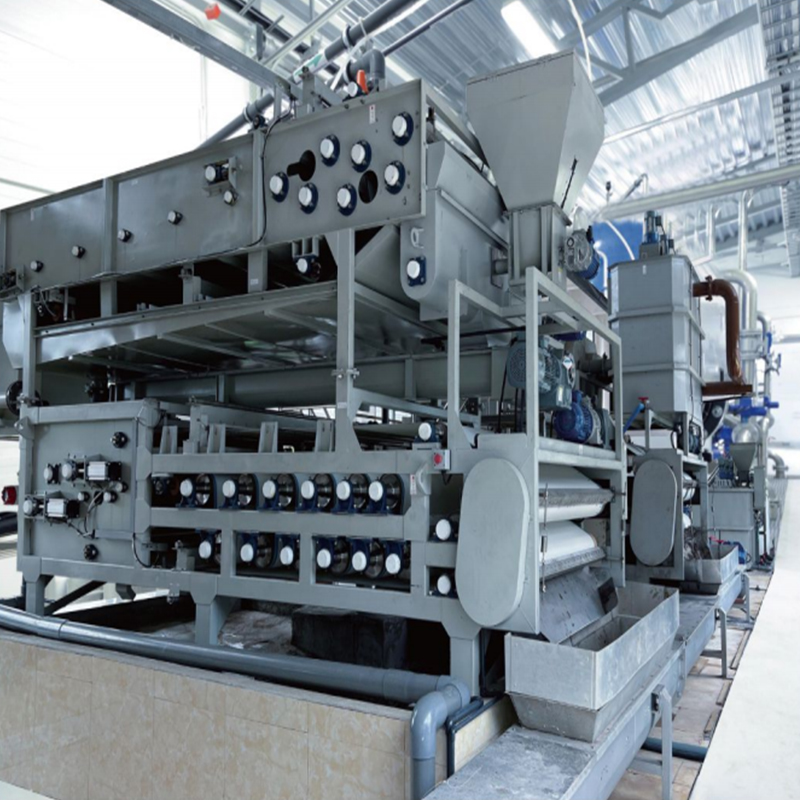
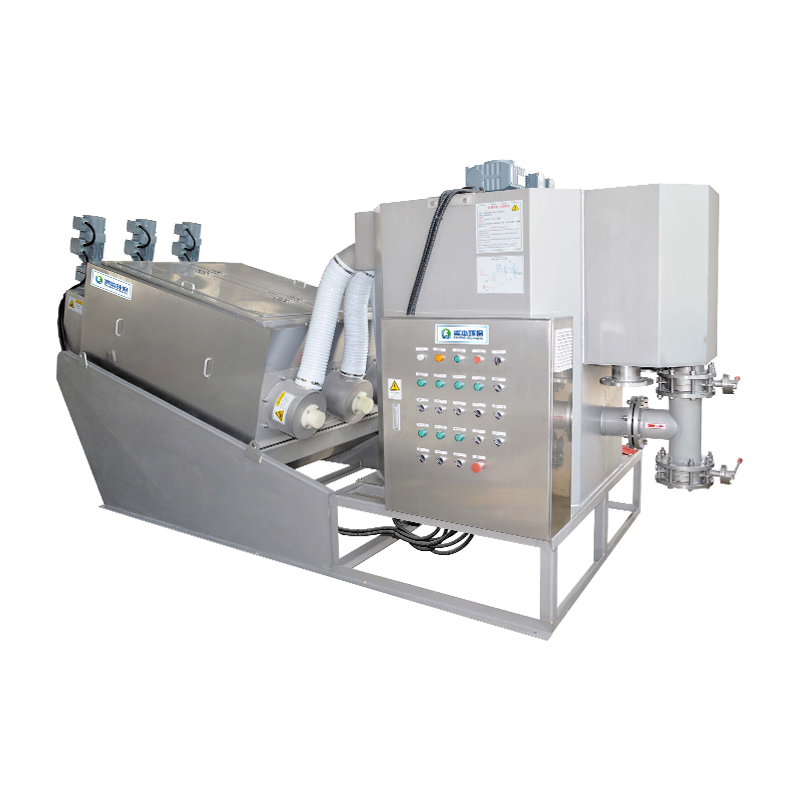
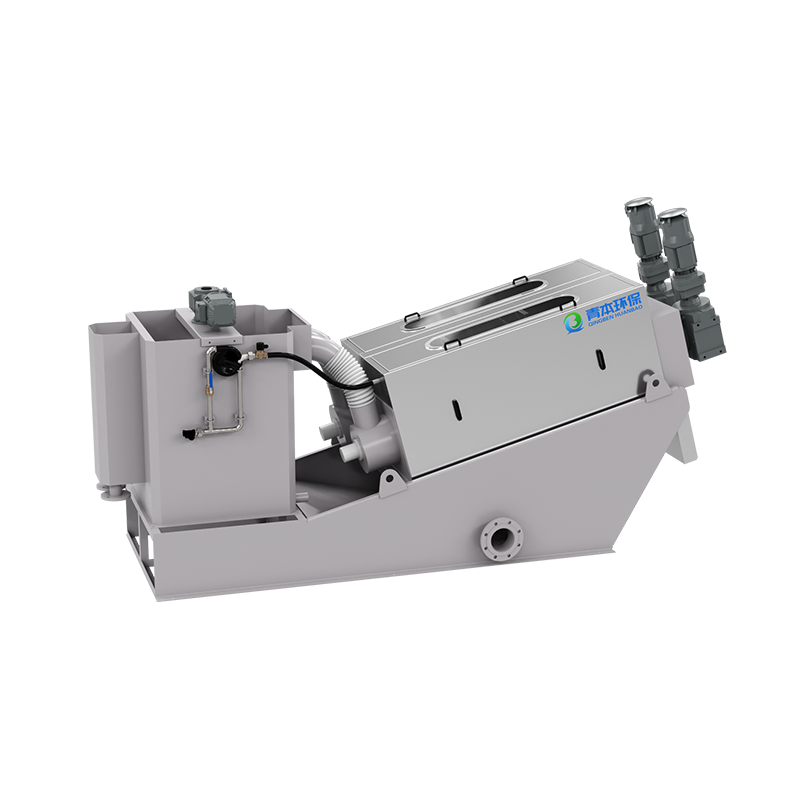
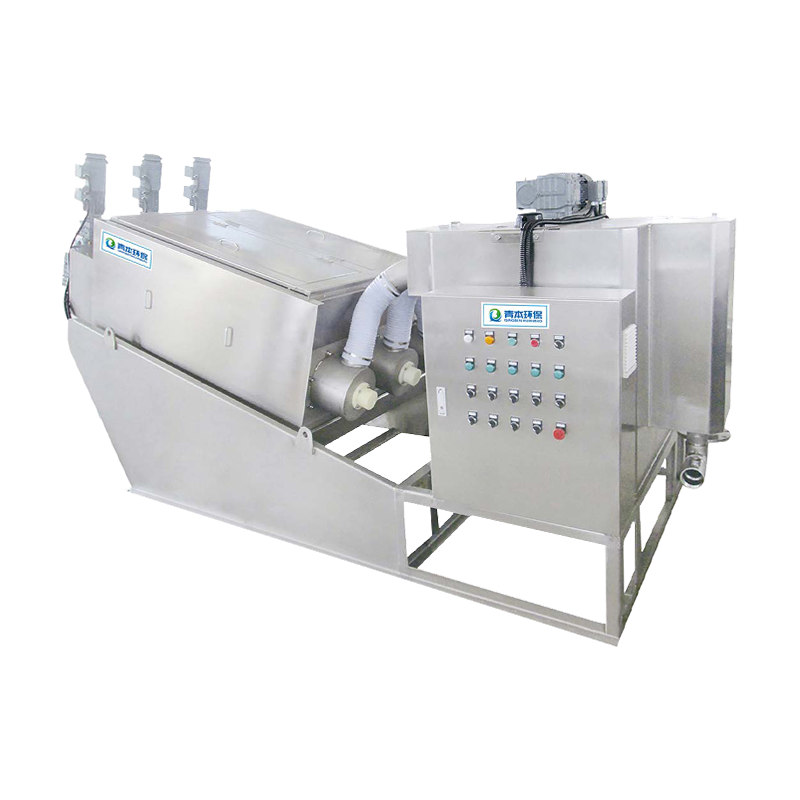
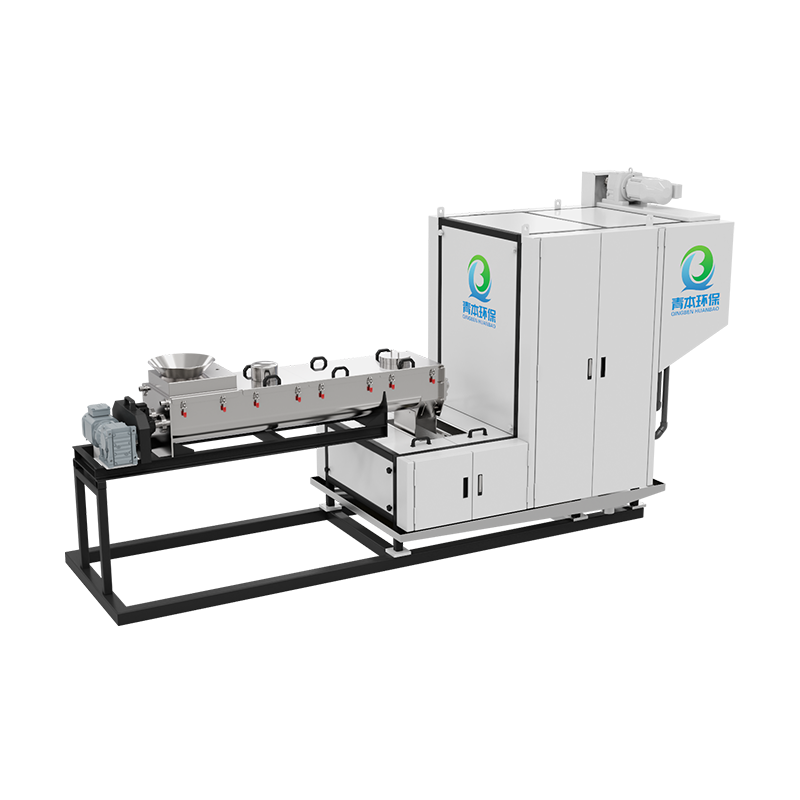
A screw press sludge preconcentration conch machine is a mechanical pre-thickening device positioned upstream of a primary dewatering unit — such as a belt press, centrifuge, or plate press — in a sludge treatment line. Its purpose is to increase the dry solids content of dilute incoming sludge from the typical 0.5 to 1.5% DS (dry solids) delivered from secondary clarifiers and dissolved air flotation units to a concentrated feed of 4 to 8% DS before it enters the main dewatering machine.
The conch (or spiral/snail shell) geometry of the screw flight profile is the defining mechanical feature. As sludge progresses through the helical screw channel, the clearance between the moving screw flight and the static outer screen progressively decreases from inlet to outlet. This controlled compression gently expresses free water through the screen without applying the high shear forces that break up sludge flocs — a critical advantage over centrifugal thickening, which can disrupt floc structure and release bound water that is then more difficult to remove downstream.
The result is a concentrated, structurally intact sludge cake fed to the downstream dewatering stage — delivering better dewatering performance per unit of polymer consumed, lower cycle times on the main dewatering machine, and a drier final cake suitable for lower-cost disposal or resource recovery pathways.
Key Performance Benefits With Supporting Data
Moisture Content Reduction Before Downstream Dewatering
The primary function of a preconcentration machine is solids concentration, and the conch screw press achieves this consistently across a range of sludge types. Incoming secondary sludge at 0.8% DS (99.2% water) can be concentrated to 5 to 7% DS in a single pass — a reduction in water volume of approximately 85% before the sludge reaches the main dewatering press. This dramatically reduces the volumetric loading on the downstream dewatering unit, allowing a smaller or lower-rated dewatering machine to handle the same solids throughput, or the same machine to process significantly more solids per day.
Polymer Consumption Reduction
Polymer (polyelectrolyte) conditioning is the largest chemical cost in most sludge dewatering operations, typically representing 30 to 50% of total dewatering consumable cost. Because the conch screw press gently concentrates sludge without disrupting floc structure, the conditioned flocs formed during polymer dosing remain intact through the preconcentration stage and arrive at the main dewatering unit in optimal condition for pressing. Field data from municipal wastewater treatment plants shows polymer consumption reductions of 20 to 40% for the same final cake dryness when preconcentration is added to the line, compared to direct dewatering of dilute sludge.
Energy Consumption Comparison
The energy advantage of the energy saving screw press sludge preconcentration equipment configuration derives from two factors: the low-speed, low-torque operation of the screw press itself (typically driven by a motor of 0.75 to 3 kW for standard municipal units), and the reduction in loading on the downstream dewatering machine that allows it to operate at lower speed, lower pressure, or shorter cycle times — all of which reduce per-tonne energy consumption.
Low Maintenance Design: Why the Conch Geometry Matters
Conventional sludge thickening technologies — gravity belt thickeners, drum thickeners, dissolved air flotation — involve large surface areas of filter media, spray systems, washwater systems, and high mechanical complexity. All of these create maintenance demands and potential failure modes that add to operational cost and complexity.
The conch screw press preconcentration machine reduces maintenance burden through several design-inherent features:
- Self-cleaning screw mechanism: The relative motion between the rotating screw flight and the static screen produces a continuous self-cleaning action on the screen surface, preventing the progressive blinding that occurs on static filter media. This eliminates the need for high-pressure washwater systems in most sludge types.
- No high-wear components: The low rotational speed of the screw (typically 2 to 5 RPM) means bearing and seal wear rates are a fraction of those seen in centrifuges operating at 2,000 to 3,500 RPM. Mean time between major maintenance interventions is typically 3 to 5 years for the screw assembly, versus 12 to 18 months for centrifuge bowl and scroll replacement.
- Compact footprint: A standard-capacity preconcentration unit requires only 1 to 3 m² of floor space, enabling installation in existing plant rooms without major civil works or structural modifications.
- Fully automated operation: Modern units incorporate PLC control with automated start/stop, polymer dosing control, and integration with plant SCADA systems — enabling fully unattended operation during normal conditions.
Comparison With Alternative Sludge Thickening Methods
Selecting the appropriate preconcentration technology requires understanding where the screw press conch machine excels relative to alternatives and where other technologies may be more appropriate.
| Parameter | Screw Press Conch Machine | Gravity Belt Thickener | Centrifugal Thickener | Drum Thickener |
|---|---|---|---|---|
| Output DS concentration | 4–8% DS | 3–6% DS | 5–8% DS | 3–5% DS |
| Energy consumption | Very low (0.75–3 kW) | Low–moderate | High (15–45 kW) | Low–moderate |
| Washwater requirement | None / minimal | High (belt washing) | None | Moderate |
| Floc structure preservation | Excellent | Good | Poor (high shear) | Good |
| Maintenance frequency | Low (3–5 yr major) | Moderate (belt replace) | High (scroll/bowl wear) | Moderate |
| Footprint | 1–3 m² | 10–30 m² | 2–5 m² | 3–8 m² |
| Odor / splash enclosure | Fully enclosed | Open (odor risk) | Enclosed | Partially enclosed |
The fully enclosed design of the screw press conch machine is particularly valuable in urban wastewater treatment plants and food processing facilities where odor control is a regulatory or community relations requirement. Unlike gravity belt thickeners, which expose the sludge surface to ambient air across a large open belt area, the conch machine processes sludge in a closed housing that contains odorous emissions without requiring a separate exhaust treatment system in most applications.
Energy Saving Screw Press Sludge Preconcentration Equipment: The Operational Economics
The economic case for installing energy saving screw press sludge preconcentration equipment in an existing or new sludge treatment line is built on four cost reduction streams operating simultaneously.
Reduced Downstream Dewatering Machine Load
When preconcentrated sludge at 5–7% DS enters the main dewatering press instead of dilute sludge at 0.8–1.5% DS, the volumetric feed rate to the press is reduced by 70 to 85% for the same solids throughput. This means the dewatering press can handle significantly more solids in the same operating hours, or the same solids load in fewer operating hours — directly reducing machine wear, energy consumption, and the total running time for which the plant must be staffed during dewatering operations.
Reduced Sludge Disposal Volume
Better preconcentration upstream consistently produces a drier final cake from the downstream press — typically 2 to 5 percentage points higher final DS content compared to direct dewatering of dilute sludge with the same press settings. For facilities paying for sludge disposal by volume or weight, every percentage point increase in final cake dryness reduces disposal tonnage and cost proportionally. A plant disposing of 10 tonnes per day of wet cake at 20% DS that improves to 25% DS through better preconcentration reduces disposal tonnage to approximately 8 tonnes per day — a 20% reduction in disposal cost with no other changes.
Reduced Polymer Consumption
As noted above, polymer savings of 20 to 40% are consistently documented when preconcentration is added to dewatering lines. At typical municipal polymer unit costs, this represents a significant annual operating cost saving — typically $15,000 to $80,000 per year depending on plant throughput, sludge type, and local polymer costs.
Lower Capital Cost for New Installations
For new sludge treatment facilities, incorporating preconcentration into the design allows specifying a smaller, lower-rated downstream dewatering machine than would be required for direct dewatering of dilute sludge — offsetting a significant portion of the preconcentration equipment investment with capital savings on the primary dewatering unit.
Sludge Types and Applications Where the Conch Machine Performs Best
The screw press preconcentration conch machine performs across a wide range of sludge types, but delivers its most consistent and pronounced benefits in specific application categories.
| Sludge / Application Type | Typical Input DS% | Typical Output DS% | Suitability |
|---|---|---|---|
| Municipal activated sludge (WAS) | 0.5–1.0% | 5–8% | Excellent |
| Municipal primary sludge | 1.0–3.0% | 6–10% | Excellent |
| Food processing wastewater sludge | 0.5–2.0% | 4–7% | Very good |
| Paper and pulp mill sludge | 0.8–2.5% | 5–9% | Very good |
| River / lake sediment (fine) | 1.0–4.0% | 5–8% | Good |
| Digested anaerobically treated sludge | 2.0–4.0% | 6–9% | Good |
About Qingben Environmental Technology (Jiangsu) Co., Ltd.
Qingben Environmental Technology (Jiangsu) Co., Ltd. is a professional enterprise specializing in the manufacturing and service of sludge and wastewater treatment equipment. The company is rooted in the research and development of sludge and wastewater treatment technology, providing sludge dewatering machines, sludge drying equipment, complete sets of wastewater treatment equipment, river and lake sediment drying equipment, and technical services to municipal authorities and industrial clients.
As a professional custom screw press sludge preconcentration conch machine manufacturer and factory, Qingben provides comprehensive technical support encompassing project consultation, design, construction, operation, and maintenance — ensuring the successful implementation and efficient long-term operation of sewage treatment and sludge treatment projects from initial feasibility through to ongoing plant operation.
The company's integrated approach — combining equipment manufacturing with full project delivery and service capability — positions it as a complete solution provider rather than simply an equipment supplier, enabling clients to receive a single-source solution for complex sludge treatment challenges.