

Direct Answer: Yes — a screw press sludge dewatering machine is one of the most effective methods available in 2026 for reducing waste volume at the source. A well-operated unit can reduce sludge volume by 70–90%, lower disposal weight by up to 80%, and cut related handling costs significantly compared to untreated wet sludge. Continuous, low-speed operation with minimal operator input makes it the practical standard in municipal wastewater treatment, food processing, and industrial effluent management worldwide.
This article examines how a screw press sludge dewatering machine works, what performance figures are achievable, how it compares to alternatives, and what to consider when specifying industrial sludge dewatering equipment for a new or existing facility.
Content
- 1 How a Screw Press Sludge Dewatering Machine Works
- 2 Waste Reduction Performance: What the Data Shows
- 3 Screw Press vs. Other Industrial Sludge Dewatering Equipment
- 4 Industries and Applications Where Screw Press Dewatering Delivers Results
- 5 Factors That Directly Affect Waste Reduction Efficiency
- 6 How to Select the Right Screw Press Sludge Dewatering Machine
- 7 Maintenance Requirements and Service Life
- 8 Frequently Asked Questions
How a Screw Press Sludge Dewatering Machine Works
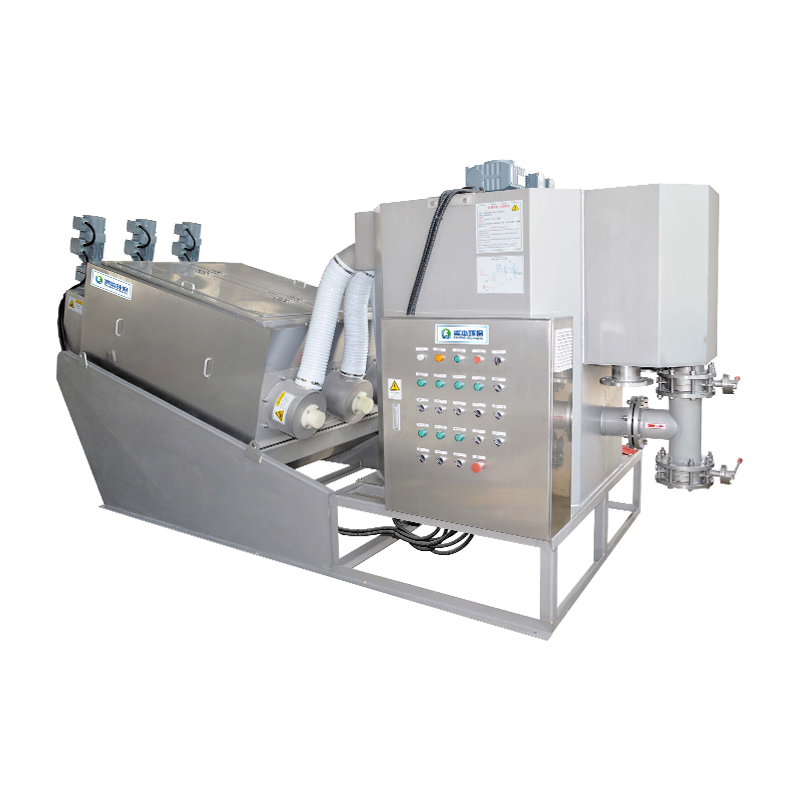
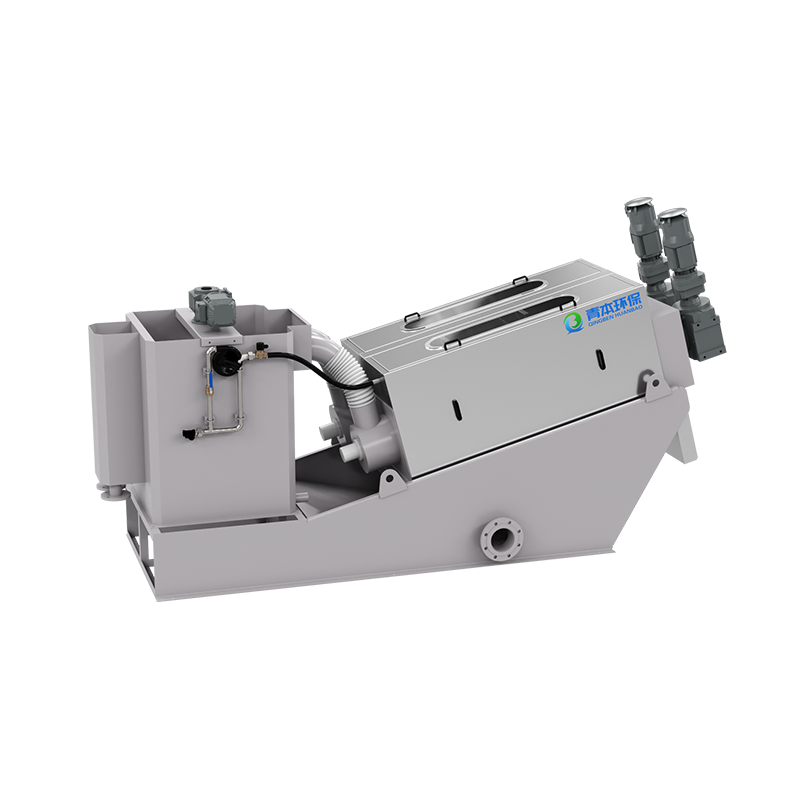
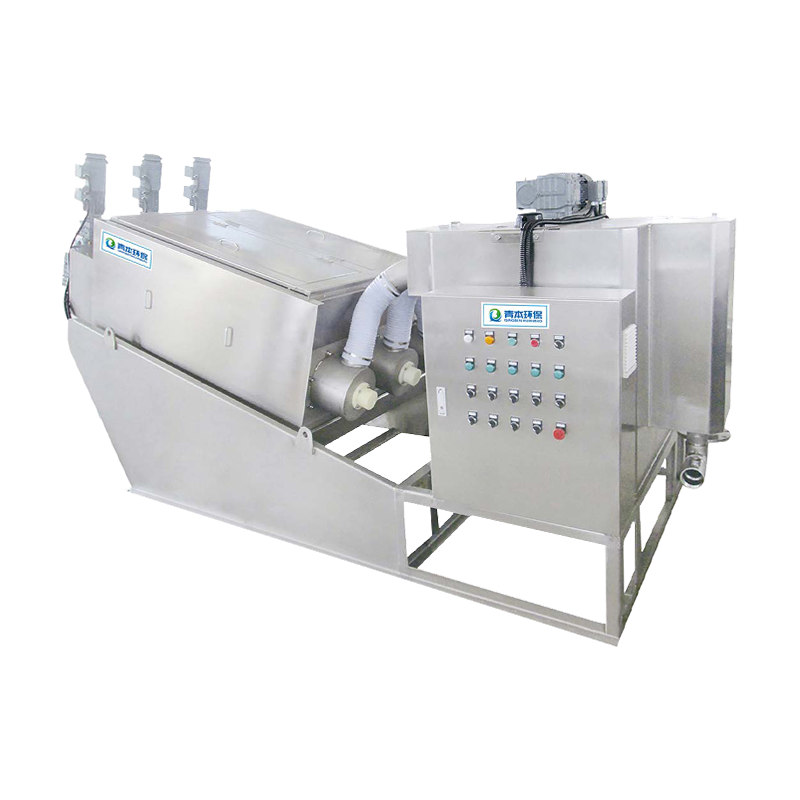
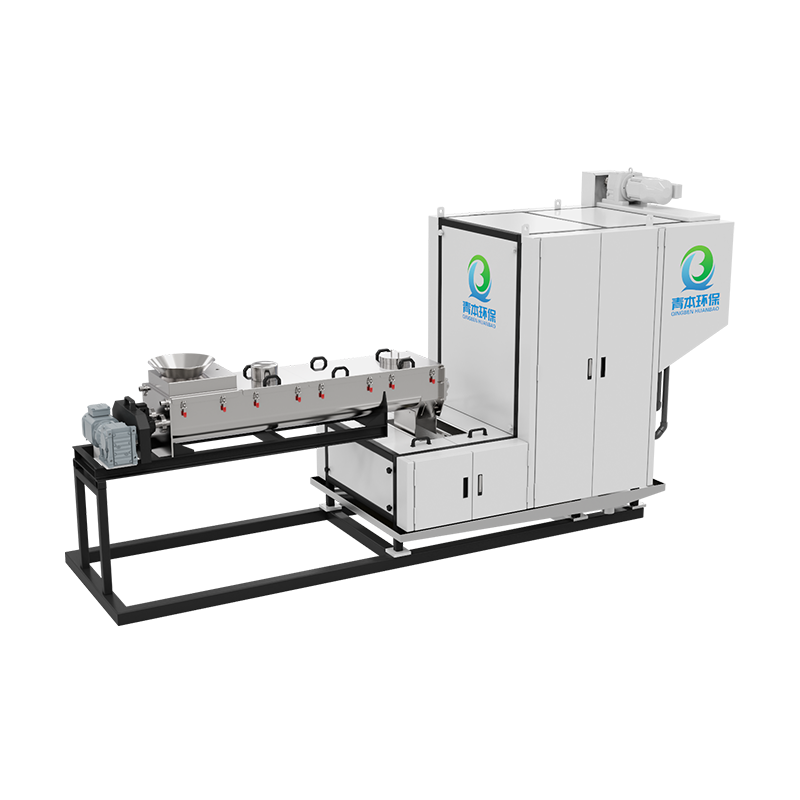
A screw press sludge separator operates on a straightforward mechanical principle. Conditioned sludge — typically pre-thickened by a polymer dosing system — is fed into a cylindrical filtering body formed by stacked, precision-spaced rings. A central rotating screw auger then conveys the sludge from the feed end to the discharge end, continuously increasing the mechanical pressure as the inter-ring gap and screw pitch tighten toward the outlet.
Free water is expelled through the gaps between the rings into a collection trough below, while the progressively compacted sludge cake is discharged at the outlet where a back-pressure mechanism (a spring-loaded or hydraulic counter plate) controls the final moisture content. The entire process runs at 2–5 rpm — far slower than centrifuges — which translates to low energy consumption, minimal wear, and quiet operation.
- Feed zone: sludge enters at low pressure; free water begins to drain through the ring gaps
- Thickening zone: screw pitch decreases, applying progressive squeeze pressure to the sludge cake
- Dewatering zone: maximum pressure is reached; the cake achieves target moisture content before being discharged
- Self-cleaning mechanism: alternating fixed and floating rings continuously clean each other during rotation, preventing clogging without flush water in most designs
The self-cleaning ring design is a significant operational advantage of the screw press sludge separator: it eliminates the need for frequent manual cleaning or large volumes of wash water that belt-press systems require, reducing both maintenance labour and water consumption.
Waste Reduction Performance: What the Data Shows
The effectiveness of a screw press sludge dewatering machine in reducing waste is best understood through three measurable outputs: cake moisture content (MC), volume reduction ratio, and solids capture rate. Typical performance figures for well-conditioned sludge are as follows:
| Sludge Type | Feed Solids Content (%) | Cake Moisture Content (%) | Volume Reduction (%) | Solids Capture Rate (%) |
|---|---|---|---|---|
| Municipal Activated Sludge | 0.5 – 1.0 | 78 – 83 | 80 – 90 | 93 – 97 |
| Mixed Sludge (Primary + Secondary) | 1.0 – 2.0 | 74 – 80 | 75 – 85 | 94 – 98 |
| Food Processing Sludge | 1.0 – 3.0 | 72 – 78 | 78 – 88 | 95 – 98 |
| Paper and Pulp Sludge | 1.5 – 4.0 | 65 – 75 | 70 – 82 | 92 – 96 |
| Industrial Oily Sludge | 2.0 – 5.0 | 68 – 76 | 72 – 84 | 90 – 95 |
A solids capture rate of 93–98% means that nearly all settleable solids are retained in the cake rather than returning to the filtrate stream — a critical factor for facilities that must meet discharge limits on suspended solids in treated effluent.
Screw Press vs. Other Industrial Sludge Dewatering Equipment
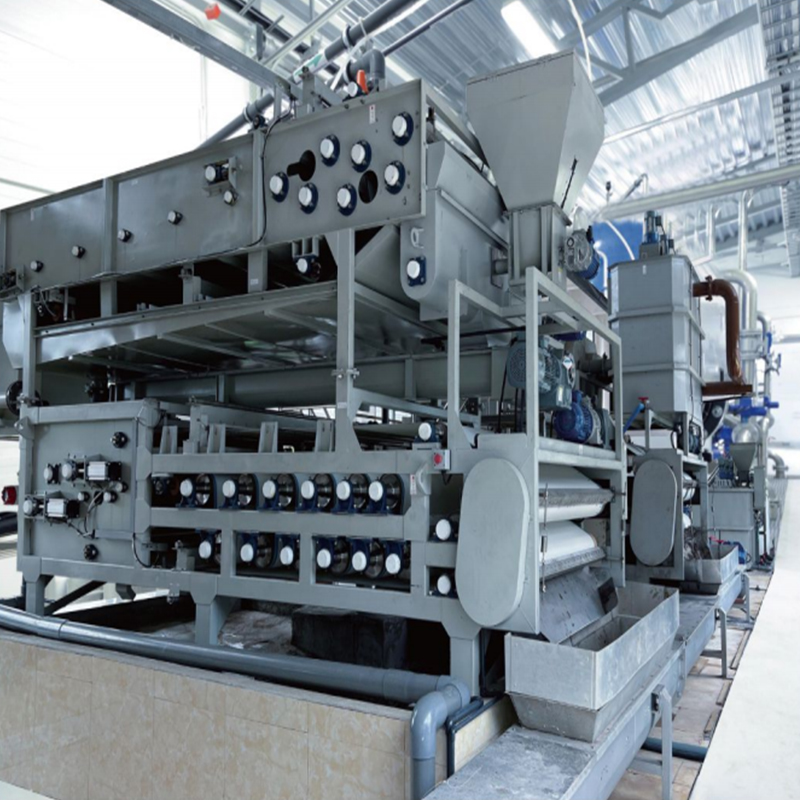
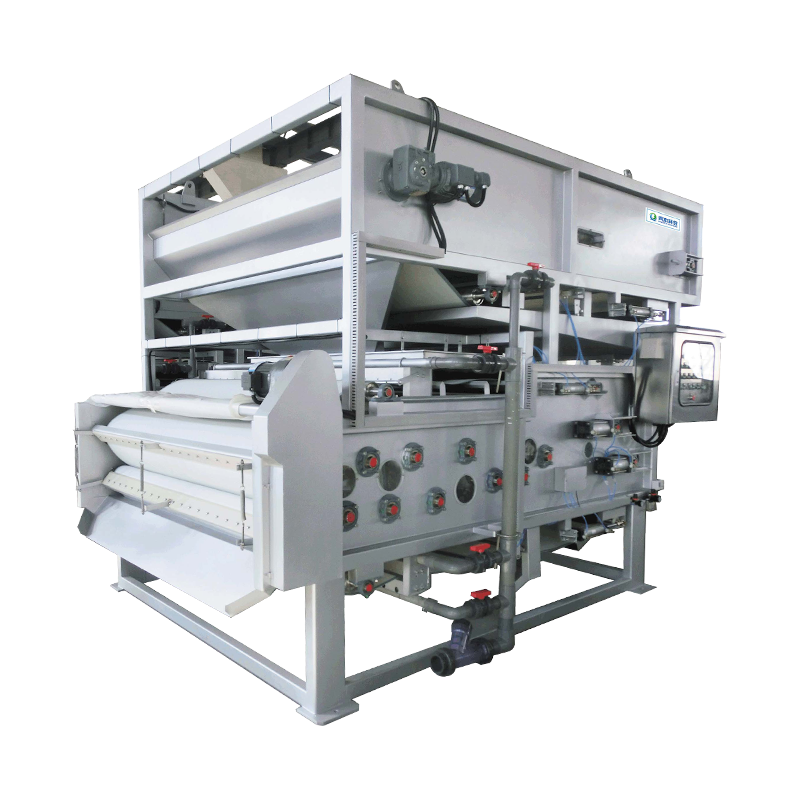
Selecting the right industrial sludge dewatering equipment requires understanding the trade-offs between technologies. The screw press is not always the highest-performing option on cake dryness, but it consistently leads on energy consumption, operational complexity, and maintenance burden.
| Parameter | Screw Press | Belt Filter Press | Centrifuge Decanter | Plate-and-Frame Filter Press |
|---|---|---|---|---|
| Cake Moisture Content (%) | 72 – 83 | 75 – 85 | 72 – 80 | 55 – 70 |
| Energy Consumption (kWh/t DS) | 15 – 30 | 20 – 40 | 80 – 180 | 30 – 60 |
| Wash Water Required | Minimal / None | High | Moderate | Moderate |
| Noise Level (dB) | 55 – 65 | 60 – 70 | 75 – 90 | 60 – 70 |
| Automation / Unattended Operation | High | Medium | High | Low |
| Maintenance Complexity | Low | Medium | High | Medium |
| Suitable for Fibrous / Oily Sludge | Yes | Limited | Yes | Limited |
The plate-and-frame filter press achieves the driest cake — useful when downstream thermal drying or incineration requires low feed moisture — but it operates in batch mode, demands operator attention, and generates high maintenance costs from repeated hydraulic pressurisation cycles. For facilities prioritising continuous, low-energy, low-maintenance operation, the screw press sludge dewatering machine is the leading choice in 2026.
Industries and Applications Where Screw Press Dewatering Delivers Results
The versatility of the screw press sludge separator makes it applicable across a wide range of industries. Below are the sectors generating the highest demand for this technology in 2026.
Municipal Wastewater Treatment
Urban wastewater plants generate large volumes of biological sludge daily. A typical plant serving 100,000 population equivalents may produce 8,000–15,000 litres of activated sludge per day at 0.8% dry solids. After screw press dewatering, this volume reduces to 1,000–2,500 litres of cake — cutting transport and landfill disposal requirements by 80–85%. Multiple units can be installed in parallel and run on an automated 24-hour schedule with minimal operator intervention.
Food and Beverage Processing
Wastewater treatment in slaughterhouses, dairy plants, seafood processors, and breweries generates high-organic sludge with good dewatering characteristics. Screw press units installed at these facilities routinely achieve cake moisture below 76%, producing a material that can often be composted or used as animal feed supplement — converting a disposal liability into a recoverable resource.
Paper, Pulp, and Textile Industries
Fibrous sludges from paper mills and textile dyeing facilities present challenges for belt press systems due to blinding and belt wear. The enclosed ring-and-screw design of the screw press sludge dewatering machine handles fibrous and moderately viscous sludges without the media-blinding problems that reduce throughput on open belt systems.
Industrial Effluent Treatment
Chemical plants, pharmaceutical manufacturers, and electronics fabrication facilities produce sludges with varying compositions. For these applications, a custom sludge dewatering machine configured with corrosion-resistant materials (SS316L wetted parts, PTFE seals) and enclosed housing for odour control is the standard specification. Throughput can be matched to feed flow variability by adjusting screw speed and back-pressure settings via PLC control.
Agricultural and Biogas Digestate
Anaerobic digestion of animal manure, crop waste, or food-processing by-products produces digestate that contains valuable nutrients but is largely water. Screw press dewatering separates the solid fraction — rich in phosphorus and nitrogen — for use as a slow-release fertiliser, while the liquid fraction is returned to the process or used for irrigation. This application is expanding across Europe and Asia in 2026 as circular economy regulations push facilities to maximise nutrient recovery.
Factors That Directly Affect Waste Reduction Efficiency
Understanding the variables that control dewatering performance allows operators to optimise their industrial sludge dewatering equipment and achieve consistent waste volume reduction targets.
Polymer Conditioning
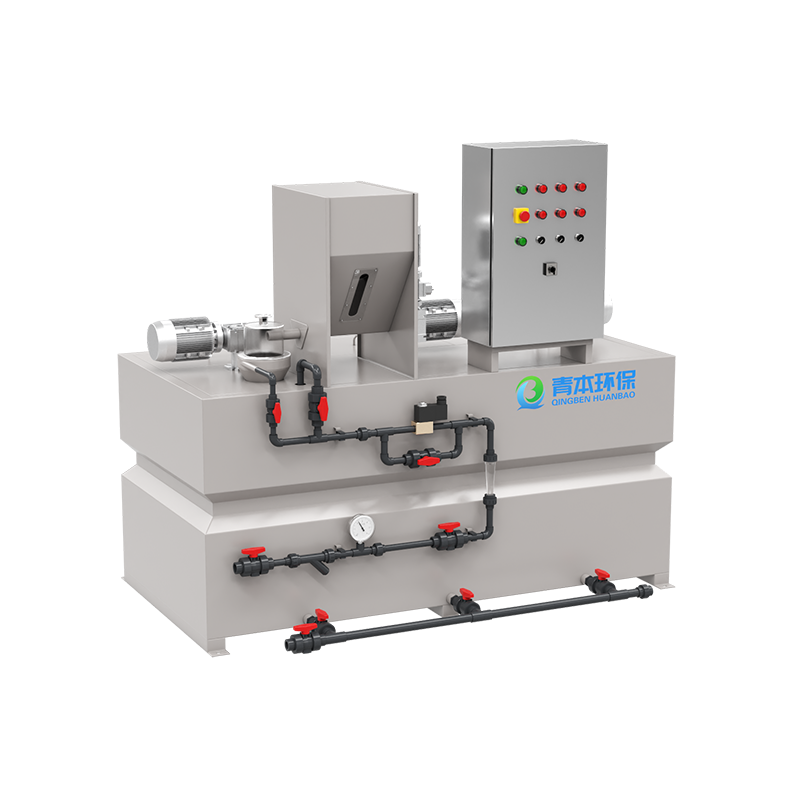
Polymer dosing is the single most influential variable in screw press performance. Correct polymer type, dosage, and mixing intensity determine floc structure, which in turn controls drainage rate and cake dryness. Under-dosing produces wet, poorly consolidated cake; over-dosing wastes reagent and can worsen filtrate quality. Optimal polymer dose for municipal activated sludge is typically 4–8 kg active polymer per tonne of dry solids, determined by jar testing prior to full-scale operation.
Feed Solids Concentration
Screw presses perform best with feed concentrations of 0.5–3.0% total solids. Feeds below 0.3% TS may require pre-thickening (via a gravity drum thickener or dissolved air flotation unit) to reduce hydraulic loading. Feeds above 4% TS may be too dense for uniform screw transport and require dilution water. Maintaining consistent feed concentration is critical to stable, predictable cake quality.
Screw Speed and Back-Pressure
Lower screw speeds increase cake dryness by allowing more drainage time in the dewatering zone, but reduce throughput. Higher back-pressure also increases dryness at the cost of higher torque and slightly increased energy consumption. Modern screw press sludge separator units include variable frequency drives (VFDs) on the screw motor and automated back-pressure controllers, allowing real-time optimisation without manual adjustment.
Ring Gap and Screw Pitch
These are fixed mechanical parameters set during manufacture or initial commissioning. For fine, low-solids sludges, narrower ring gaps (0.1–0.2 mm) are specified to prevent solids bypass. For coarse, fibrous, or high-solids feeds, wider gaps (0.3–0.5 mm) improve throughput without unacceptable solids loss. This is a key reason why custom sludge dewatering machine configurations are often specified: standard units may not be optimised for the specific sludge characteristics at a given facility.
How to Select the Right Screw Press Sludge Dewatering Machine
A systematic selection approach reduces the risk of under-performance after installation. Use the following sequence when evaluating industrial sludge dewatering equipment:
- Characterise the sludge: total solids content, volatile solids fraction, particle size distribution, pH, oil and grease content, and settleability. Laboratory dewatering tests using a small pilot unit are strongly recommended before full-scale procurement.
- Define throughput requirements: calculate peak and average sludge flow in m³/h or kg DS/h; size the machine for peak load with a margin of at least 20%.
- Set target cake moisture: determine the downstream use of the cake (landfill, composting, incineration, land application) and work backwards to the required moisture content to confirm the screw press can meet the specification.
- Select materials of construction: for aggressive sludges (acidic pH, high chloride, oily), specify SS316L for all wetted metal parts; for standard municipal sludge, SS304 is adequate and reduces unit weight.
- Specify automation level: most modern installations integrate the screw press with PLC/SCADA systems for automatic start/stop, polymer dosing control, fault alarming, and remote monitoring. Define the required I/O and communication protocols at the specification stage.
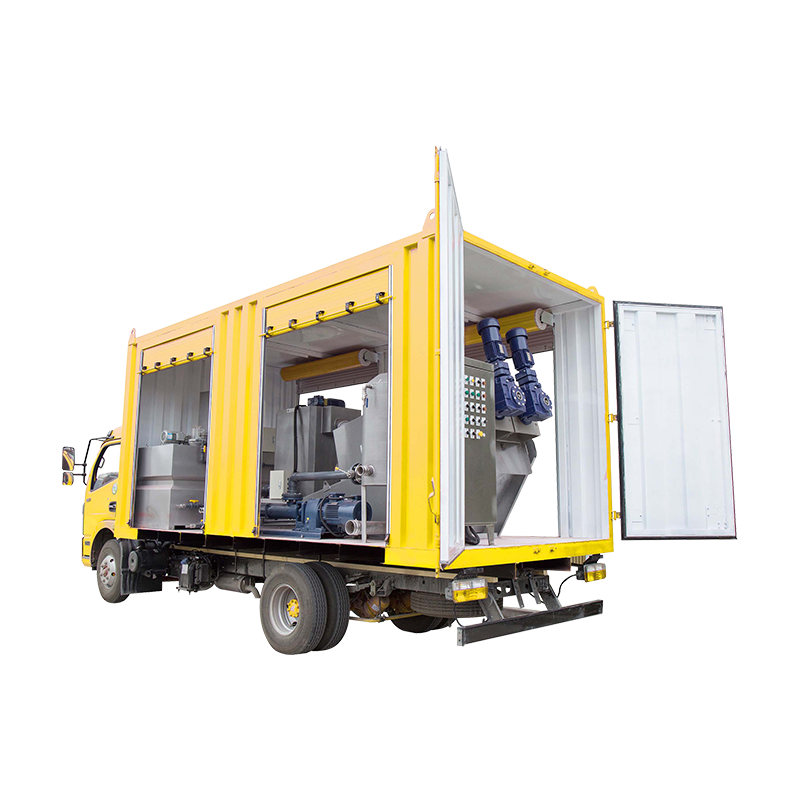
- Request a pilot test or performance guarantee: reputable suppliers of custom sludge dewatering machines offer on-site pilot testing using a trailer-mounted unit. This provides verified performance data and forms the basis of a performance guarantee in the supply contract.
Maintenance Requirements and Service Life
One of the primary operational advantages of the screw press sludge separator over competing technologies is its low maintenance demand. The slow rotational speed (2–5 rpm) drastically reduces wear on all moving components compared to centrifuges (2,000–3,500 rpm) or high-pressure hydraulic systems in plate presses.
- Screw auger: typically requires inspection every 8,000–12,000 operating hours; hard-surfaced flights may last 15,000–20,000 hours in standard municipal sludge service
- Filtering rings: stainless steel rings in standard service last 5–10 years; abrasive or highly acidic sludges shorten this interval
- Drive motor and gearbox: standard preventive maintenance per manufacturer schedule, typically oil changes every 4,000 operating hours
- Polymer dosing system: peristaltic pump tubes and mixer wear parts require replacement every 6–12 months depending on duty cycle
- Seals and bearings: annual inspection; replacement on condition rather than fixed schedule in most modern designs
Overall, a well-maintained screw press sludge dewatering machine can deliver a service life of 15–20 years, with major overhauls typically required only once every 8–10 years. This long operational life makes lifecycle cost analysis favourable compared to technologies requiring more frequent component replacement.