

Content
- 1 Sludge Dewatering vs Sludge Drying: The Direct Answer
- 2 What Is Sludge Dewatering
- 3 What Is Sludge Drying and How a Low Temperature Sludge Drying System Works
- 4 Sludge Dewatering vs Sludge Drying: Side by Side Comparison
- 5 Moisture Content Reduction Across Each Treatment Stage
- 6 How the Two Processes Work Together in a Sludge Treatment Line
- 7 Heat Pump Sludge Drying Technology Explained
- 8 Comparing Performance: Dewatering Alone, Drying Alone, and a Combined Process
- 9 Municipal Sludge Drying vs Industrial Sludge Dryer Applications
- 10 Factors That Influence Sludge Drying Cost and Energy Saving Sludge Drying
- 11 Sludge Drying Equipment Selection Guide
- 12 About Qingben Environmental Technology
- 13 Related Low Temperature Sludge Drying Equipment
- 14 Frequently Asked Questions
- 14.1 Q1. What is low temperature sludge drying
- 14.2 Q2. How does a sludge drying system work
- 14.3 Q3. Why dry sludge after dewatering
- 14.4 Q4. What is sludge moisture content
- 14.5 Q5. How much moisture can be removed by drying
- 14.6 Q6. How to choose a sludge drying system
- 14.7 Q7. What is the lifespan of a sludge dryer
- 14.8 Q8. Can low temperature drying handle industrial sludge
Sludge Dewatering vs Sludge Drying: The Direct Answer
Sludge dewatering and sludge drying are two separate stages of a sludge treatment line, and mixing up the two often leads to the wrong equipment choice for a project. Sludge dewatering uses mechanical force, centrifugal spinning, belt pressing, or filter pressing, to push free water out of liquid sludge, generally lowering moisture from close to 97 percent down to a semi solid cake sitting around 75 percent to 85 percent moisture. Sludge drying goes a step further by applying controlled heat and airflow to remove the bound water that mechanical force alone cannot reach. A low temperature sludge drying system is built specifically for this second stage, taking dewatered sludge cake from around 83 percent moisture down to a dry, stable material sitting between 10 percent and 30 percent moisture content.
- Sludge dewatering removes free water through mechanical pressure
- Sludge drying removes bound water through heat and controlled airflow
- Dewatering alone rarely brings moisture content below 70 percent
- A low temperature sludge drying system can bring moisture down to 10 percent to 30 percent
- The two processes are typically used together rather than as substitutes for one another
The sections below walk through how each process works, where the two differ in practice, and how a low temperature sludge drying system fits into a complete municipal or industrial sludge treatment line.
What Is Sludge Dewatering
Sludge dewatering is the mechanical stage of sludge treatment. Liquid sludge coming out of a clarifier, thickener, or digester still behaves almost like a slurry, since it can carry moisture content in the high nineties. Dewatering equipment applies centrifugal force or physical pressure to separate solid particles from the surrounding water, producing a cake that can be handled, stacked, and transported without a container designed for liquids.
Common Dewatering Methods
- Decanter centrifuge, which spins sludge at high speed so denser solids separate from water
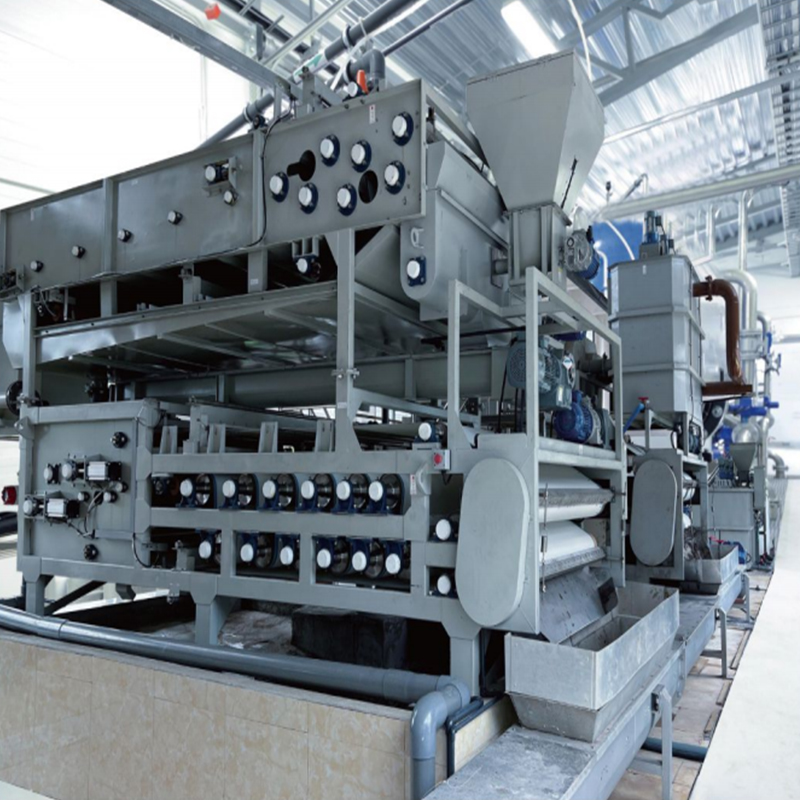
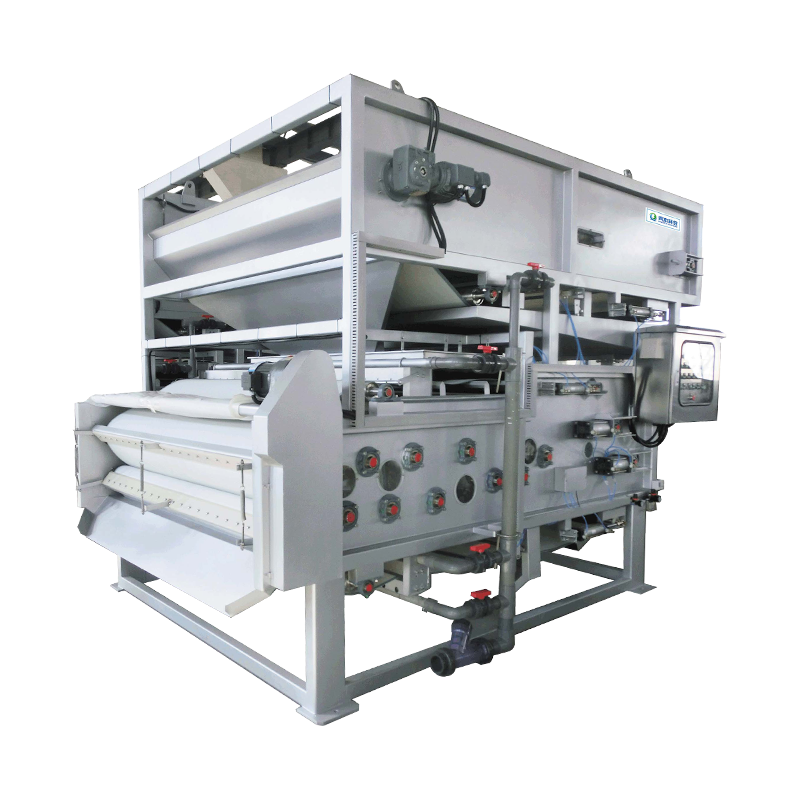
- Belt filter press, which squeezes sludge between moving porous belts
- Chamber filter press, which forces water through filter cloth under pressure in batches
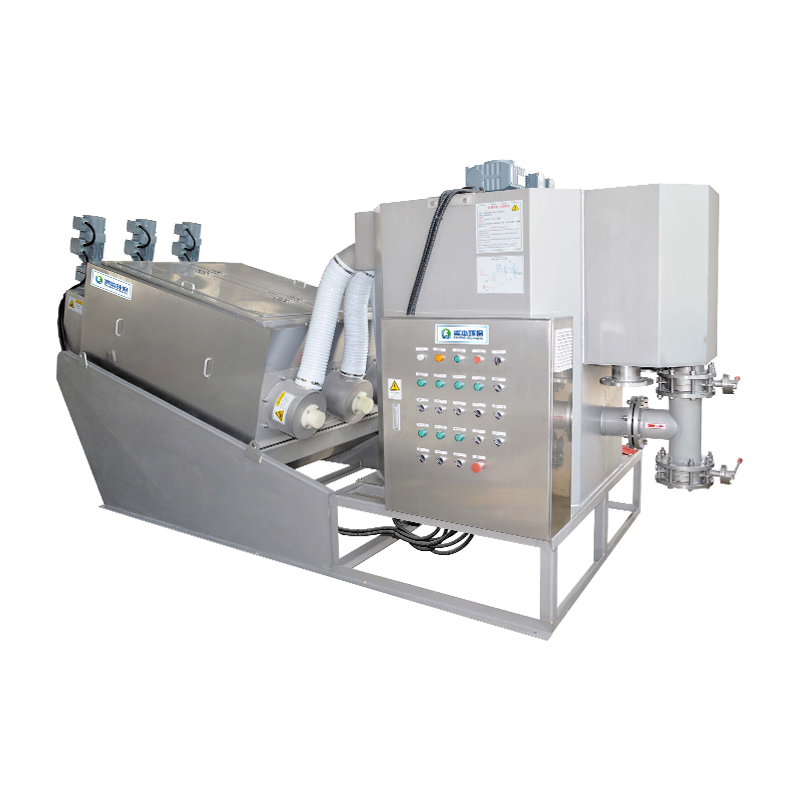
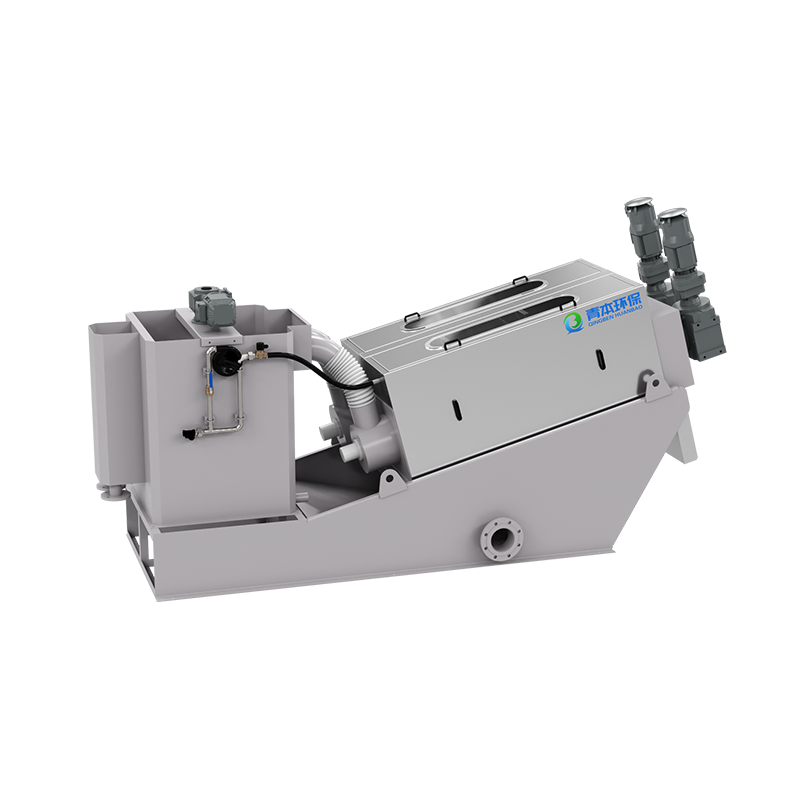
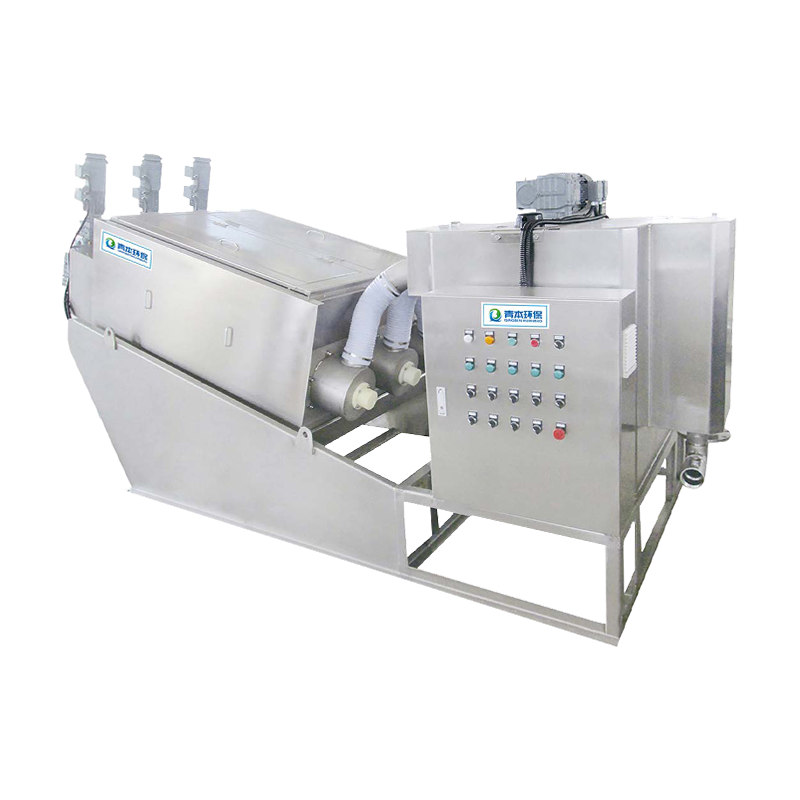
- Screw press, which uses a rotating screw to compress sludge along a screened barrel
Why Dewatering Alone Is Not Enough
A dewatered cake at 75 percent to 85 percent moisture is still mostly water by weight. It remains biologically active, can generate odor during storage, and is costly to transport because so much of the load is water rather than dry solids. This is the practical reason many treatment lines add a low temperature sludge drying system after mechanical dewatering, since drying targets the remaining bound water that pressure and centrifugal force cannot extract.
Sludge Dewatering vs Sludge Drying: Side by Side Comparison
The table below lines up the two processes across the factors that matter most when planning a treatment line, from moisture output to typical equipment.
| Aspect | Sludge Dewatering | Sludge Drying |
|---|---|---|
| Primary Mechanism | Mechanical pressure or centrifugal force | Controlled heat and airflow |
| Typical Moisture Output | 75% to 85% | 10% to 30% |
| Water Type Removed | Free and interstitial water | Bound and capillary water |
| Common Equipment | Centrifuge, belt press, filter press | Belt dryer, chamber dryer, heat pump dryer |
| Processing Time | Minutes per batch | Multiple hours, continuous or batch |
| Odor Management | Limited on its own | Improved at low operating temperature |
| Typical Role | First stage volume reduction | Second stage stabilization and reduction |
| End Result | Semi solid cake | Granular or crumb dry solid |
Moisture Content Reduction Across Each Treatment Stage
Tracking sludge moisture content stage by stage helps explain why drying is treated as a separate step rather than an extension of dewatering. Raw liquid sludge entering a treatment line often carries moisture near 98 percent, since it remains largely suspended in water. Mechanical dewatering typically brings that figure down to a cake around 83 percent moisture, which is a common reference point used when sizing a low temperature sludge drying system. From that starting point, low temperature drying equipment can bring moisture content further down to a range of 10 percent to 30 percent, corresponding to a mass and volume reduction that can reach as high as 90 percent.
Approximate moisture content by treatment stage, based on typical performance ranges for low temperature sludge drying equipment
How the Two Processes Work Together in a Sludge Treatment Line
Most treatment lines run dewatering and drying in sequence rather than choosing one over the other. The steps below outline a common arrangement.
- Raw Sludge Collection. Liquid sludge is drawn from clarifiers, thickeners, or digesters at moisture content generally above 95 percent.
- Conditioning. Polymer or other conditioning agents are dosed in to improve flocculation ahead of mechanical separation.
- Mechanical Dewatering. A centrifuge, belt press, or filter press reduces moisture to a cake around 75 percent to 85 percent.
- Low Temperature Drying. A belt type or chamber type low temperature sludge drying system reduces moisture further to roughly 10 percent to 30 percent.
- Final Handling. Dried sludge is directed toward composting, blending and burning, degasification, or use as a raw material input for building materials.
Heat Pump Sludge Drying Technology Explained
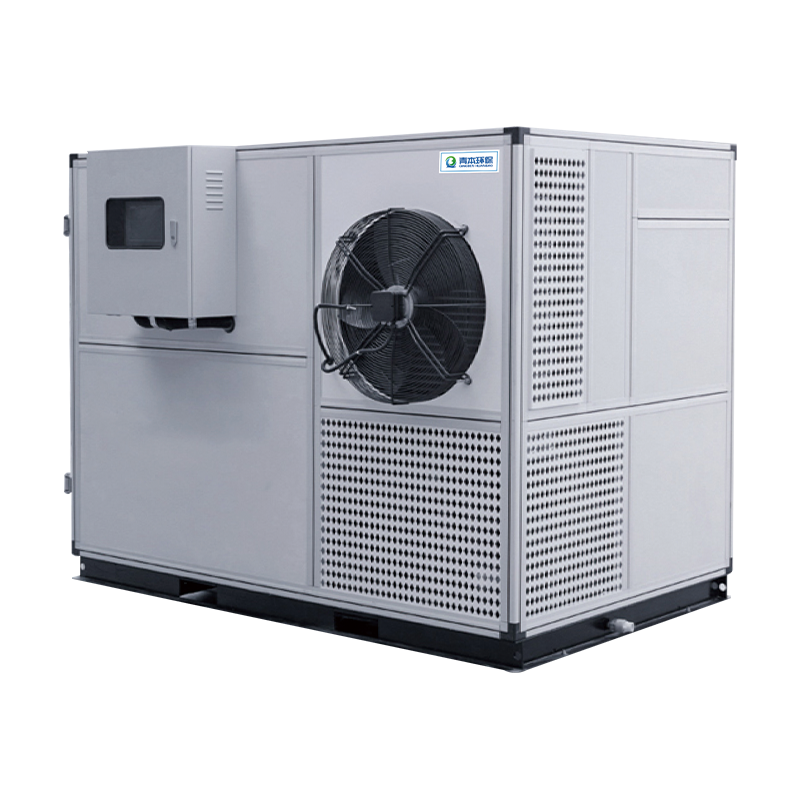
A heat pump sludge dryer works on the same basic principle as a household heat pump, but applied to a drying chamber instead of a room. A refrigerant cycle extracts heat from the air passing through the system, compresses that refrigerant to raise its temperature, and transfers the resulting heat into the air stream that circulates over the sludge. As moisture laden air moves back through the evaporator coil, water vapor condenses out and much of the latent heat is recovered rather than vented outside.
Why Heat Pump Sludge Drying Technology Supports Energy Saving Sludge Drying
Because heat is recycled within a closed loop instead of being generated fresh and exhausted continuously, the overall energy input needed per unit of water removed tends to be lower than an open loop combustion dryer running at high temperature. Keeping the operating temperature low also limits the volatilization of certain odor causing compounds, which matters when dried sludge is intended for composting or as a soil amendment feedstock rather than incineration. These characteristics are part of why heat pump sludge drying technology is increasingly specified for municipal and industrial sludge drying equipment upgrades.
Comparing Performance: Dewatering Alone, Drying Alone, and a Combined Process
The radar chart below compares three approaches across five practical dimensions. Scores are shown on a relative scale for general orientation rather than as measured laboratory values.
- Dewatering Only
- Drying Only, without prior mechanical dewatering
- Combined Process, dewatering followed by low temperature drying
Dewatering alone scores well on energy use for that single step but leaves moisture content and odor control weaker, since bound water and much of the organic activity remain. Drying alone, without prior mechanical separation, can reach good pathogen and odor outcomes but generally needs more energy because it is removing free water that mechanical equipment could have handled more efficiently. A combined process, mechanical dewatering followed by a low temperature sludge drying system, tends to score highest across most categories because each stage is doing the type of water removal it is best suited for.
Municipal Sludge Drying vs Industrial Sludge Dryer Applications
Municipal Sludge Drying
Municipal wastewater treatment plants generally produce sludge with a relatively consistent organic composition, since the feed source is domestic wastewater. Municipal sludge drying projects tend to focus on steady, predictable throughput and on producing dried material suitable for composting, land application, or blending and burning.
Industrial Sludge Dryer Considerations
An industrial sludge dryer often needs to accommodate more variable feed characteristics, since industrial sludge composition depends heavily on the originating process. Qingben low temperature drying equipment is applied across printing and dyeing, papermaking, electroplating, chemical, leather, and pharmaceutical sludge streams, each of which can differ in organic content, particle size, and residual chemical composition, which is why equipment sizing and airflow settings are typically adjusted per project rather than applied as one fixed configuration.
The chart below shows typical mass reduction ranges achieved after low temperature drying across several common sludge sources.
Typical mass reduction ranges after low temperature sludge drying, shown by sludge source, based on general equipment performance data
Factors That Influence Sludge Drying Cost and Energy Saving Sludge Drying
Sludge drying cost is shaped by several project specific variables rather than a single fixed figure, which is why an accurate estimate typically follows a site review rather than a general assumption. The list below covers the factors that most commonly affect the operating profile of a low temperature sludge drying system.
- Initial moisture content and general sludge characteristics
- Required throughput capacity and daily processing volume
- Available heat source, whether ambient waste heat or a standalone heat pump unit
- Ambient climate and seasonal temperature variation at the installation site
- Automation level and control complexity of the drying line
- Footprint and installation space available on site
- Maintenance access and expected component replacement frequency
On the energy side, heat pump sludge drying technology recycles latent heat within a closed loop rather than continuously heating and venting fresh air, which is a meaningful contributor to energy saving sludge drying compared with open loop combustion drying. A Sludge Drying Machine for Low Temperature Waste Heat takes this a step further by drawing on existing waste heat streams already present on an industrial site, which can reduce how much supplemental energy the drying process needs to draw from other sources.
Sludge Drying Equipment Selection Guide
Sludge drying equipment selection generally starts with a site assessment and sample testing, followed by capacity calculation and layout planning. The table below summarizes how selection criteria tend to differ between municipal and industrial projects.
| Selection Criteria | Municipal Project | Industrial Project |
|---|---|---|
| Feed Moisture Level | Generally consistent | Can vary by process line |
| Daily Throughput | Steady, predictable volume | May fluctuate with production schedule |
| Sludge Composition | Mostly organic domestic waste | Depends on originating industrial process |
| Odor Sensitivity of Site | Often near residential areas | Depends on plant location |
| Available Utilities | Grid power typically available | May include recoverable waste heat |
After reviewing site conditions and sample characteristics, most projects move through capacity calculation, equipment configuration, and layout planning before installation, with a pilot trial recommended for sludge streams with unusual or highly variable composition.
About Qingben Environmental Technology
Qingben Environmental Technology, Jiangsu, Co., Ltd. focuses on the research, manufacturing, and service of sludge and wastewater treatment equipment. The product range covers decanter sludge dewatering machines, sludge drying equipment, complete wastewater treatment equipment sets, and river and lake sediment drying equipment, supported by technical services from project consultation and design through construction and ongoing operation support.
Sludge low temperature drying equipment from Qingben can take sewage or sludge from around 83 percent moisture down to a dry sludge output between 10 percent and 30 percent moisture, with mass reduction reaching as high as 90 percent and pathogen reduction reaching as high as 90 percent under typical operating conditions, while keeping energy consumption and emissions low. This equipment is applied across municipal sludge and industrial sludge streams including printing and dyeing, papermaking, electroplating, chemical, leather, and pharmaceutical sources. The resulting dry sludge, at 10 percent to 30 percent moisture, can be directed toward degasification, blending and burning, composting, or use as a raw material input for building materials as part of a harmless resource disposal pathway.
Related Low Temperature Sludge Drying Equipment
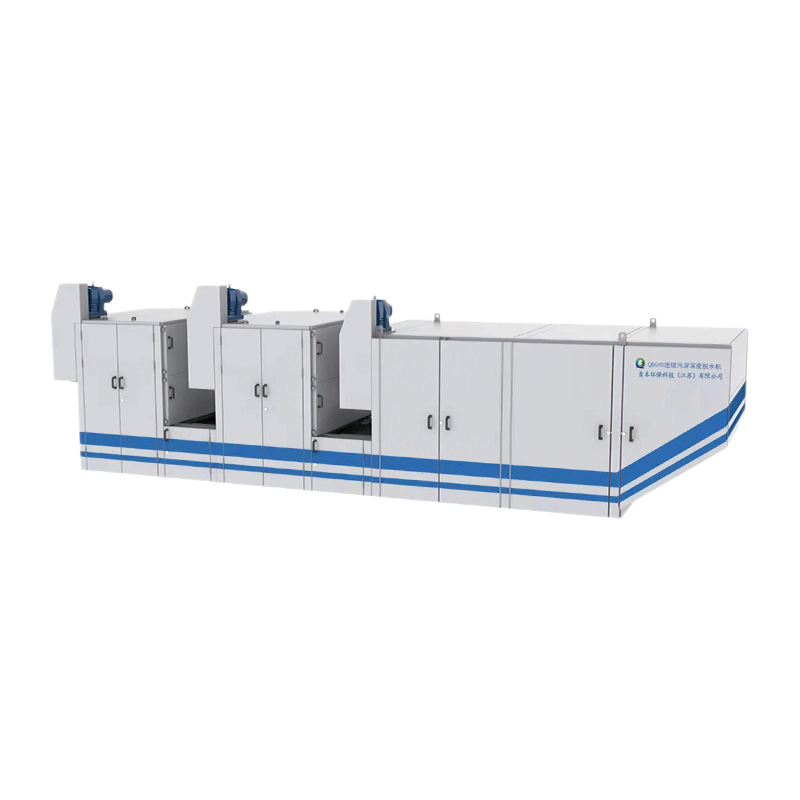
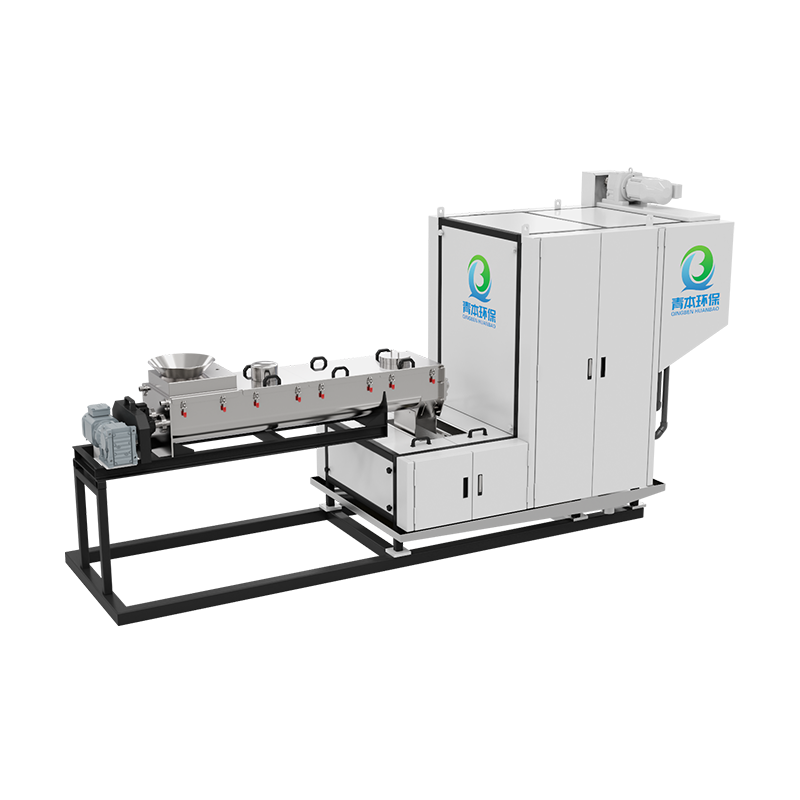
- Low Temperature Belt Type Sludge Drying Machine. A continuous conveyor based configuration suited to medium and large throughput projects, spreading sludge in a thin layer across multiple belt zones for even airflow exposure.
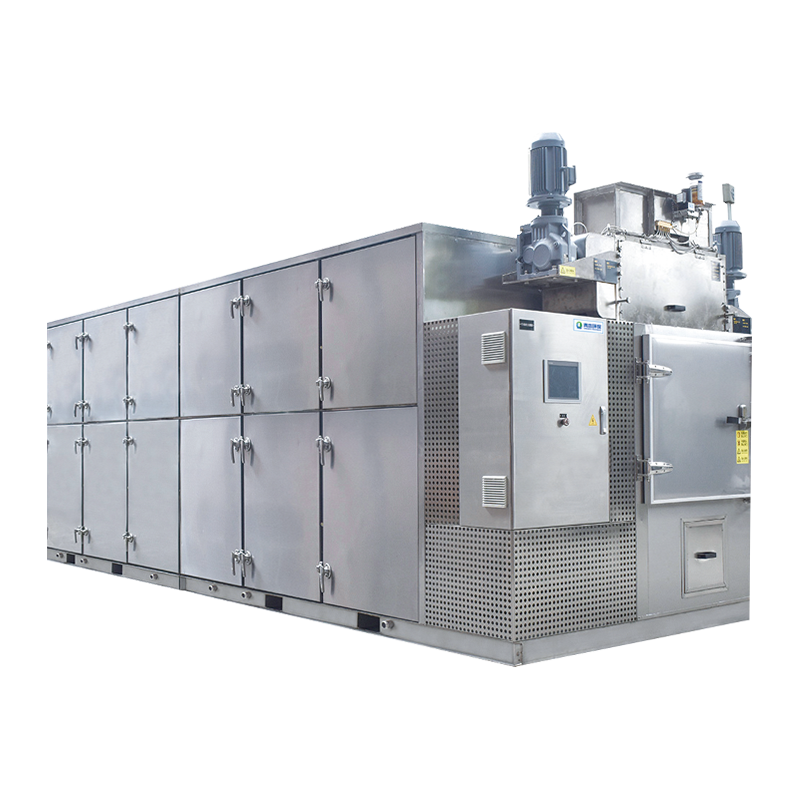
- Sludge Drying Machine for Low Temperature Waste Heat. Configured to draw on available waste heat sources already present on an industrial site, supporting energy saving sludge drying where recoverable heat exists.
- Sludge Cryogenic Chamber Drying Machine. A batch chamber configuration suited to smaller volumes or facilities that need a flexible operating schedule rather than continuous throughput.
Frequently Asked Questions
Q1. What is low temperature sludge drying
Low temperature sludge drying is a thermal process that removes bound moisture from dewatered sludge cake using moderate operating temperatures, typically paired with heat pump or waste heat recovery equipment, bringing moisture content down from around 83 percent to a range of 10 percent to 30 percent.
Q2. How does a sludge drying system work
Sludge is spread across a belt or held in a drying chamber, warm dry air circulates over the material to pick up moisture, and that moist air is routed through a condensing coil where water is removed and heat is recovered for reuse within the system.
Q3. Why dry sludge after dewatering
Mechanical dewatering alone typically leaves moisture content around 75 percent to 85 percent, which is still costly to transport and remains biologically active. Drying reduces both weight and volume further while helping stabilize the material.
Q4. What is sludge moisture content
Sludge moisture content is the percentage of a sludge sample that consists of water rather than dry solids. Raw liquid sludge often sits near 98 percent moisture, dewatered cake around 83 percent, and dried sludge between 10 percent and 30 percent.
Q5. How much moisture can be removed by drying
A low temperature sludge drying system can generally reduce dewatered cake from around 83 percent moisture down to a range of 10 percent to 30 percent, corresponding to mass and volume reduction that can reach as high as 90 percent.
Q6. How to choose a sludge drying system
Start with sample testing to understand sludge characteristics, then match required daily throughput, available heat sources, site footprint, and odor sensitivity to a belt type or chamber type configuration suited to the project.
Q7. What is the lifespan of a sludge dryer
Service life depends heavily on maintenance practice, sludge characteristics, and operating hours, so it is best assessed through routine inspection schedules and manufacturer guidance rather than a single general figure.
Q8. Can low temperature drying handle industrial sludge
Yes, low temperature drying equipment is applied across industrial sludge streams such as printing and dyeing, papermaking, electroplating, chemical, leather, and pharmaceutical sources, generally with airflow and capacity settings adjusted per project.