

Quick Answer
A high pressure belt deep dewatering machine achieves sludge dryness above 65% — often reaching 75% to 83% — by combining gravity drainage, mechanical pressing, and sustained high-tension belt compression in a continuous, multi-stage process. The key differentiators are the elevated belt tension (typically 0.5–0.8 MPa compared to 0.3–0.4 MPa in standard belt presses), extended pressing length, and precisely controlled roller geometry that together squeeze out far more interstitial and capillary water than conventional belt filter press systems can achieve.
Content
- 1 What Is a High Pressure Belt Deep Dewatering Machine?
- 2 Why 65% Dryness Is the Critical Benchmark — and What Changes Above It
- 3 5 Technical Factors That Enable Dryness Above 65%
- 4 Dewatering Performance Across Technology Types: A Data Comparison
- 5 Where High Pressure Belt Dewatering Delivers the Most Value
- 6 How Belt Tension Directly Drives Cake Dryness: A Performance Curve
- 7 Key Operational Parameters to Specify When Selecting a High Pressure Belt System
- 8 About Qingben Environmental Technology (Jiangsu) Co., Ltd.
- 9 Frequently Asked Questions About High Pressure Belt Deep Dewatering Machines
What Is a High Pressure Belt Deep Dewatering Machine?
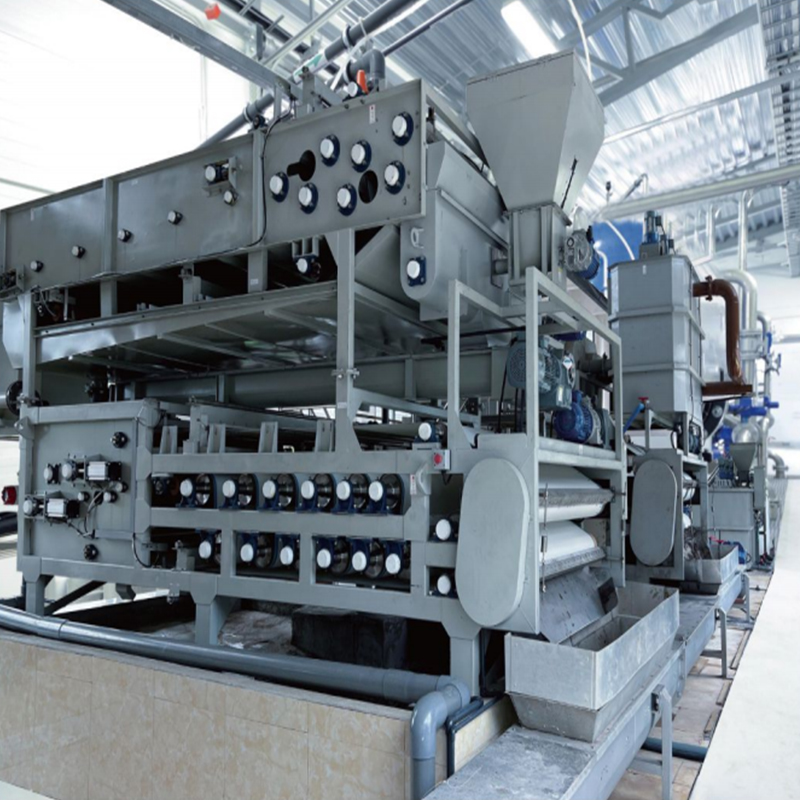
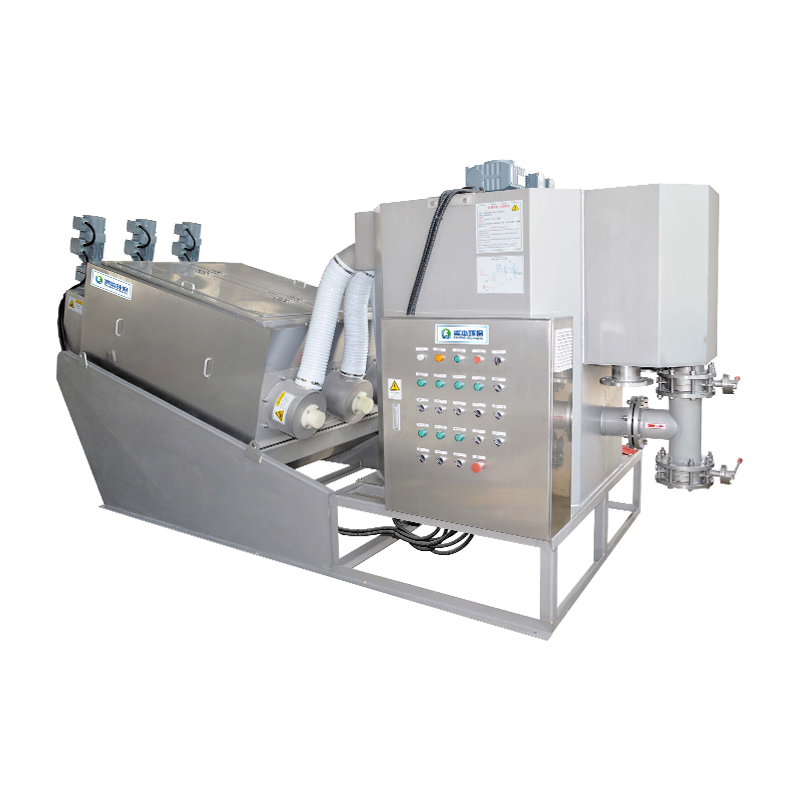
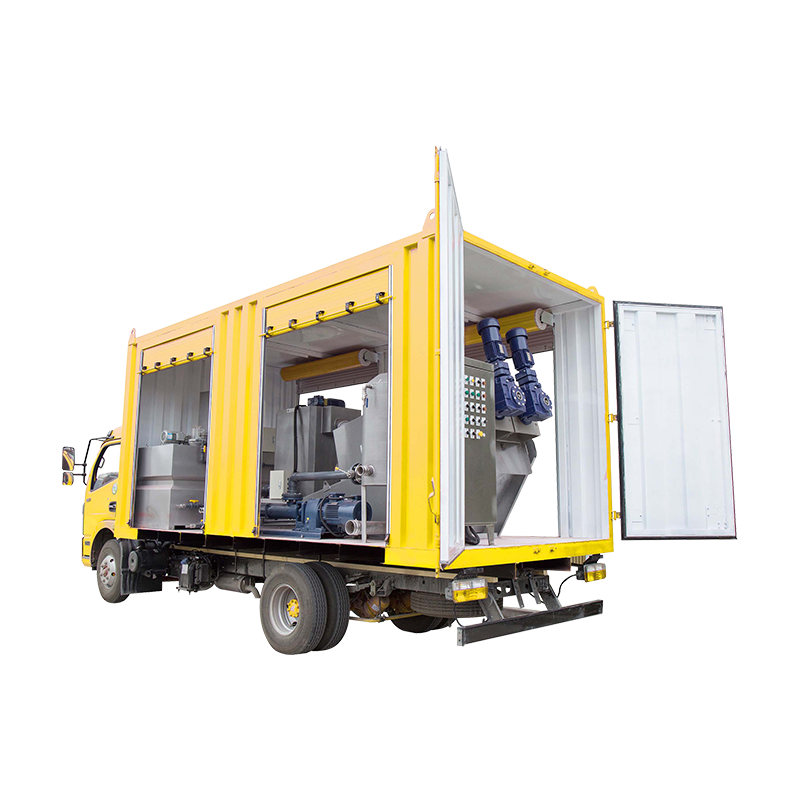
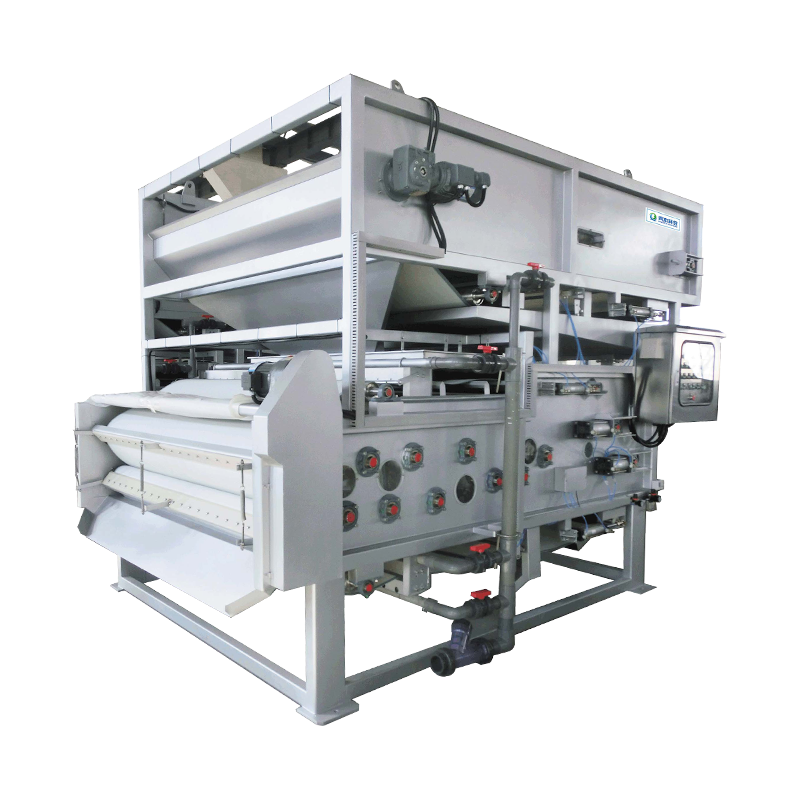
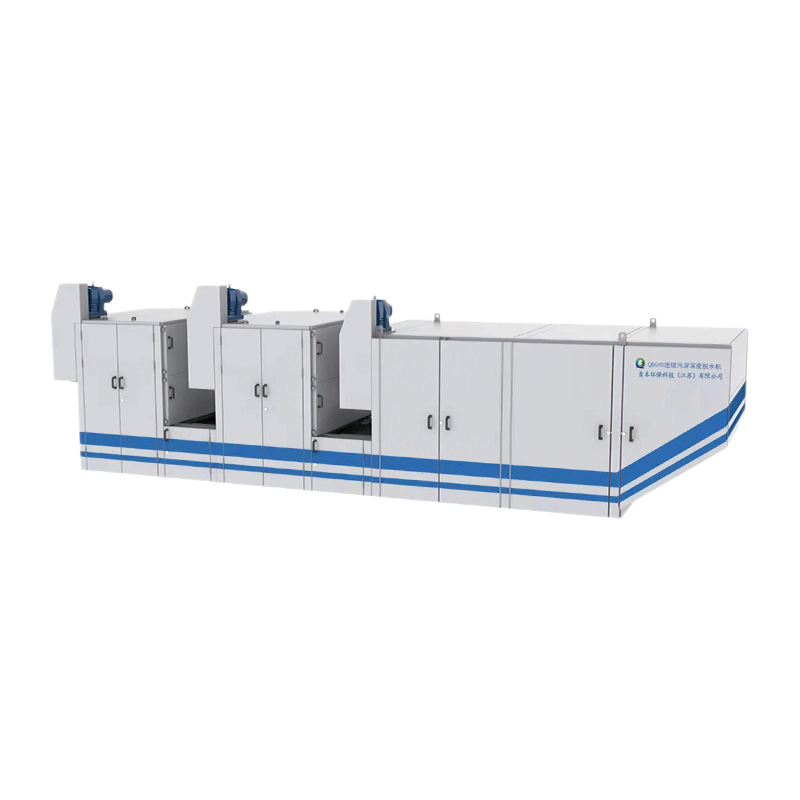
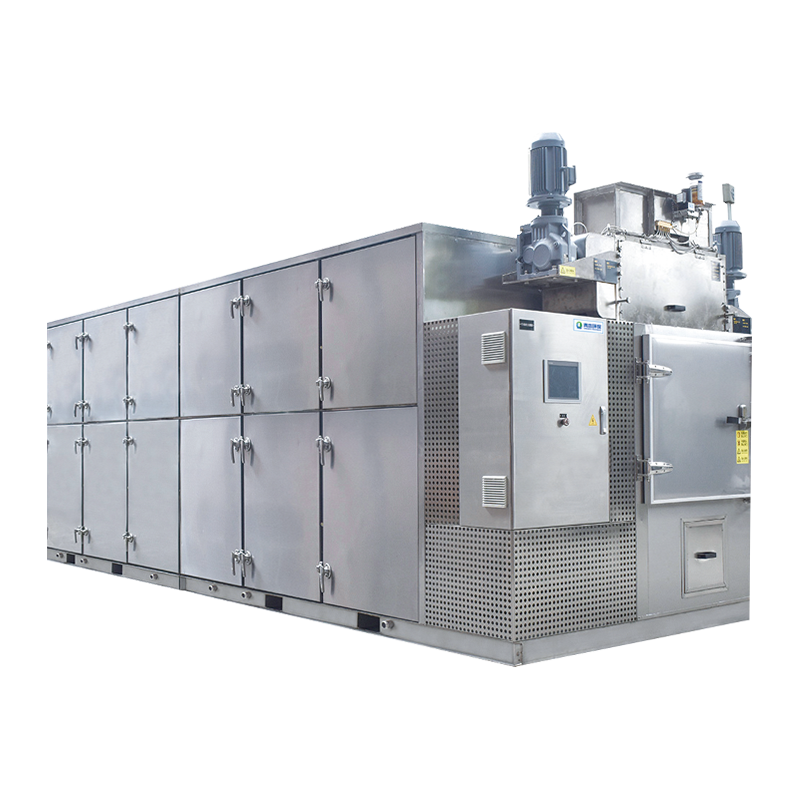
A high pressure belt deep dewatering machine is an advanced industrial sludge water removal machine that processes conditioned sludge or wastewater residuals through a continuous belt-driven compression system. Unlike a standard belt filter press — which typically delivers sludge cakes at 55–62% dry solids — the high pressure variant is engineered specifically to break through the dewatering ceiling and deliver cake dryness consistently above 65%, making downstream drying, transport, and disposal significantly more economical.
The equipment is widely deployed in municipal wastewater treatment plants, industrial effluent facilities, paper mills, food processing operations, and river or lake sediment remediation projects. As pressure on sludge disposal costs intensifies and landfill restrictions tighten globally, high efficiency sludge dewatering technology that can reliably exceed 65% dryness has become a critical procurement priority for environmental engineers and plant operators.
Core Mechanism
Continuous dual-belt compression with progressive pressure stages — gravity zone, low-pressure wedge zone, and high-pressure roller zone — applied in sequence to a conditioned sludge feed.
Target Output
Sludge cake dryness of 65%–83% total solids depending on sludge type, conditioning chemistry, and machine configuration — well above the 55–62% ceiling of conventional belt presses.
Key Industries
Municipal wastewater treatment, industrial effluent management, paper and pulp production, food processing, mining slurry handling, and river/lake sediment dewatering projects.
Why 65% Dryness Is the Critical Benchmark — and What Changes Above It
The 65% dryness threshold is not arbitrary. It represents the practical boundary at which sludge cake transitions from a semi-liquid, difficult-to-handle mass into a structurally stable, crumbly solid that can be stacked, bagged, directly incinerated, composted, or used as a soil amendment without further thermal drying in many applications.
| Dryness Level | Cake State | Relative Transport Volume | Thermal Drying Needed? |
|---|---|---|---|
| 50–55% (conventional centrifuge) | Paste-like | 100% (baseline) | Usually required |
| 55–62% (standard belt press) | Soft cake | ~82% | Often required |
| 65–72% (high pressure belt) | Firm, crumbly cake | ~60% | Often avoidable |
| 75–83% (optimized deep dewatering) | Dry, stackable solid | ~45% | Not required for most uses |
Moving from 55% to 75% dryness reduces sludge mass by approximately 40% and volume by a similar proportion. For a plant processing 100 tonnes of wet sludge per day, this can translate to dozens fewer transport trips per week and a corresponding reduction in landfill tipping fees — a compelling operational and financial argument for investing in a high pressure sludge dewatering system.
5 Technical Factors That Enable Dryness Above 65%
Achieving consistent deep dewatering performance is the result of engineering decisions across multiple system parameters. Each of the following factors contributes measurably to the final cake dryness.
Factor 1 — Elevated Belt Tension (0.5–0.8 MPa)
Standard belt type sludge dewatering equipment operates at belt tensions of 0.3–0.4 MPa. High pressure deep dewatering machines apply 0.5–0.8 MPa, creating a substantially greater compressive force across the sludge cake. This additional pressure is sustained over an extended pressing length — often 60–80% longer than conventional machines — allowing more time for water to migrate through the belt fabric and drain away. The hydraulic or pneumatic tensioning system that maintains this pressure must be precisely regulated; pressure that fluctuates degrades cake uniformity and average dryness.
Factor 2 — Multi-Stage Roller Geometry
The roller arrangement in a high pressure belt deep dewatering machine is not simply "more rollers." The rollers are configured in a progressively decreasing diameter sequence — typically from 500 mm down to 150 mm or smaller — so that each successive pass increases the localized pressure and curvature applied to the sludge layer. This S-wrap or sinusoidal path through the roller stack creates alternating compression and shear forces that disrupt the sludge cake structure at a micro-scale, forcing water out of pores that simple linear compression cannot reach. The combination of compressive and shear dewatering is the primary mechanism that breaks through the 65% barrier.
Factor 3 — High-Performance Filter Belt Selection
The filter belt in a wastewater belt filter press system must balance two competing requirements: fine enough pore structure to retain solids and prevent blinding at high pressure, and open enough weave to allow high filtrate flow rates. High pressure machines use specialty woven belts with controlled porosity (typically 30–80 microns effective pore size) manufactured from high-tenacity polyester or polyamide monofilament yarns rated for the elevated tension loads. Belt tracking precision also matters — even minor lateral drift causes uneven pressure distribution and reduces average dryness by 2–5 percentage points.
Factor 4 — Optimized Chemical Conditioning
No mechanical dewatering machine — regardless of belt pressure — can achieve deep dewatering without effective upstream chemical conditioning. For high pressure belt systems, polymer dosing optimization is critical: too little polymer leaves bound water trapped in floc structures; too much creates a sticky, gel-like cake that resists drainage through the belt. The optimal polymer dose for most municipal sludges feeding a high pressure sludge dewatering system is 4–8 kg active polymer per tonne of dry solids, though this varies significantly with sludge origin and composition. Online turbidity monitoring of filtrate quality enables real-time polymer dose adjustment.
Factor 5 — Gravity Drainage Zone Length and Feed Consistency
Before any mechanical pressing begins, a well-designed gravity drainage zone removes 20–35% of the initial free water content. High pressure machines dedicate a longer, more gently inclined gravity section — often 1.5 to 2 meters — to maximize this free-drainage step. This matters because entering the pressing zone with lower initial moisture reduces the compression work required and allows the high-pressure roller section to focus on bound and capillary water rather than excess free water. Consistent feed rate and sludge solids concentration are equally important; fluctuating feed destabilizes the pressing zone and creates wet spots in the output cake.
Dewatering Performance Across Technology Types: A Data Comparison
The performance gap between a high pressure belt deep dewatering machine and conventional dewatering technologies is significant across both cake dryness and energy consumption metrics.
Typical Cake Dryness by Dewatering Technology (% Total Solids)
Performance ranges for municipal activated sludge with optimal polymer conditioning. Industrial sludges will vary.
The plate-and-frame filter press can approach similar dryness levels but operates in batch mode — requiring manual labor for cake discharge and significantly lower throughput per unit of floor space. The high pressure belt deep dewatering machine delivers comparable or superior dryness in a fully continuous, automated process, making it the preferred choice for facilities processing more than 20 m³/h of sludge.
Energy consumption of high pressure belt systems is typically 15–25 kWh per tonne of dry solids — substantially lower than thermal dryers (150–400 kWh/t DS) and competitive with centrifuges (20–40 kWh/t DS), while delivering superior cake dryness versus both.
Where High Pressure Belt Dewatering Delivers the Most Value
Not every dewatering project requires a high pressure system, but the following application scenarios consistently produce the strongest return on the investment in belt type sludge dewatering equipment with deep dewatering capability.
Municipal Wastewater Plants
Plants where sludge disposal contracts are priced by weight or volume see immediate savings. Achieving 72–78% dryness instead of 55% can reduce monthly disposal costs by 30–45% at medium-scale facilities.
Industrial Effluent Treatment
Food processing, paper mills, and chemical plants generate sludge with variable composition. The high pressure system's adjustable belt tension and roller configuration accommodate a wide range of sludge filterabilities without requiring a machine change.
River and Lake Sediment Projects
Dredged sediment is typically very dilute (2–5% solids) and challenging to dewater. High pressure belt systems can be configured with extended gravity zones and specialized belt fabrics suited to coarse, sandy sediment or fine-grained, cohesive lake mud.
Incineration Pre-Treatment
Sludge fed to an incinerator at 65–75% dryness can support partial autothermal combustion, significantly reducing auxiliary fuel requirements compared to feeding sludge at 55% moisture — a key operational cost driver for thermal treatment facilities.
How Belt Tension Directly Drives Cake Dryness: A Performance Curve
The relationship between applied belt pressure and output cake dryness is non-linear. Gains come quickly at lower pressures, then taper as the sludge cake approaches its mechanical dewatering limit. Understanding this curve helps operators identify the optimal operating point — balancing belt wear against incremental dryness gains.
Cake Dryness (% TS) vs Belt Pressure (MPa) — Activated Sludge
Indicative performance curve for conditioned municipal activated sludge. Values vary with sludge type and belt fabric selection.
The red dashed line at 65% shows where conventional belt presses consistently fall short. Only by pushing belt pressure into the 0.5–0.8 MPa range — the operating territory of dedicated high pressure sludge dewatering systems — does the machine cross this threshold reliably and at production scale.
Key Operational Parameters to Specify When Selecting a High Pressure Belt System
When sourcing a high pressure sludge dewatering system or requesting a technical proposal from a manufacturer, the following parameters directly determine whether the machine will achieve the dryness targets required for your application.
| Parameter | Standard Belt Press | High Pressure Deep Dewatering |
|---|---|---|
| Belt Width | 0.5–3.0 m | 0.5–3.0 m |
| Belt Tension | 0.3–0.4 MPa | 0.5–0.8 MPa |
| Roller Count (pressing zone) | 6–10 rollers | 12–24 rollers |
| Belt Speed | 2–10 m/min | 1–6 m/min (slower for higher dryness) |
| Throughput (m³/h per meter width) | 10–25 m³/h/m | 6–18 m³/h/m |
| Typical Cake Dryness | 55–62% TS | 65–83% TS |
Note that high pressure systems operate at lower belt speeds than standard presses — this is deliberate. Slower belt speed extends the time the sludge cake spends under compression, directly increasing moisture removal. The tradeoff is somewhat lower volumetric throughput per meter of belt width, which is typically offset by the reduction in downstream sludge handling volume.
About Qingben Environmental Technology (Jiangsu) Co., Ltd.
Qingben Environmental Technology (Jiangsu) Co., Ltd. is a professional enterprise specializing in the manufacturing and service of sludge and wastewater treatment equipment. With deep roots in sludge and wastewater treatment research and development, Qingben focuses on delivering proven, field-tested solutions including sludge dewatering machines, sludge drying equipment, complete sets of wastewater treatment systems, and river and lake sediment dewatering equipment — supported by end-to-end technical services.
As a professional custom high pressure belt deep dewatering machine manufacturer and high pressure belt continuous sludge deep dewatering machine factory, Qingben provides comprehensive technical support covering every phase of a project — from initial consultation and process design, through construction and commissioning, to long-term operation and maintenance. This full-lifecycle approach ensures the successful implementation and efficient ongoing operation of sewage treatment and sludge treatment projects of all scales.
Whether you are evaluating high efficiency sludge dewatering technology for a new municipal facility, upgrading an existing industrial effluent treatment line, or planning a river sediment remediation project, Qingben's engineering team is equipped to assess your specific sludge characteristics and recommend the belt type sludge dewatering equipment configuration best suited to achieve your target dryness and throughput requirements.