

A metal-working plant discharges about 20 cubic metres per hour of rinse water carrying roughly 400 mg/L of tramp oil and cutting fluid. Free oil floats to the surface within minutes if the water is given a quiet place to sit. Emulsified oil can hang in the same water for hours and still not rise. That difference, not the shape of the tank, decides whether an oil water separator works.
So here is the short version: an oil water separator does not filter oil out of water. It slows the water down, spreads it wide enough, and gives buoyancy enough time to lift oil droplets to a surface where a skimmer can take them away. Plates, baffles, air bubbles and chemicals all exist to make that single job easier.
Content
- 1 Buoyancy, Surface Area and Time: the Three Levers of Separation
- 2 From Inlet to Outlet: What Each Stage of the Unit Does
- 3 How Fast Do Oil Droplets Actually Rise?
- 4 Temperature Is the Cheapest Variable to Change
- 5 The Main Separation Routes Compared
- 6 Where Chemical Dosing Fits
- 7 What Decides Whether the Unit Meets Its Numbers
- 8 Maintenance, and the Sludge Nobody Plans For
- 9 Choosing a Separator for Your Stream
- 10 Frequently Asked Questions
- 10.1 Q1. How does an oil water separator work in simple terms?
- 10.2 Q2. What oil droplet size can a gravity oil water separator remove?
- 10.3 Q3. What is the difference between an API separator and a coalescing plate separator?
- 10.4 Q4. Does an oil water separator remove emulsified oil?
- 10.5 Q5. How often does an oil water separator need maintenance?
- 10.6 Q6. What retention time should an oil water separator have?
Buoyancy, Surface Area and Time: the Three Levers of Separation
Oil floats because it is lighter than water. Most mineral oils, hydraulic fluids and diesel sit between 0.85 and 0.92 g/cm³, while water at 20 degrees Celsius is close to 1.00 g/cm³. The gap is often only 8 to 15 percent, which is why separation is slow and why tank geometry matters so much.
The rise speed of a single droplet is normally estimated with Stokes' law:
v = g (density of water - density of oil) d2 / 18 viscosity
where d is droplet diameter and viscosity is that of the water. Two things stand out. Because diameter is squared, doubling droplet size makes a droplet rise four times faster. Because viscosity sits in the denominator, warming the water has the same effect as making the droplets bigger. A separator that ignores either factor is a settling tank with a more impressive name.
From Inlet to Outlet: What Each Stage of the Unit Does
Almost every gravity separator follows the same sequence, whether it is a buried concrete API unit at a refinery or a compact steel package unit on a workshop floor.
- Inlet distributor or baffle. It kills the velocity head from the incoming pipe and spreads flow evenly across the full width of the unit. Uneven distribution is the most common cause of short-circuiting.
- Grit and solids drop out. Sand, scale and heavy solids settle into a hopper at the bottom, usually a V-shaped sump with a drain valve or an auger.
- Plate pack or coalescing media. Inclined plates cut the vertical distance a droplet must travel from tens of centimetres to a few centimetres, and they give small droplets a surface to merge on.
- The oil layer builds up. Free oil collects as a film that thickens to roughly 25 to 50 mm before it is drawn off by a skimmer pipe, a belt skimmer or an adjustable weir.
- Outlet weir or baffle. Water is drawn from below the oil layer and leaves over a weir that sets the water level, and therefore the depth of the oil layer, inside the unit.
The order matters. If the inlet baffle is fouled or the plate pack is blinded, every downstream stage is working on the wrong water, and the outlet weir simply passes the problem along.
How Fast Do Oil Droplets Actually Rise?
Numbers make the design logic obvious. Using Stokes' law with a density difference of 80 kg/m³ in water at 20 degrees Celsius, a 150 micron droplet, the classic design basis for a gravity separator, rises at roughly 1 mm per second. It needs about 17 minutes to travel one metre.
This is why gravity separators are long and shallow. Keep the droplets within 20 cm of the surface and the residence time needed drops from tens of minutes to a few. It is also the reason plate packs exist: shorten the rise path and you can either shrink the tank or catch smaller droplets in the same footprint.
Temperature Is the Cheapest Variable to Change
Water viscosity falls steeply as it warms. It is about 1.79 mPa s at 0 degrees, 1.00 at 20 degrees and roughly 0.55 at 50 degrees. Because viscosity sits in the denominator of Stokes' law, heating a stream from 20 to 50 degrees nearly doubles the rise speed of every droplet in it, without changing a single plate.
That is why oily-water systems in cold climates are insulated or heated, and why the same unit often performs better in summer than in winter. It is also a warning. If a plant switches to a different detergent or cleaning agent, the emulsified fraction can jump sharply, and the separator will look as though something mechanical has failed when nothing has.
The Main Separation Routes Compared
Gravity separation is the backbone of oily-water treatment, but it is rarely the whole story. The routes below are the ones most often found ahead of a discharge point or a reuse step.
| Route | How it separates | Droplets it suits | Footprint |
|---|---|---|---|
| API gravity separator | Long, quiet channel with residence time | Free oil, mainly above 150 µm | Large |
| CPI / PPI plate separator | Inclined plates shorten the rise path | Free and dispersed oil, about 60 to 150 µm | Medium |
| Dissolved air flotation | Micro-bubbles carry oil to the surface | Dispersed and lightly emulsified oil | Medium |
| Hydrocyclone or centrifuge | High g-force amplifies the density difference | Small droplets, but energy intensive | Small |
| Chemical coagulation plus flotation or membrane polishing | Chemicals enlarge droplets and a barrier catches the rest | Heavily emulsified and some dissolved oil | Compact |
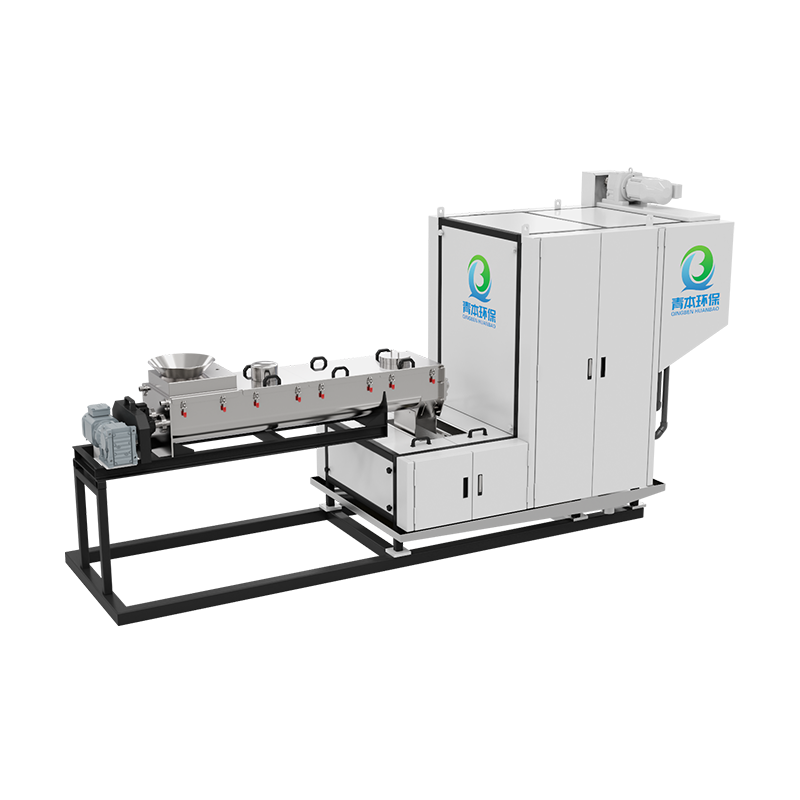
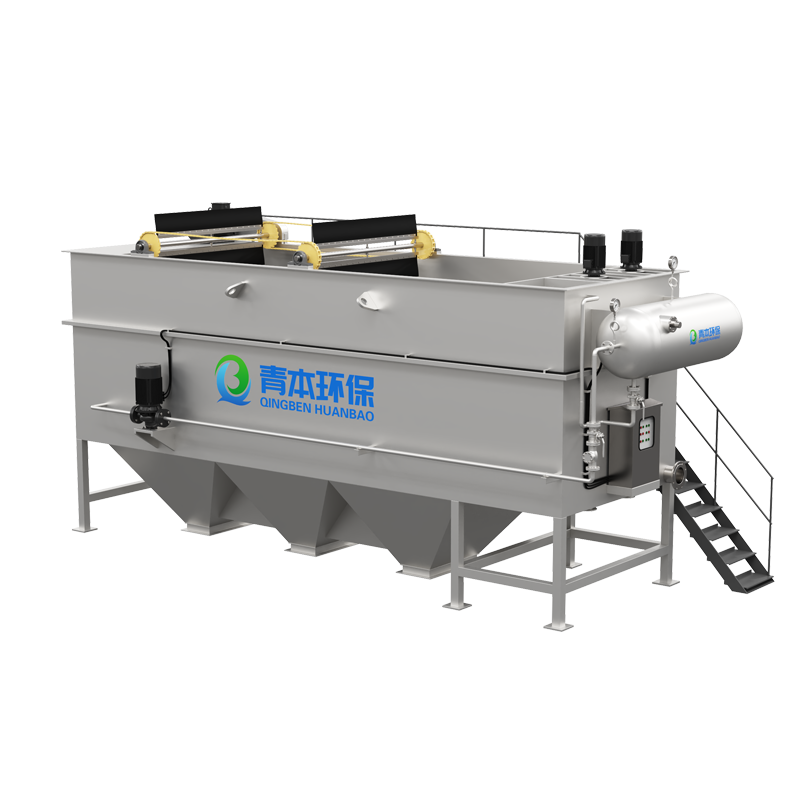 Horizontal Air Flotation MachineThe advection dissolved air flotation machine is a solid-liquid separation equipment commonly used in the sewage treatment industry. It can effectively remove suspende...View Product →
Dissolved air flotation deserves a closer look because it changes the mechanism rather than the geometry. Instead of waiting for oil to rise on its own, micro-bubbles attach to droplets and lift them at a speed gravity alone cannot produce. It removes dispersed and lightly emulsified oil that a plain gravity unit passes straight through.
Where Chemical Dosing Fits
Below roughly 20 microns, oil droplets behave more like dissolved matter than like floating oil. A 20 micron droplet needs several hours to rise a metre, which no practical tank can offer. The answer is to grow them: a coagulant neutralises the surface charge on the droplets, and a flocculant builds the neutralised droplets into flocs large enough for gravity or flotation to remove.
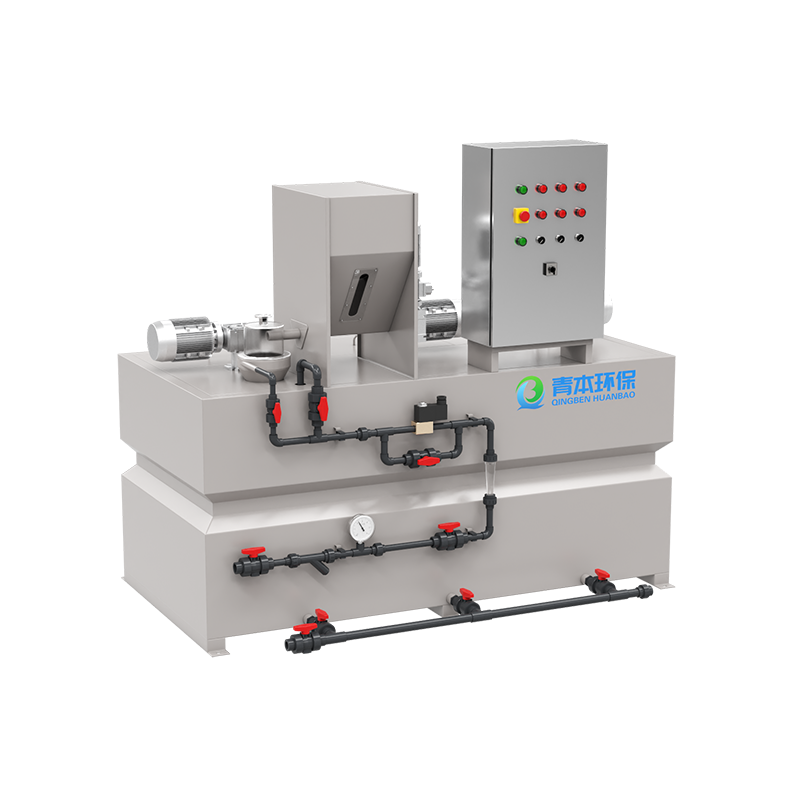
The chemistry only works if the dosing is consistent. Dose rates on oily water typically sit in the tens to low hundreds of mg/L, and a metering pump that drifts by 20 percent either wastes polymer or lets oil through to the outlet. That is why packaged dosing systems with a mixing chamber and calibrated pumps are standard on industrial wastewater treatment lines where the influent changes shift by shift.
 Integrated Dosing DeviceScrew Press Sludge Dewatering MachineView Product →
What Decides Whether the Unit Meets Its Numbers
Two separators built to identical drawings can perform very differently. In practice, performance is decided by a short list of variables:
- Surface loading rate, in cubic metres per square metre per hour. Push it up and retention time falls in proportion.
- Temperature and viscosity of the incoming stream.
- Droplet size distribution: free, dispersed or emulsified.
- Turbulence at the inlet, which re-breaks droplets that have already coalesced.
- Depth and stability of the oil layer. An over-skimmed layer carries water, an under-skimmed one carries oil out with the water.
- Accumulated sludge and grit, which quietly reduce the working volume of the unit.
Only one item on that list is a mechanical property of the separator. The rest are properties of the stream and of how the unit is operated.
Maintenance, and the Sludge Nobody Plans For
An oil water separator is a passive device, so it fails quietly. The usual symptoms are predictable:
- Oil in the outlet: oil layer too thick, skimming interval too long, or the outlet weir set too low.
- Poor separation at design flow: short-circuiting caused by a blocked inlet baffle or a fouled plate pack.
- Persistent odour and a rising sludge blanket: solids accumulating in the hopper faster than they are drawn off.
- Sudden loss of performance with no mechanical change: a new cleaning agent or a process change has emulsified the oil.
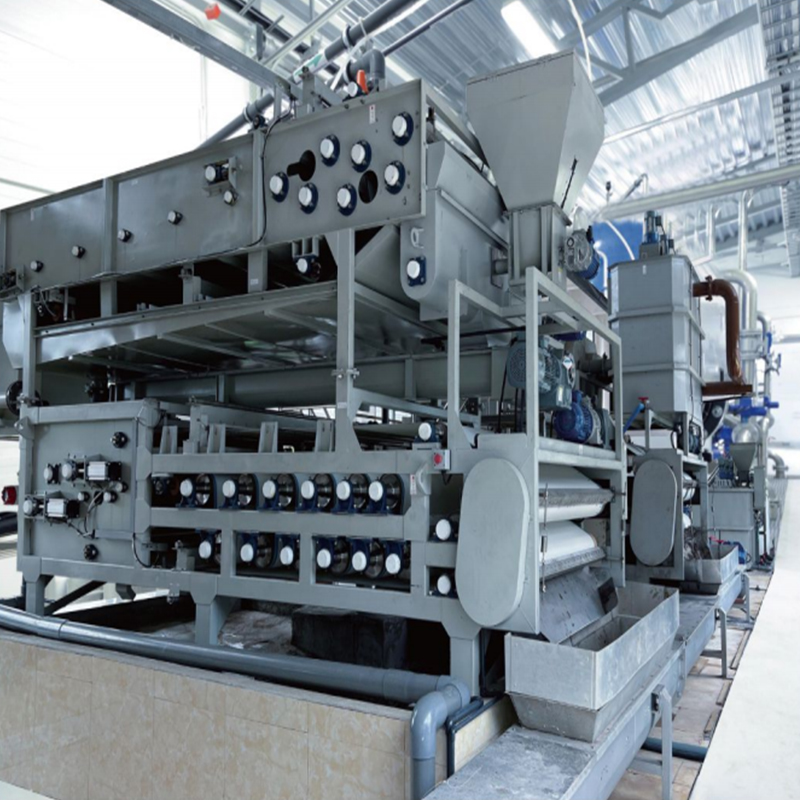
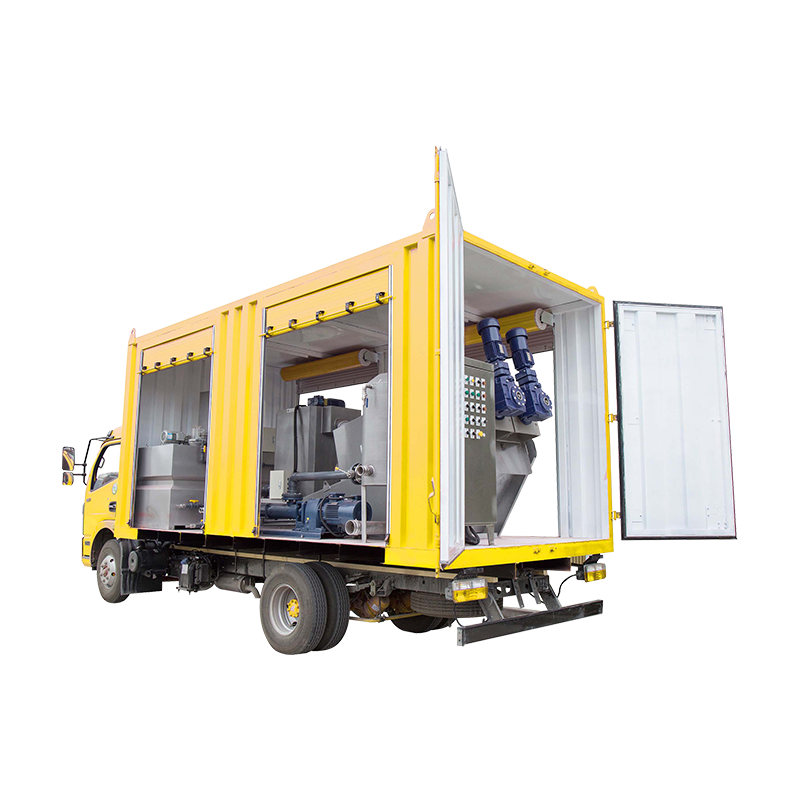
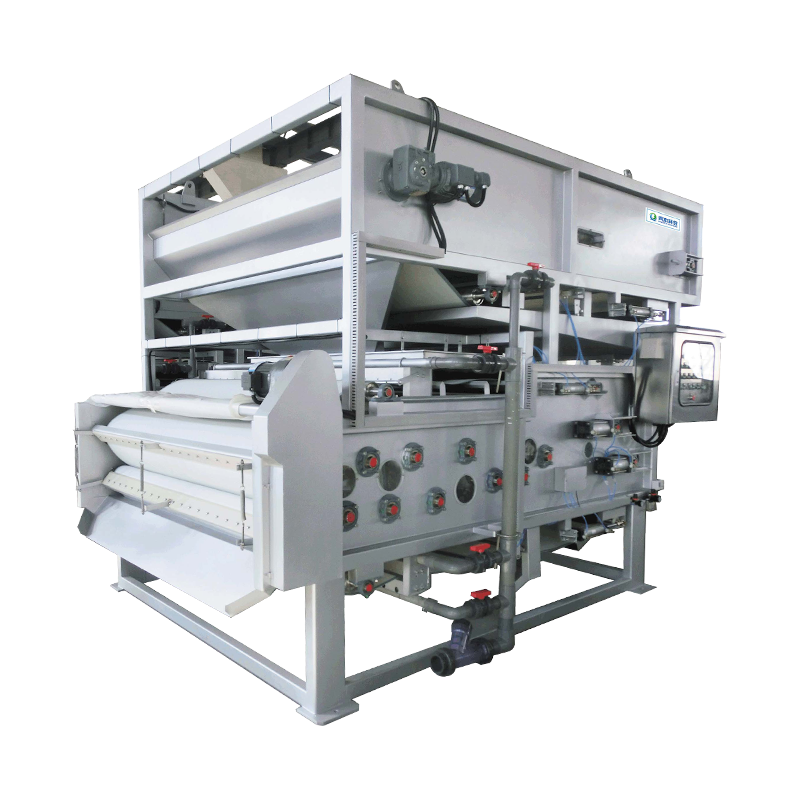
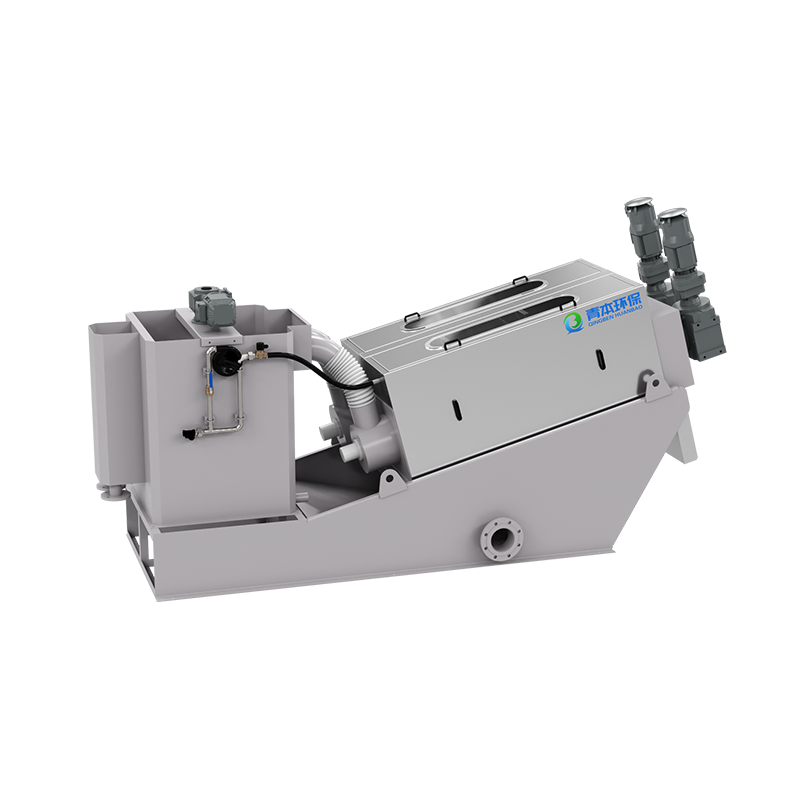
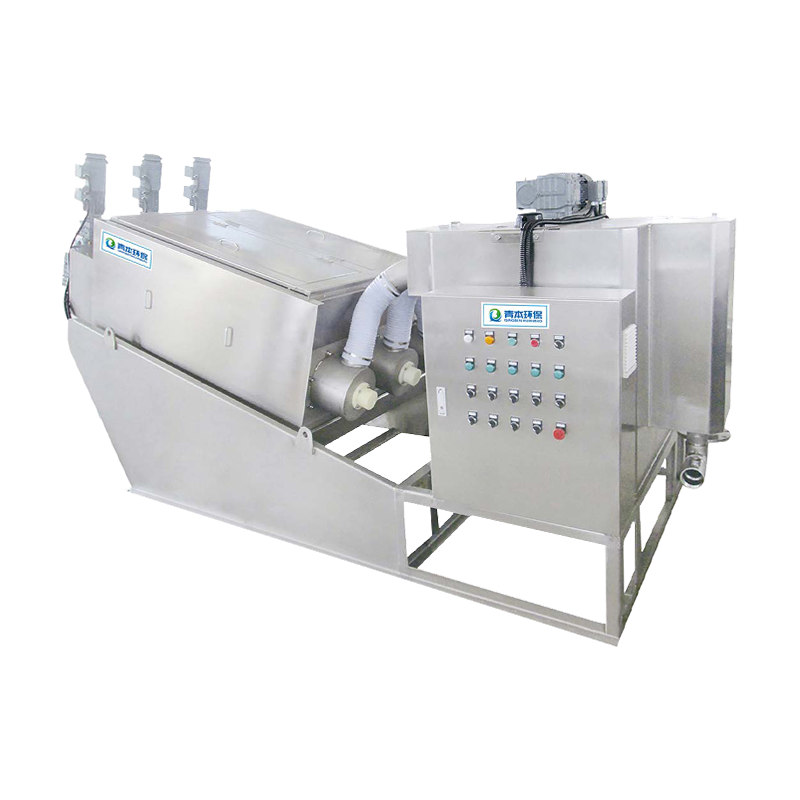
Oil recovered from the surface and sludge drawn from the bottom both need a destination. Oily sludge is normally dewatered before disposal or co-processing, and this is where many small plants come unstuck, because oily sludge behaves very differently from municipal sludge and blinds conventional dewatering equipment.
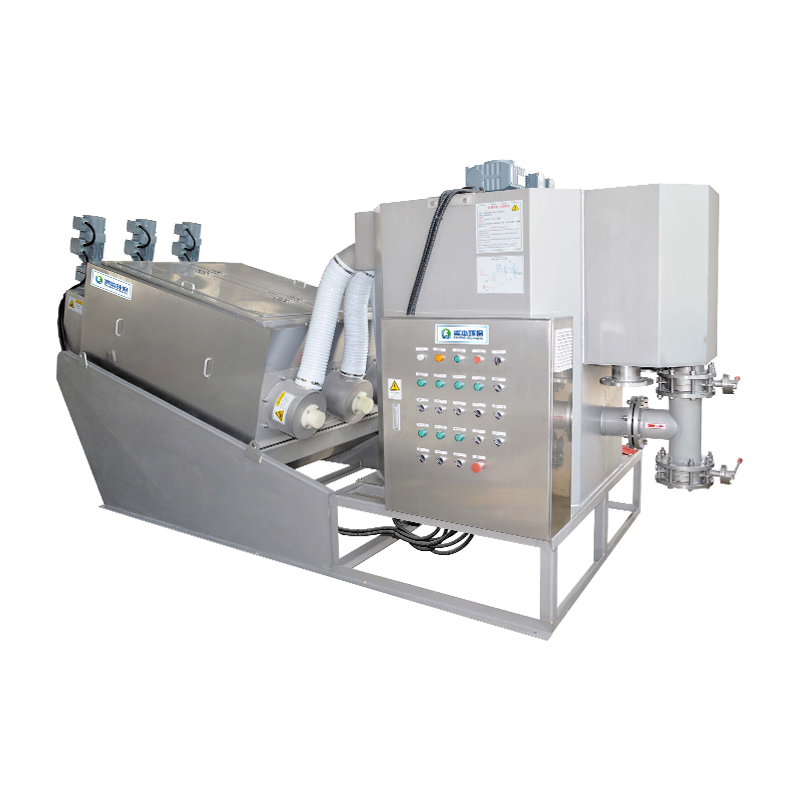
 Screw Press Sludge Dewatering MachineThe spiral-type sewage mixer dewatering machine can not only treat high-concentration sludge but also concentrate and dewater low-concentration sewage. The applicable ...View Product →
Choosing a Separator for Your Stream
Start with the droplet spectrum, not the flow rate. If the stream is mostly free oil from a workshop floor, a vehicle wash bay or a fuel bund, a plate-pack gravity separator sized on a 60 to 100 micron basis will normally do the job. If it carries emulsified oil, machining coolant or produced water from oil and gas operations, gravity alone will not reach the discharge limit and a flotation or chemical stage is required.
Then check the practical items: available footprint, whether heat is available, how recovered oil and sludge will be handled, and who will clean the unit. Those four questions predict operating cost far more reliably than any brochure figure for removal efficiency.
Frequently Asked Questions
Q1. How does an oil water separator work in simple terms?
It slows the flow and spreads it over a wide, quiet surface so buoyancy can lift oil droplets to the top, where a skimmer removes them before the water leaves the outlet.
Q2. What oil droplet size can a gravity oil water separator remove?
Gravity units are usually sized around 150 micron droplets, while coalescing plate separators target about 60 microns. Droplets below roughly 20 microns rise too slowly for gravity alone.
Q3. What is the difference between an API separator and a coalescing plate separator?
Both rely on gravity. An API separator uses a long, quiet channel, while a coalescing plate unit adds inclined plates that shorten the rise path, so it needs far less space for the same duty.
Q4. Does an oil water separator remove emulsified oil?
Not reliably. Emulsified droplets below about 20 microns need chemical coagulation, dissolved air flotation or membrane polishing downstream of the gravity stage.
Q5. How often does an oil water separator need maintenance?
Skimming is continuous or daily, baffles and plate packs are inspected monthly, and sludge is drawn from the hopper before it builds up, often weekly on industrial streams.
Q6. What retention time should an oil water separator have?
Gravity units commonly provide 10 to 30 minutes of retention at design flow, with the surface loading rate kept low enough for the target droplet size to reach the surface.