

A municipal plant running 100 m³ a day of waste activated sludge at 1% dry solids is not really moving sludge — it is moving one tonne of solids inside 99 tonnes of water, and every litre of that water is pumped, stored, stirred, trucked and invoiced. Thicken the same sludge to 5% solids before it leaves the tank and the volume drops to 20 m³. Nothing was burned, nothing was added, and every kilogram of solids is still there.
That single relationship explains most of what works in sludge volume reduction, and most of what goes wrong when a plant buys equipment in the wrong order.
Content
- 1 The Arithmetic: Volume Follows Solids Content, Not Tonnage
- 2 Where the Water Actually Leaves: Four Stages, Four Jobs
- 3 Stage 1: Thickening Is the Cheapest Litre You Will Ever Remove
- 4 Stage 2: Dewatering — Pick the Cake, Then Pick the Machine
- 5 Stage 3: Drying Turns a Haulage Problem into an Energy Problem
- 6 Reduce the Mass First: Process Changes That Shrink Sludge Before Any Equipment Runs
- 7 What to Verify Before You Buy a Volume Reduction System
- 8 Frequently Asked Questions
The Arithmetic: Volume Follows Solids Content, Not Tonnage
Because sludge is mostly water, its volume scales almost exactly with the inverse of its solids concentration. Double the solids percentage and you halve the volume; multiply it fivefold and you keep one fifth. The table below applies that relationship to a plant generating one tonne of dry solids per day.
| Solids content | Wet volume per tonne DS | Water still being handled | Typical stage |
|---|---|---|---|
| 1% | 100 m³ | 99 m³ | Raw or waste activated sludge |
| 3% | 33 m³ | 32 m³ | Gravity or drum thickened |
| 5% | 20 m³ | 19 m³ | Well thickened feed |
| 20% | 5 m³ | 4 m³ | Screw press or centrifuge cake |
| 30% | 3.3 m³ | 2.3 m³ | High-pressure belt cake |
| 90% | 1.1 m³ | 0.1 m³ | Dried biosolids |
Notice the asymmetry. Going from 1% to 5% removes about 80% of the volume in one of the cheapest unit operations on site. Going from 20% to 30% removes only another third of what remains — yet that third is often exactly what decides whether a cake passes a landfill’s paint-filter or shear test, or whether you pay for an extra truck every day.
Where the Water Actually Leaves: Four Stages, Four Jobs
Thickening, dewatering, drying and final disposal are not interchangeable. Each starts from a different solids level, each costs a different amount per litre of water removed, and each fails in its own way.
- Thickening (1-5% DS). Removes free water that drains or floats away with almost no energy input. Cheapest litre on site, and it stops every downstream unit from being sized on dilute feed.
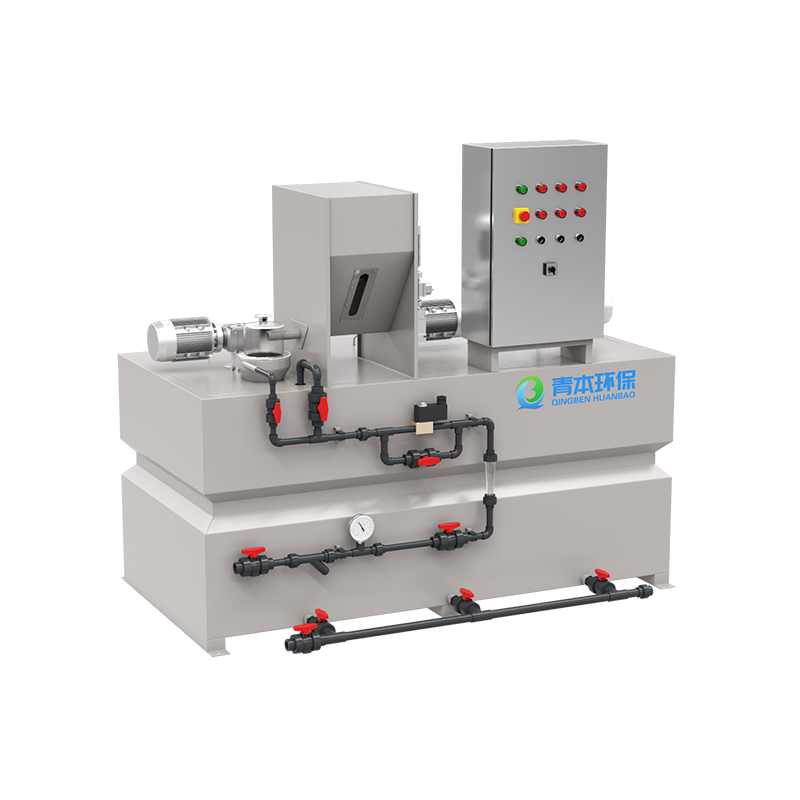
- Dewatering (20-35% DS). Mechanical pressure or centrifugal force plus polymer. This is where volume becomes manageable and where most operating cost sits.
- Drying (70-90% DS). Thermal evaporation. Water’s latent heat is about 2,260 kJ/kg, so one tonne of water needs roughly 630 kWh of heat before any efficiency loss — a serious running cost that only pays back on expensive disposal routes.
- Reuse or disposal. Landfill, land application, incineration or co-processing in cement kilns. Each route has its own dryness and quality threshold.
Stage 1: Thickening Is the Cheapest Litre You Will Ever Remove
Typical operating ranges quoted in process design are 2-4% DS for gravity thickening of waste activated sludge, 3-5% DS for dissolved air flotation, and 4-8% DS for rotary drum or screw pre-concentration units. On a 100 m³/day stream, moving from 1% to 5% before dewatering takes roughly 80 m³ of water out of the tanker bill permanently — and every downstream pump, pipe and tank can be a size smaller.
Three things that quietly ruin thickening performance
- Bulking sludge. Filamentous growth gives poor settling in gravity thickeners and poor flotation in DAF units; mechanical pre-concentration handles it more gracefully because it does not depend on density.
- Polymer over-dosing. Carryover returns to the head of the works and adds to the biological load you were trying to reduce.
- Residence time. Long holding times in open thickeners release phosphorus and generate odour; covered or mechanically thickened options avoid the problem.
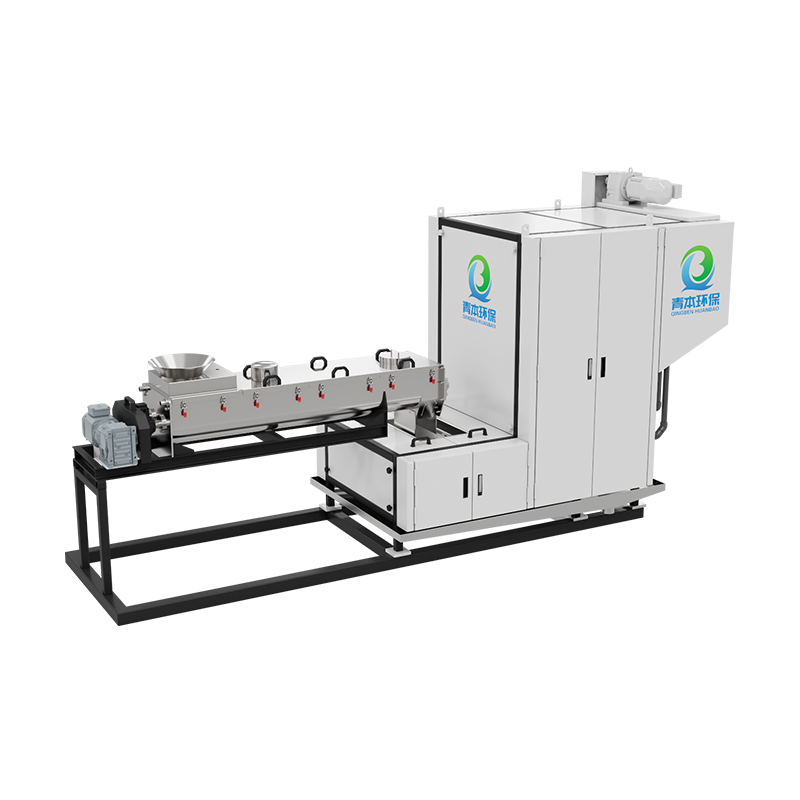
Where space is tight, a pre-concentration unit installed immediately upstream of the dewatering press usually delivers the fastest volume reduction per square metre of floor area.
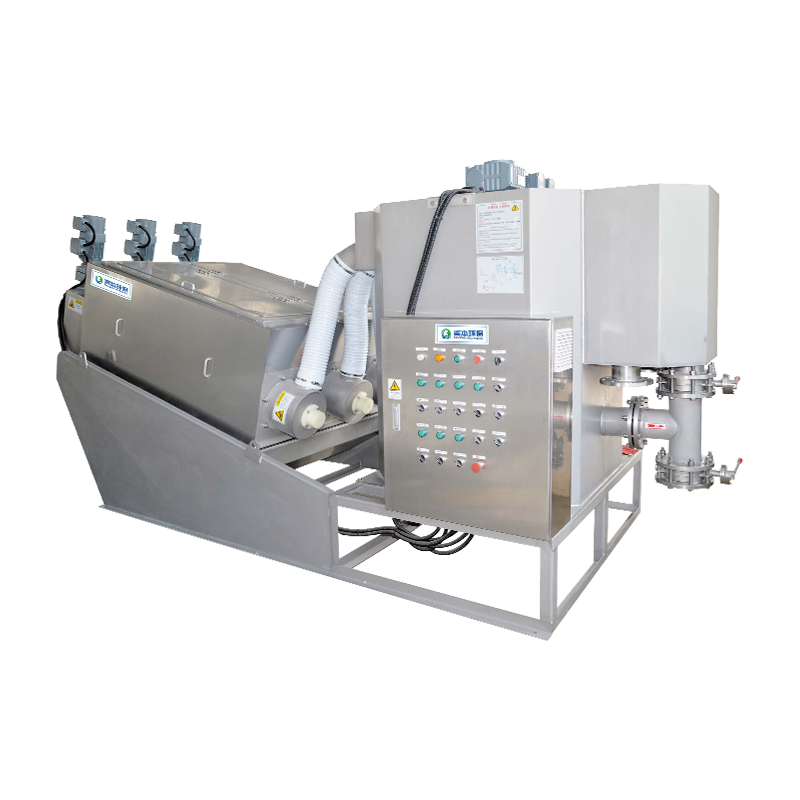
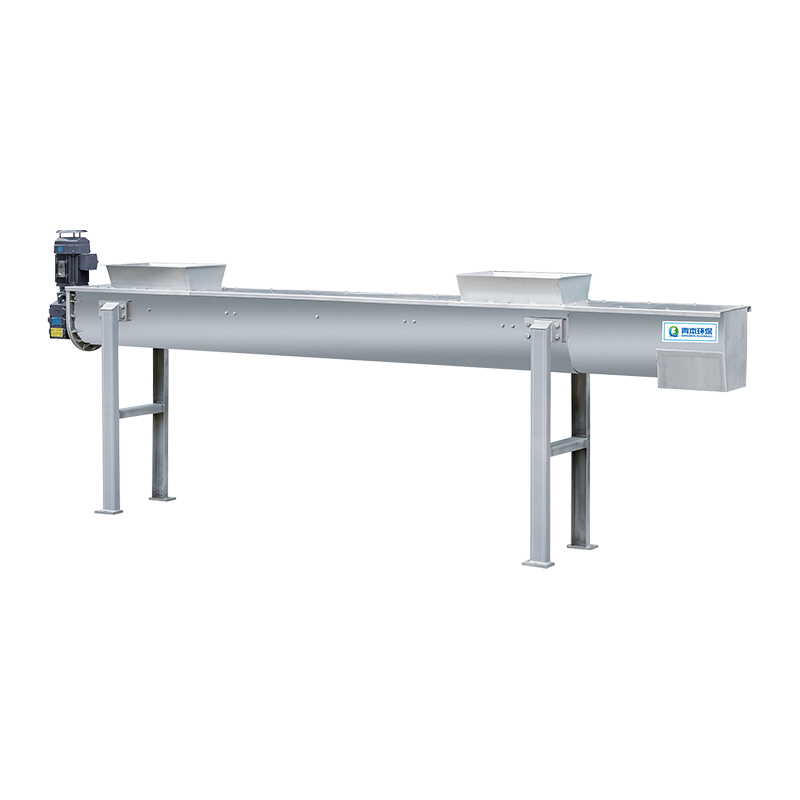
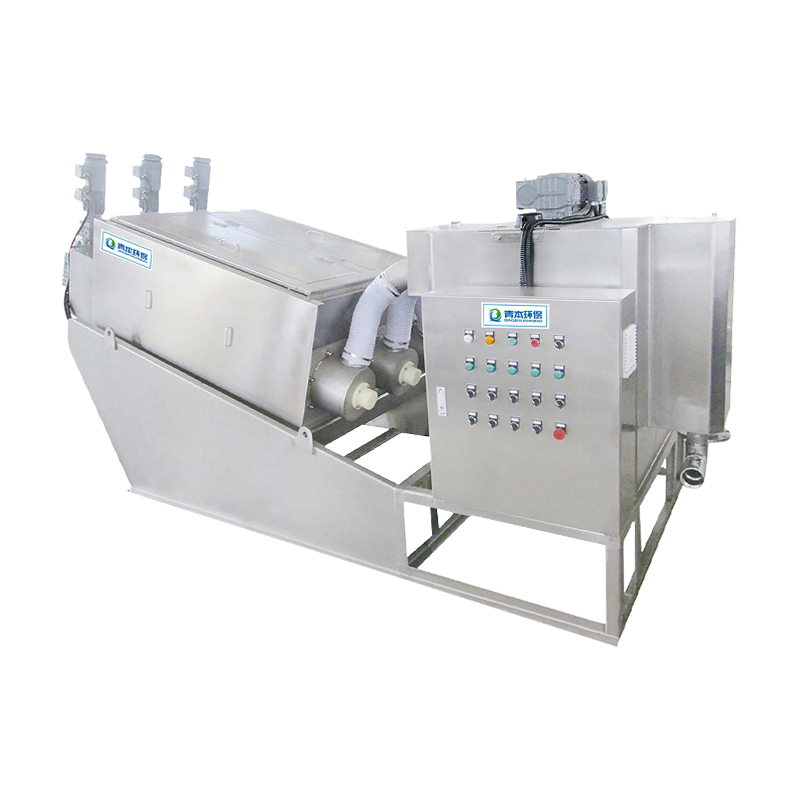 Screw Press Sludge Preconcentration MachineA pre-concentration unit for space-limited plants, installed upstream of dewatering to reduce downstream load and avoid a separate thickening tank.View Product →
Stage 2: Dewatering — Pick the Cake, Then Pick the Machine
Technologies overlap heavily on dilute sludge and diverge sharply once you push for high cake solids. The ranges below reflect common vendor and design-guide figures; always confirm with bench tests on your own sludge, because polymer selection can move results by several points.
| Technology | WAS cake | Mixed / primary cake | Polymer and utilities |
|---|---|---|---|
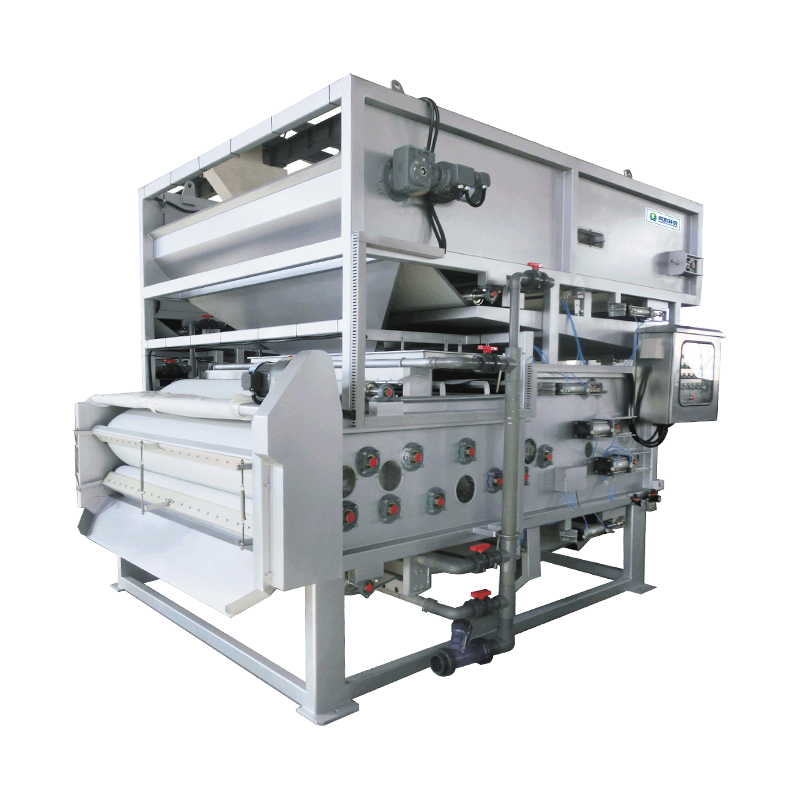
| Belt filter press | 18-22% DS | 22-28% DS | Moderate to high polymer, filter cloth wash water |
| Screw press | 20-25% DS | 25-35% DS | Lower polymer, low wash water, tolerates thin feed |
| Centrifuge | 20-25% DS | 25-30% DS | High power, grit sensitive |
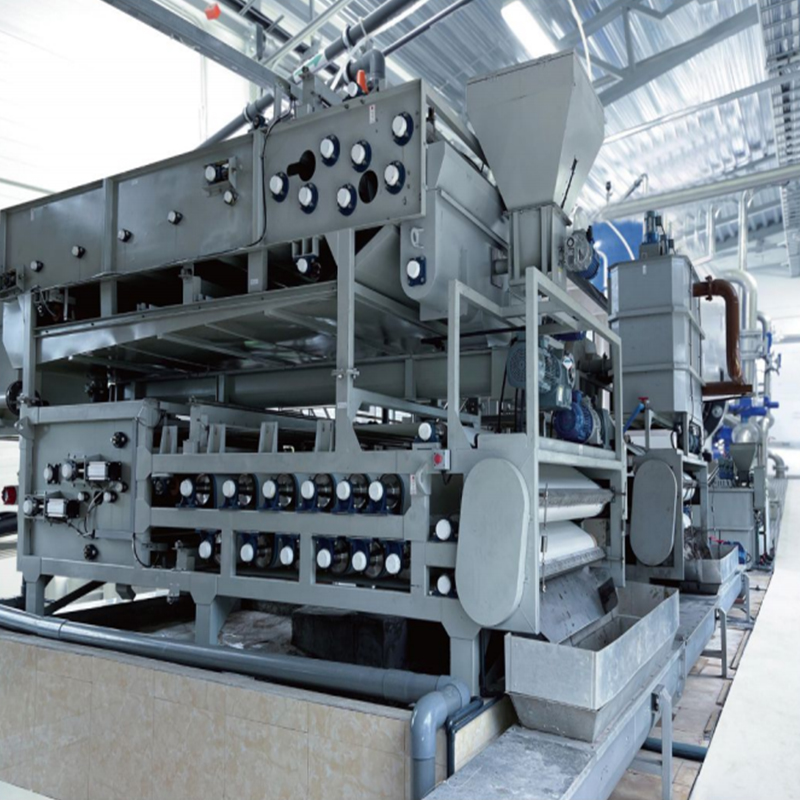
| High-pressure belt deep dewatering | 30-40% DS | 35-45% DS | High polymer, needs conditioned feed |
| Plate filter press | 30-38% DS | 35-45% DS | Batch operation, more labour |
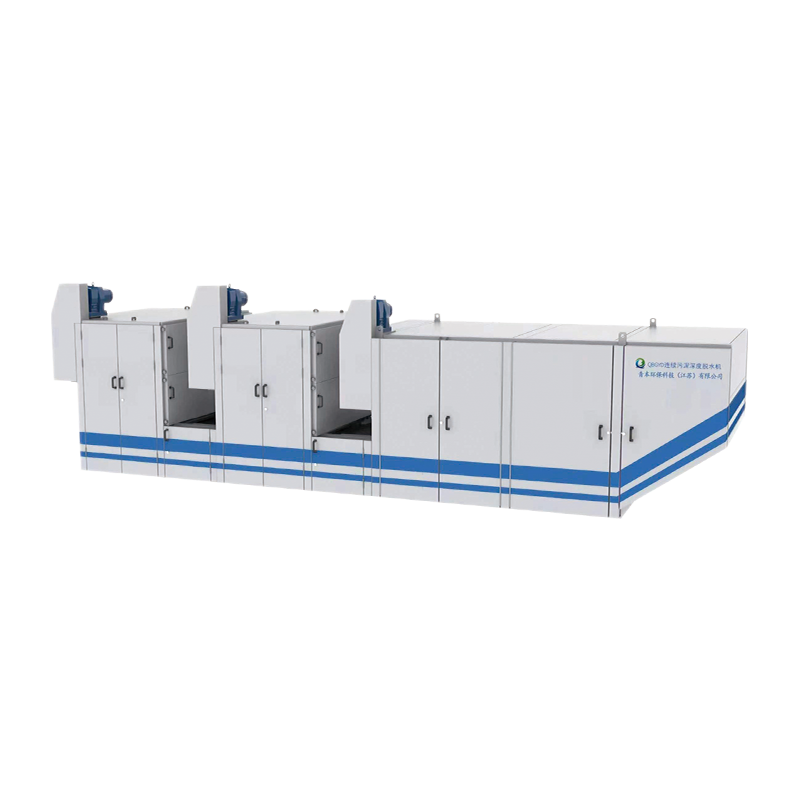
The curve is the number that appears on the invoice. At 20% DS every dry tonne becomes five wet tonnes; at 30% it becomes 3.3; at 40% it becomes 2.5. For a plant producing three dry tonnes a day, moving from 20% to 30% removes about five tonnes of wet cake from the road every single day — a shift that usually pays for a deep-dewatering upgrade well before its service life ends.
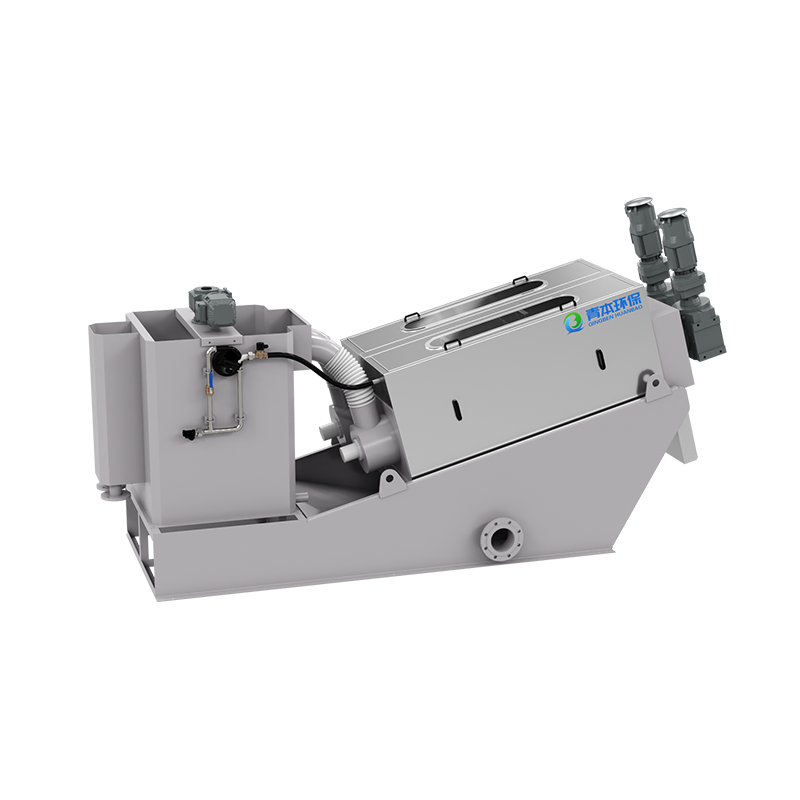 Screw Press Sludge Dewatering MachineA continuously operating screw press that thickens and dewaters sludge, helping raise cake solids before any energy-intensive drying step.View Product →
Stage 3: Drying Turns a Haulage Problem into an Energy Problem
Drying is the only step that turns sludge from a wet solid into a product. It is also the step most often bought for the wrong reason. Because evaporation is energy-intensive, drying only makes sense when at least one of three conditions applies: disposal is very expensive or legally restricted, the dried material has a genuine reuse route such as cement kiln co-processing or land application, or waste heat is available on site at near-zero marginal cost.
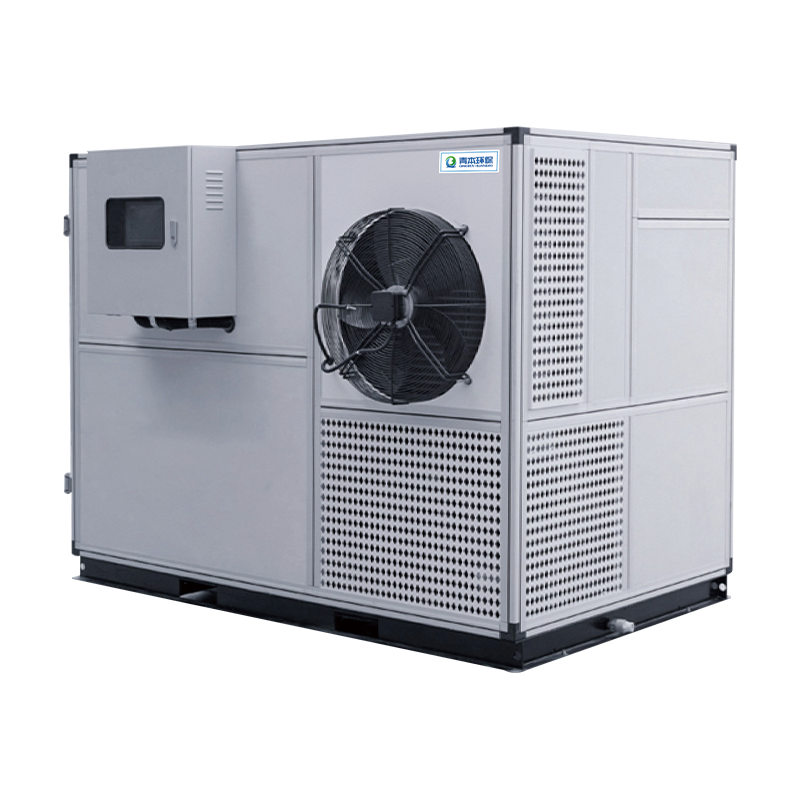
Low-temperature belt dryers running at roughly 40-75°C with a heat pump or recovered waste heat are the common choice for municipal plants, since they avoid the odour and volatile handling issues of high-temperature drum drying. Chamber-style units using vacuum-freezing technology suit smaller or containerised installations where footprint dominates.
One practical caution: dried biosolids are dusty, hygroscopic and can re-absorb moisture, so plan storage and conveying before commissioning the dryer, not after.
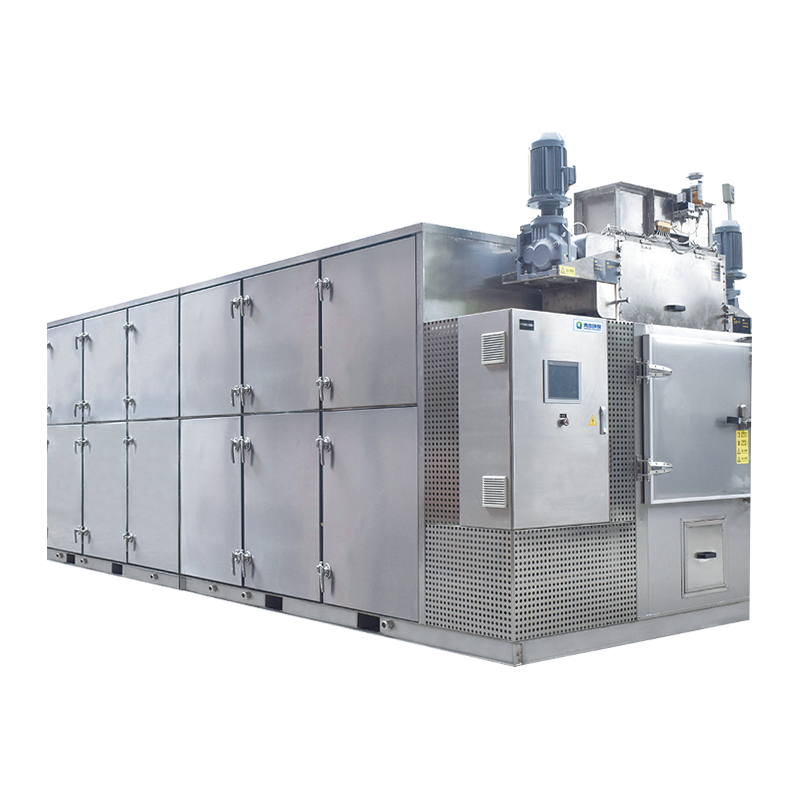 Low Temperature Belt Type Sludge Drying MachineA low-temperature heat-pump belt dryer that dehumidifies and recycles heat, suited to plants that need dried biosolids and can manage storage.View Product →
Reduce the Mass First: Process Changes That Shrink Sludge Before Any Equipment Runs
Every kilogram of dry solids you avoid generating is a kilogram you never thicken, dewater, dry, store or haul. These levers are usually cheaper than new machinery and often overlooked:
- Run a longer sludge age. Extending solids retention time lowers the observed yield substantially — typical design values suggest surplus sludge can fall by a third or more when SRT moves from around 5 days to around 20. The trade-off is more aeration energy and larger tankage.
- Audit chemical dosing. Lime and ferric conditioning add real mass. A 20-30% increase in dry solids from lime conditioning is common, and that extra mass is paid for again at every downstream stage.
- Control filamentous bulking early. Poorly settling sludge thickens badly and dewaters badly, so the same dry tonne occupies more volume at both ends of the train.
- Keep grit and screenings out. Grit is inert, abrasive and impossible to dewater; every tonne removed in the grit classifier is a tonne that never reaches the press.
- Recover solids from supernatant and filtrate. Returning fines to the head of the works simply re-circulates mass and increases polymer demand.
What to Verify Before You Buy a Volume Reduction System
Most disappointing sludge projects are not equipment failures — they are specification failures. Four checks catch the majority of them.
| Check | Why it matters | Ask for |
|---|---|---|
| Guarantee basis | Cake dryness quoted on best-case sludge rarely survives contact with real feed | Test method, sludge type and whether the guarantee applies to your sludge |
| Polymer consumption | Usually the largest single operating cost after labour | Kilograms of polymer per dry tonne, in writing |
| Part-load behaviour | Few plants run at design flow all year | Performance and stability at 40-50% of design feed |
| Filtrate quality | Solids returned to the head of the works become a hidden recirculating load | Suspended solids concentration and return flow rate |
It also helps to compare against plants handling similar sludge. Municipal and industrial installations differ sharply in cake behaviour, and reviewing real installations is often faster than reading another datasheet — the municipal wastewater treatment reference and the delivered project case list are useful starting points when sizing a retrofit.